[pageLogInLogOut]
You can feel it's Benninger!

#Dyeing, Drying, Finishing

Focus on denim for Monforts at SaigonTex 2025
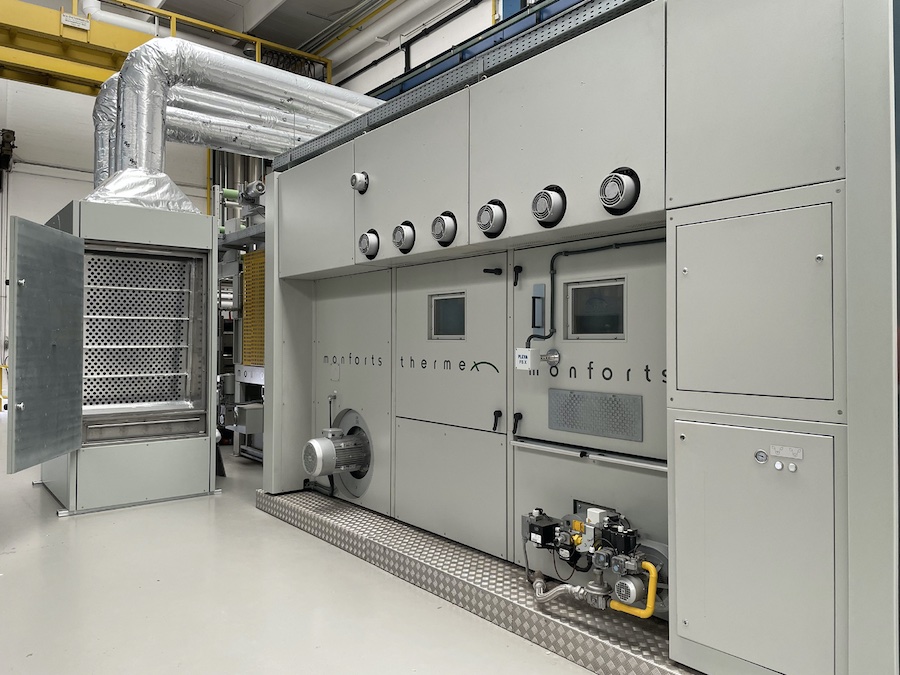
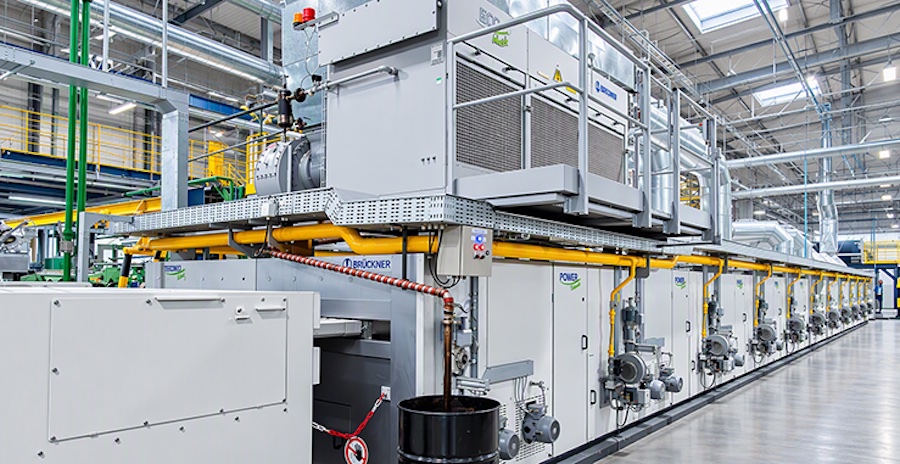
At the SaigonTex 2025 textile machinery exhibition which is taking place from April 9-12 in Ho Chi Minh City, Vietnam, Monforts will highlight the benefits of its advanced finishing technologies for denim. Over 900 Monforts THERMEX hotflue dyeing systems are now operational in the main textile producing countries, with many of them devoted to denim production, and a significant number already reaping the benefits of the Econtrol® and Econtrol®T-CA processes*.
Over 900 Monforts denim range concepts are now successfully running worldwide © 2025


Econtrol® is a continuous process for the dyeing of woven cotton and cellulosic fabrics in which reactive dyestuffs are fixed into the fabric in a one-step dyeing and drying operation with a controlled combination of steam and air. The entire pad-dry process takes just two-to-three minutes at a temperature of between 120-130°C and a relative humidity volume of 25-30%.

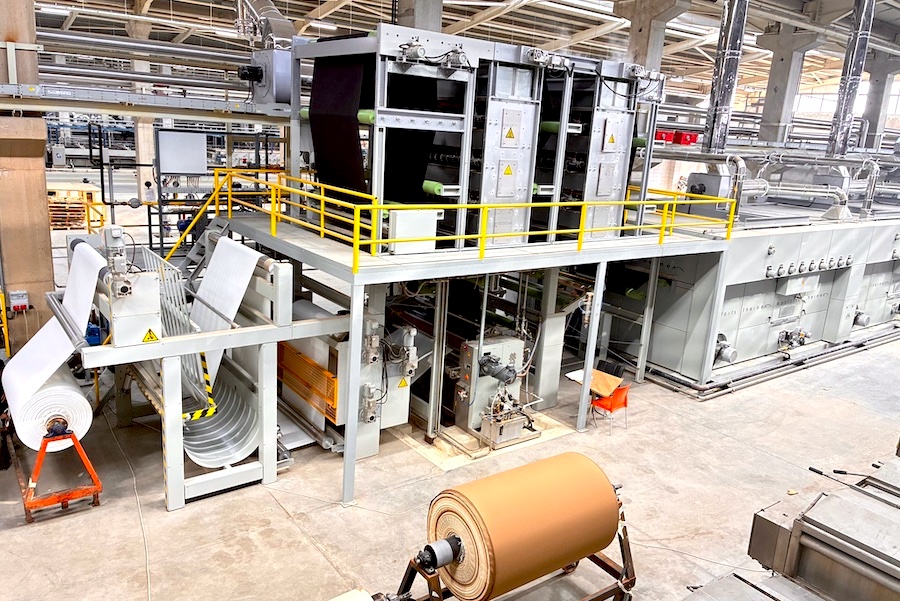
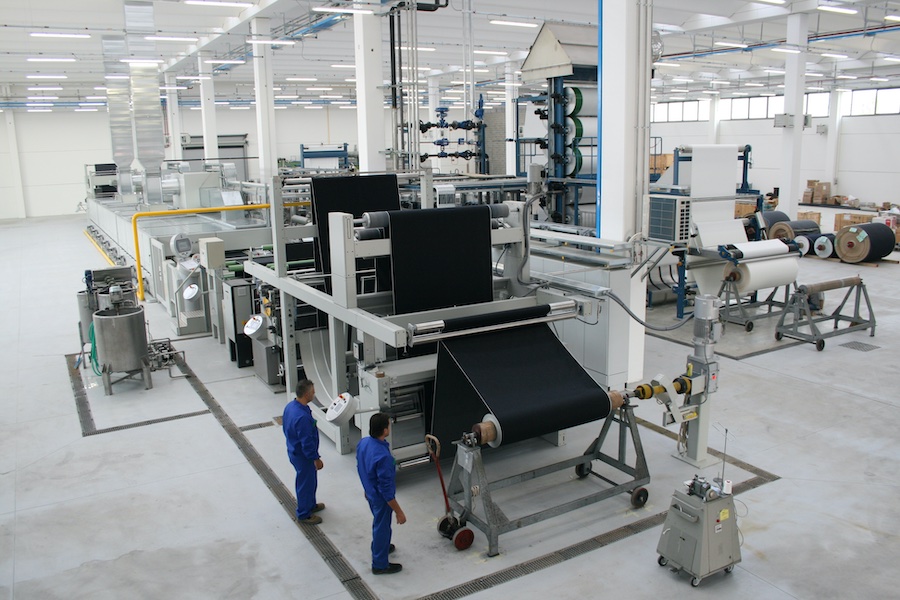
Monforts denim range concepts which are successfully running worldwide enable the processing of high-qualtiy and reproducible fabrics which are stretched and skewed far more gently than with conventional range combinations. The ‘double rubber’ version of a THERMEX range comprises two compressive shrinkage units and two felt calenders in line, for super elastic and bi-elastic materials. Additionally, the combined drying, stretching and skewing functions for denim fabric are possible with the ThermoStretch unit, which can also include an EcoApplicator system for the minimum application of necessary finishing chemicals.
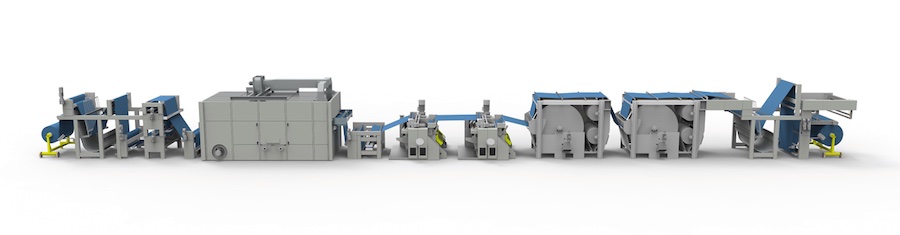
Denim fabrics are stretched and skewed far more gently than with conventional range © 2025 combinations


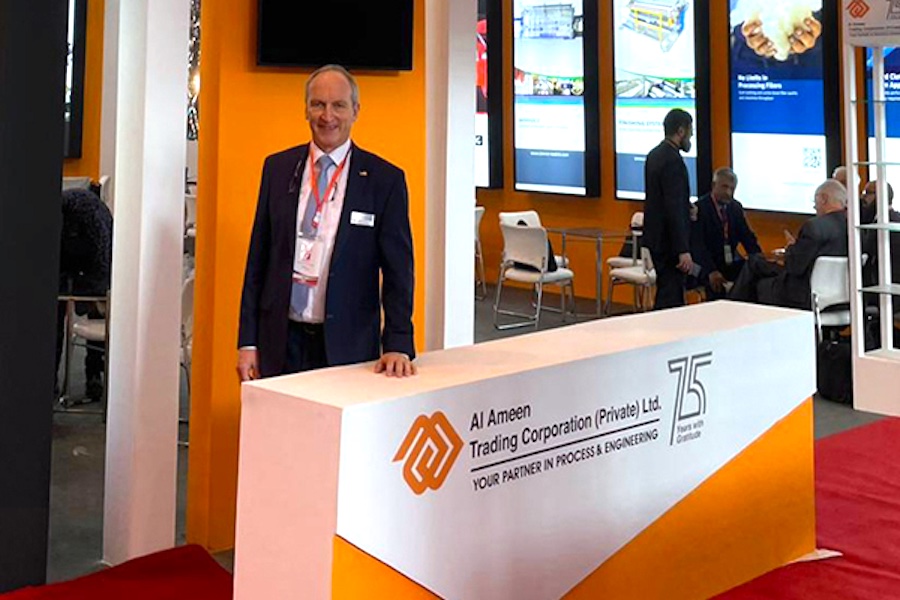
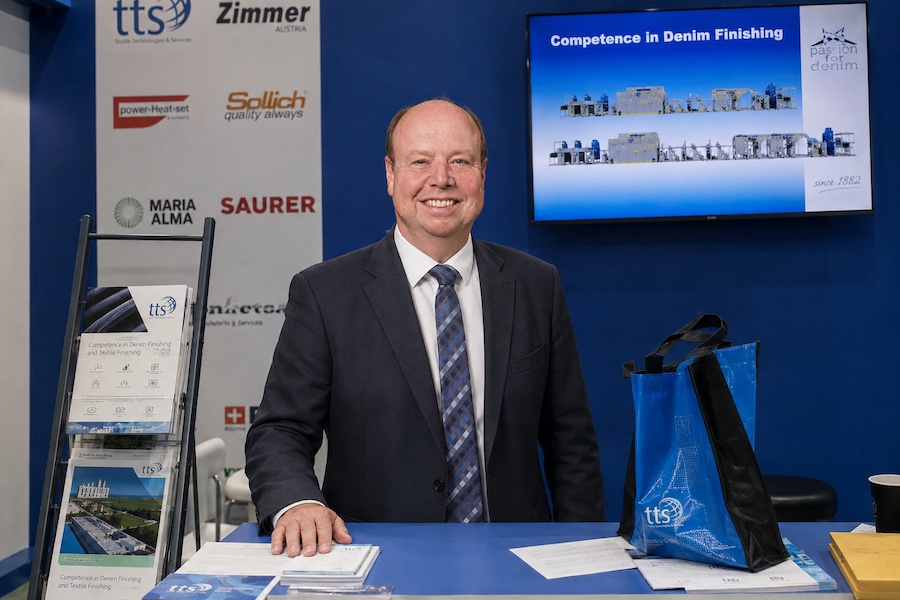
“These latest Monforts lines allow users to be extremely versatile and respond quickly to market demand, while also allowing very short production runs,” says Monforts Head of Denim Hans Wroblowski, who will be present at the Ho Chi Minh exhibition along with specialists from the company’s regional partner, Peja Vietnam, at stand 1L01 in Hall A1.
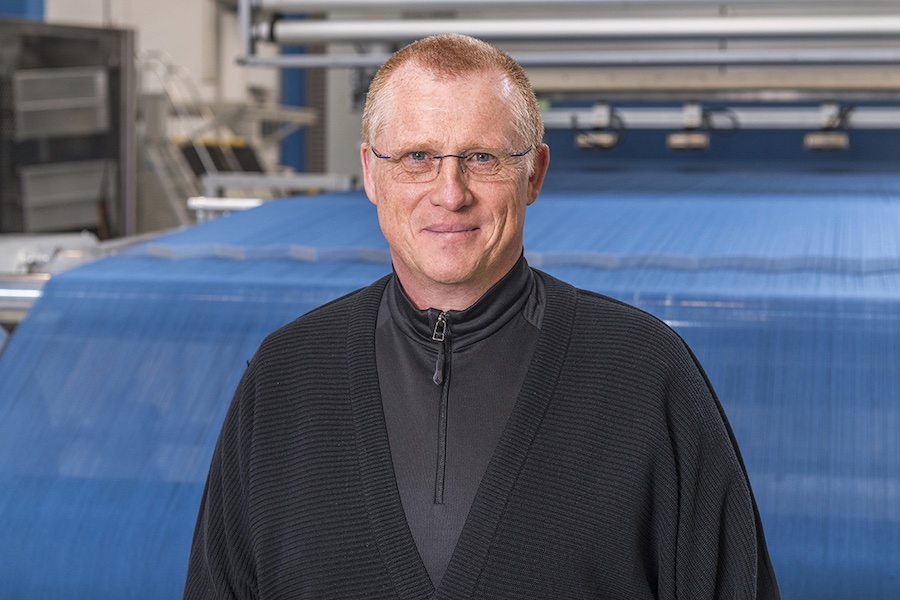
Monforts Head of Denim Hans Wroblowski © 2025


In 2024, Vietnam surpassed Bangladesh to become the world’s second-largest textiles and apparel exporter, trailing only China, with total export revenues reaching $44 billion. This is in part due to tariffs that are currently 10-20% lower than China’s and significantly cheaper labour costs – less than half of China’s.

Vietnam’s textile and apparel industry is poised for further expansion in 2025, leveraging cost advantages and rapid production turnaround while proactively managing rising logistics costs and adapting to shifting trade dynamics.

“Vietnam is now a significant market for us and we have developed long-standing relationships of mutual trust with many of the leading textile manufacturers,” says Hans Wroblowski. “Peja Vietnam has proved the perfect partner in installing and commissioning Monforts machines, with its service team working side by side with our own engineers to ensure the machines fully meet every customer expectation. Together, we are looking forward to fruitful discussions at SaigonTex.”

* Econtrol® is a registered trademark of DyStar Colours Distribution GmbH, Germany.
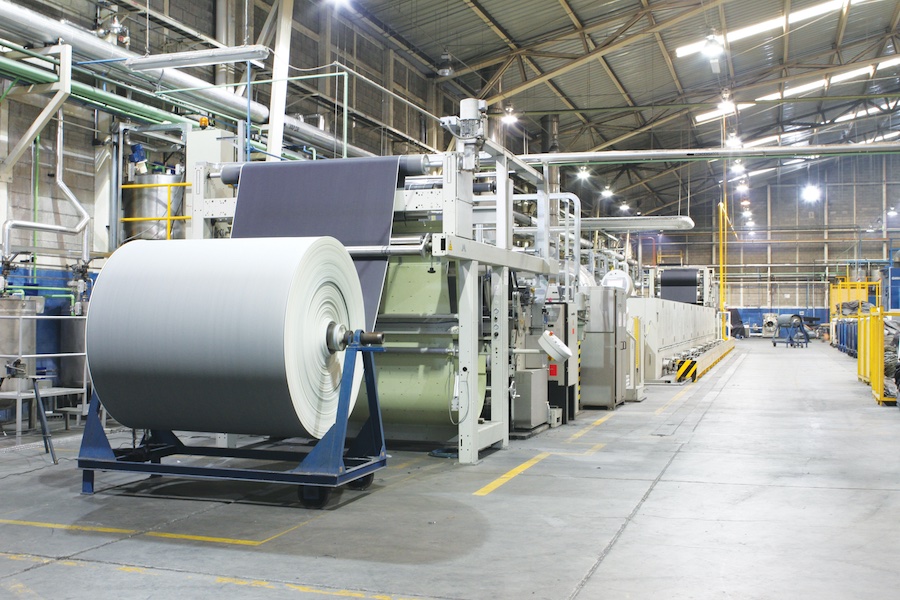
Typical denim range configuration © 2025


More News from A. Monforts Textilmaschinen GmbH & Co. KG

More News on Dyeing, Drying, Finishing

#Dyeing, Drying, Finishing

Smart Quality Control for Technical Textiles

In the end, what matters is the result: a filter that performs reliably, a membrane that remains stable in storm conditions, a composite material with precisely defined properties. But the path to achieving this is demanding. In the production of technical textiles, numerous parameters interact – and even the smallest deviations can have major consequences.

#ITM 2026

The address for environmentally friendly dyeing and finishing systems: ITM 2026

Dyeing and finishing technologies, one of the most critical and value-added areas of the textile sector, have gained strong growth momentum on a global scale. Technologies that are pioneers of this transformation focused on sustainability, quality and efficiency will meet with sector professionals at the ITM 2026 International Textile Machinery Exhibition. Dyeing and Finishing Hall (11–12) will host the latest technologies that increase efficiency, optimize resource use and reduce environmental impact in textile finishing processes.

#Techtextil 2026

iNTERSPARE presents latest developments and upgrade solutions for technical textile finishing at Techtextil

iNTERSPARE Textilmaschinen GmbH will present its latest solutions for technical textile finishing at Techtextil 2026 in Frankfurt (VDMA joint stand, Hall 12 / Stand C55A). The focus will be on further developments within the Krantz, Artos and Babcock (BTM) product lines, in particular the Krantz K30 stenter as well as the reintroduction of the Artos Vari-Flex foulard. The presentation will be complemented by modular solutions for upgrading existing installations and new approaches in automation and digitalization.

Latest News

#INDEX 2026

“We clearly see that reliability, flexibility, service and total cost of ownership are becoming increasingly important again.”

The nonwovens industry continues to face a challenging market environment. Nevertheless, AUTEFA Solutions reports successful projects, new line sales and growing demand for energy-efficient and flexible solutions. In this interview, André Imhof of AUTEFA Solutions talks about competitiveness against Chinese suppliers, new service and recycling concepts, the growing importance of application development and the opportunities created by countercyclical investments.

#INDEX 2026

“Needle punching technology is more universal and sustainable than ever!”

Needle punching technology was long regarded as a rather traditional and comparatively slow technology within the nonwovens industry. In this interview, Johann Philipp Dilo explains why needle punching is more relevant than ever today – ranging from energy efficiency and resource conservation to hygiene applications, new machine concepts and design-oriented nonwoven solutions.

#Research & Development

Textile climate control system in workwear – exhibition at the 2026 SME Innovation Day!

Conventional protective workwear often reaches its limits during strenuous physical activity. In particular, the transport of sweat and excess body heat poses a problem. The German Institutes of Textile and Fiber Research (DITF) conducted research on flow-optimized, air-conducting textile structures that enable targeted climate control directly on the body. These structures can be integrated straight into protective work garments. The textile climate control system supports the body’s natural thermoregulation. This contributes to improved workplace safety and comfort.

#Nonwovens

PET spunbond from China – EDANA welcomes imposition of provisional anti-dumping measures

On 13 May 2026, after eight months of investigation, the European Commission imposed provisional anti-dumping duties of 45.6-50.0% on imports of PET spunbond from China. EDANA welcomes this expression of the Commission’s clear determination to protect EU industries from the unfair trade practices of Chinese producers.

TOP