[pageLogInLogOut]

#Digital Printing

Epson and designer Yuima Nakazato show a glimpse of a more sustainable future for fashion

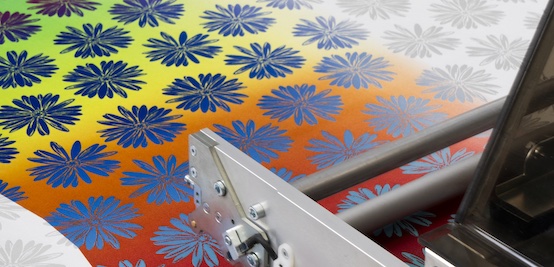
Epson has partnered with renowned Japanese fashion designer Yuima Nakazato and his eponymous YUIMA NAKAZATO brand at Paris Haute Couture Fashion Week Spring - Summer 2023 to unveil creations that are both stunning and sustainable. In addition to utilizing Epson's digital textile printing to reproduce his unique and creative worldview, YUIMA NAKAZATO realized some of its creations with the help of a new, more sustainable and potentially industry-transforming textile production process.

Partnership combines inkjet and dry fiber technologies to create stunning designs from recycled clothing

Epson's dry fiber technology, which is already used commercially to recycle office paper and which requires virtually no water, has been adapted to produce printable non-woven fabric from used garments. The new fabric production process was revealed in Paris as part of a three-year collaboration between Epson and YUIMA NAKAZATO and was used in the creation of items for the first time during the latter's runway show at the Palais de Tokyo on January 25, 2023.

The collaboration between Epson and YUIMA NAKAZATO builds on the success of the company's printing support for his couture and evolves the level of his creations to enable the low-impact production of high-quality custom garments. Both Epson and YUIMA NAKAZATO are keen to raise awareness of the water and material waste associated with excess production. The Paris Show illustrates how switching to digital textile printing using more environmentally friendly pigment inks offers the fashion industry a more sustainable and less wasteful means of textile printing.(1)

© Luca Tombolini x Yuima Nakazato


The fabric taken to create the latest YUIMA NAKAZATO fashion line was derived from material from used garments sourced from Africa, the destination for many discarded garments from elsewhere in the world. Nakazato visited Kenya where he collected around 150 kg of waste garment material destined for the "clothes mountain" of discarded textiles he encountered there. Epson then applied its dry fiber process to produce over 50 metres of new re-fiberised non-woven fabric, some of which was used for printing with pigment inks with Epson's Monna Lisa digital printing technology.(2)

Hitoshi Igarashi from Epson's Printing Solutions Division explains the importance of the technology: "Although in its early stages, Epson believes its dry fiber technology combined with pigment ink digital printing could offer the fashion industry a much more sustainable future, significantly reducing water use while allowing designers the freedom to fully express their creativity.

"Epson's Environmental Vision is committed to contributing to a circular economy, and this development could be one step towards achieving this. Dry fiber technology applied to the fashion industry offers the possibility of producing material for new clothes that have been recycled from used garments."

In a trial of distributed printing for venue decoration, Epson inkjet printers in Japan and France with remote support from Epson engineers were used to create decorations in the venue space. Both Epson and YUIMA NAKAZATO intend to continue exploring the possibilities for contributing to a more sustainable fashion industry.



© Luca Tombolini x Yuima Nakazato


1) Digital textile printing using pigment inks offers a far more sustainable approach to the fabric production process. compared with traditional analog methods. In addition to pigment inks requiring significantly less water, the digital process requires far fewer stages and is less complex. Unlike analog it requires no plate production, washing or storage, results in little disposal of used inks, and allows on-demand production that contributes to less waste.


2) Epson's Monna Lisa digital Direct-to-Fabric printers use less water compared with analog methods. Pigment inks are more eco-friendly and Epson GENESTA pigment inks are GOTS approved by ECOCERT.

More News from Epson Europe

#Digital Printing

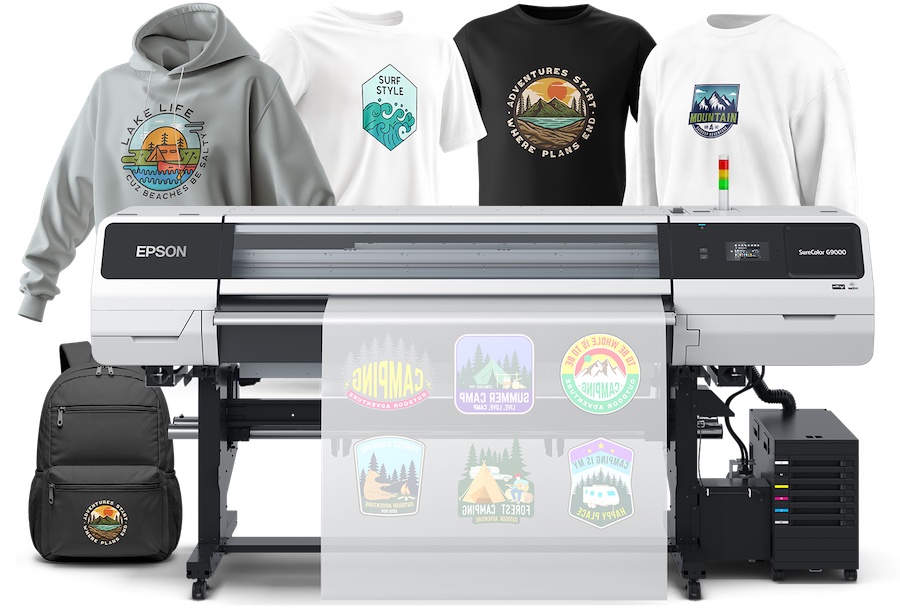
Epson launches SureColor G9000: high-production Direct-To-Film printer delivering greater productivity and reliability

Epson today announces the launch of the SureColor G9000, a new high-production Direct-To-Film (DTFilm) printer designed to meet growing global demand for flexible and efficient textile transfer printing. Expanding Epson’s DTFilm line-up alongside the SC-G6000, the SC-G9000 introduces enhanced speed, reliability and ease of maintenance for commercial garment decorators and textile producers.

#Digital Printing

Epson future proofs textile printing with Epson Textile Academy 2.0

Technology leader Epson today hosted its second Textile Academy Event at the company’s Textile Innovation Centre in Lutterworth, Leicestershire. Building on the success of its inaugural Textile Academy earlier this year, the event welcomed Textile Design BA students from Nottingham Trent University (NTU) and Loughborough University. The event features workshops designed to enhance student’s practical textile printing skills; corporate and entrepreneurial business acumen; marketing and self-branding; and environmental awareness around the textile industry.

#Recycling / Circular Economy

HKRITA and Epson develop silk-like regenerated fiber from cotton

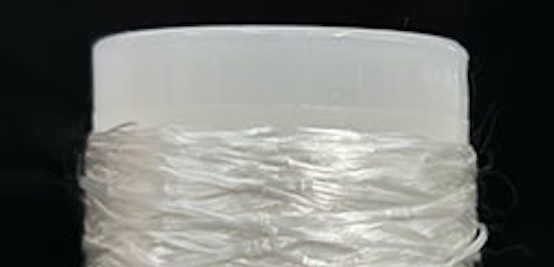
The Hong Kong Research Institute of Textiles and Apparel ("HKRITA") and Seiko Epson Corporation ("Epson"; TSE: 6724) have succeeded in developing new regenerated cellulose fiber with a silk-like sheen from waste cotton fabric through a new production process.

#Digital Printing

Epson unveils Monna Lisa ML-16000JQ for more efficient and sustainable Jacquard fabric printing

Global technology firm Epson announces a new direct-to-fabric digital textile printer designed for jacquard fabrics. The Monna Lisa ML-16000JQ delivers direct-to-fabric double-sided printing on jacquard fabrics, meeting the needs of fashion designers looking to enhance their creativity by seamlessly integrating vibrant colours with intricate woven patterns.

More News on Digital Printing

#Digital Printing

Maximising print efficiency exploring ink saving features for modern print production

In today’s print industry, balancing quality, efficiency, and environmental responsibility is a growing priority. With increasing pressure on margins and sustainability, solutions that streamline production without sacrificing results are more relevant than ever.

#Digital Printing

Mimaki upgrades TS330 series for vibrant and seamless dye sublimation printing

The TS330 Series now provides users with an extended colour gamut, offering the flexibility to serve different markets profitably from one solution – from fashion to décor to signage – with improved colour vibrancy, fidelity and accuracy. Mimaki also introduces a larger solution to the TS330 Series, the TS330-1800, able to accommodate single-piece, wide textile fabrics, ideal for larger home décor applications.

#Digital Printing

Call for speakers and partners: Kornit Konnections 2026

Kornit Konnections today announced it is officially accepting speaker proposals and partner interest for what is set to be the most influential digital apparel industry gathering of the decade. Interested parties should visit www.kornitkonnections.com.

#Digital Printing

Sold-out industrial inkjet print technology showcase signals accelerating adoption across advanced manufacturing

A new sold-out industrial inkjet print showcase taking place in Munich this month is sending one of the clearest signals yet that industrial print technologies are entering a new phase of commercial adoption, as manufacturers increasingly integrate inkjet into production-scale environments.

Latest News

#Technical Textiles

Cinte Techtextil China 2026: redefining business encounters for trending sub-sectors and cutting-edge technologies

The essence of a good trade fair is to create chance encounters to deliver tangible business value to its participants. Driven to stay ahead, Cinte Techtextil China is constantly seeking fresh strategies to keep the industry attuned to emerging trends, pinpointing high-potential segments for technical textiles and nonwovens. With a new zone and upgraded fringe events introduced, the last edition saw an impressive 17% increase in visiting numbers[1], and this year’s fair is set to leverage that success from 1 to 3 September at the Shanghai New International Expo Centre.

#Spinning

Rieter completes acquisition of Barmag

Rieter has successfully completed the acquisition of Barmag as of February 2, 2026. This strategically important acquisition makes Rieter the world’s leading system provider for natural and synthetic fibers.

#Nonwoven machines

Three ANDRITZ spunlace lines start operating at Alar Silk Road New Materials in China

Alar Silk Road New Materials and ANDRITZ have successfully commissioned three spunlace lines in crosslapped configuration at Alar’s facility in Aral City, Xinjiang, China.

#Raw Materials

Better Cotton Initiative opens enrollment in the US with promising opportunities for producers

Producer enrollment for the US Program of the Better Cotton Initiative (BCI) is open until May 15 for the 2026-2027 season. With over 2,600 members spanning the cotton supply chain and more than 11,000 users of its Better Cotton Platform (BCP) as of 2025, BCI’s standard is implemented in 15 countries and covers one fifth of global cotton production.

TOP