[pageLogInLogOut]

#Digital Printing

Epson unveils Monna Lisa ML-16000JQ for more efficient and sustainable Jacquard fabric printing
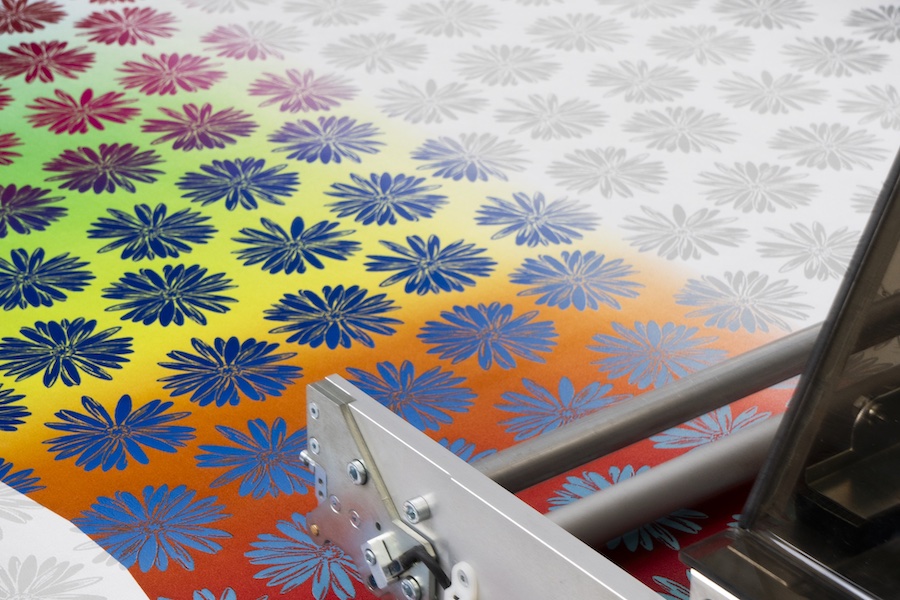
Global technology firm Epson announces a new direct-to-fabric digital textile printer designed for jacquard fabrics. The Monna Lisa ML-16000JQ delivers direct-to-fabric double-sided printing on jacquard fabrics, meeting the needs of fashion designers looking to enhance their creativity by seamlessly integrating vibrant colours with intricate woven patterns.
The Monna Lisa ML-16000JQ simplifies colored Jacquard patterns © 2025  Epson
The Monna Lisa ML-16000JQ simplifies colored Jacquard patterns © 2025 Epson


Traditional jacquard production is laborious and repetitive, yet the Monna Lisa ML-16000JQ simplifies this process. With just a white jacquard base, designers can explore infinite variations without repetitive processes thanks to its remarkable adaptability in colour, areas, and line changes—creating entirely novel and original fabrics.

The Monna Lisa ML-16000JQ stands out with its advanced and far more efficient double-sided printing feature. This allows it to automatically recognise pre-printed fabrics and produce prints on both sides with differing colours. This unique capability enhances customisation, engendering greater creative freedom for designers and allowing for new possibilities in textile design.

The ML-16000JQ deploys a high-precision recognition system that captures the exact position and shape of fabric patterns, optimising colour assignment with greater accuracy. This integrated software adapts to various fabric types, ensuring superior precision and reducing waste typically associated with traditional printing methods.

“At Epson, we understand the urgency of responding to evolving market demands with products that anticipate fashion trends while minimising environmental impacts. The Monna Lisa ML-16000JQ embodies this ethos," remarks XXXXXX. "Through combining high-precision recognition systems with bespoke software, the Monna Lisa ML-16000JQ detects the exact positions and shapes of jacquard fabric patterns, assigns precise colours to each area, adjusting as necessary for different fabric types, ensuring precision in pattern alignment. More than this, the precision pattern detection system ensures flawless double-sided printing with differential colouring.”

Incorporating 16 state-of-the-art Epson PrecisionCore printheads, the ML-16000JQ offers eight colours across four ink families from Epson GENESTA—Acid, Reactive, Dispersed, and Pigment. These versatile inks deliver unparalleled quality across a spectrum of fabric, from natural fibres to cutting-edge plant-based textiles like coconut and banana.
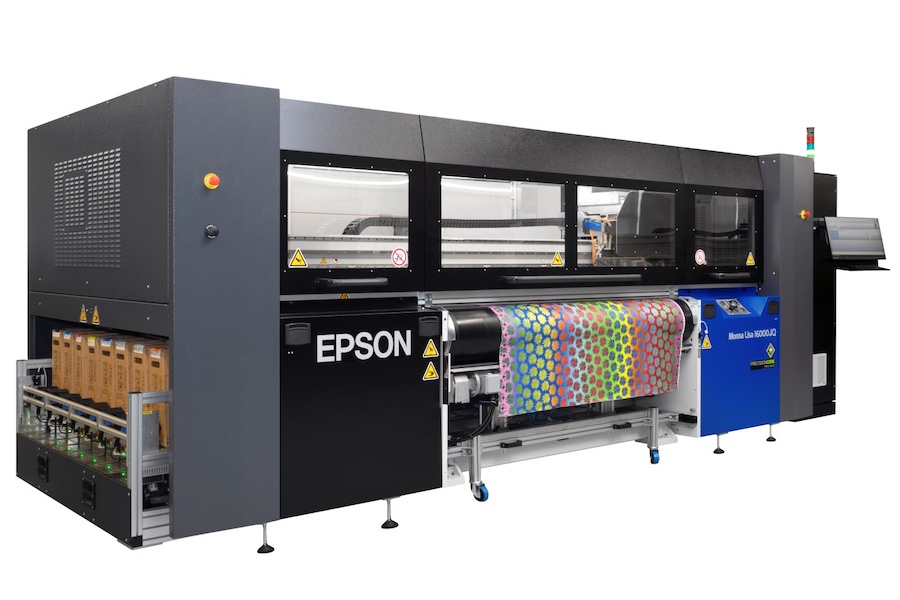
Epson Monna Lisa ML-16000JQ © 2025  Epson
Epson Monna Lisa ML-16000JQ © 2025 Epson


Monna Lisa ML-16000JQ - Key specifications:

- Printheads: 16 advanced Epson PrecisionCore printheads

- Resolution: Up to 1200 dpi for exquisite detail

- Width: Prints up to 180 cm wide

- Ink Colours: GENESTA inks available in Acid, Reactive, Dispersed, and Pigment variants

- Environmental Certification: All inks hold ECO PASSPORT certification, with additional recognitions such as bluesign and GOTS approvals

- Ink Cartridges: High-capacity, swappable 10-liter cartridges for seamless production

Through the Monna Lisa ML-16000JQ, Epson continues to lead the way towards integrating creativity and sustainability in the textile industry, redefining the future of fabric printing.

A more sustainable approach to digital textile printing with Monna Lisa

+ Digital textile printing with the Monna Lisa ML-16000JQ provides a more sustainable approach compared with traditional analogue printing as follows:

+ Reduced resource consumption: Digital printing technologies use less electricity and water compared to traditional printing methods. This reduction in resource usage is crucial for minimising environmental impact, especially in water-scarce regions.

+ On-demand printing: The Monna Lisa ML-16000JQ allows for on-demand printing, which means that fabrics can be produced as needed rather than in large batches. This approach helps to minimise waste, as it reduces the surplus stock that often results from overproduction in traditional printing processes.

+ Less chemical waste: Digital printing uses advanced ink formulations, such as Epson's GENESTA inks, which are designed to meet stringent environmental standards. Many of these inks are ECO PASSPORT certified and compliant with regulations such as GOTS and bluesign, which ensures that they are less harmful to the environment.

+ Quick turnaround and flexibility: With fast setup times and adjustable designs, the Monna Lisa ML-16000JQ promotes efficiency and flexibility in production. Designers can produce only what is necessary, incorporating trend changes without the need for extensive retooling or material waste.

+ Double-sided printing: The printer's capability to recognize pre-printed fabrics and accurately reproduce designs on both sides with different colours not only enhances creativity but also reduces the number of fabrics needed to achieve complex designs, thereby cutting down on material wastage.

+ Product lifecycle management: Digital printing allows for modifications and updates to designs even during production runs. This adaptability means that companies can be more responsive to trends and customer demands without over-production.

By using the Monna Lisa ML-16000JQ, the textile industry can embrace a more sustainable future, emphasising resource efficiency, waste reduction, and a commitment to environmental responsibility while delivering both creativity and innovation.

More News from Epson Europe

#Digital Printing

Epson launches SureColor G9000: high-production Direct-To-Film printer delivering greater productivity and reliability

Epson today announces the launch of the SureColor G9000, a new high-production Direct-To-Film (DTFilm) printer designed to meet growing global demand for flexible and efficient textile transfer printing. Expanding Epson’s DTFilm line-up alongside the SC-G6000, the SC-G9000 introduces enhanced speed, reliability and ease of maintenance for commercial garment decorators and textile producers.

#Digital Printing

Epson future proofs textile printing with Epson Textile Academy 2.0

Technology leader Epson today hosted its second Textile Academy Event at the company’s Textile Innovation Centre in Lutterworth, Leicestershire. Building on the success of its inaugural Textile Academy earlier this year, the event welcomed Textile Design BA students from Nottingham Trent University (NTU) and Loughborough University. The event features workshops designed to enhance student’s practical textile printing skills; corporate and entrepreneurial business acumen; marketing and self-branding; and environmental awareness around the textile industry.

#Recycling / Circular Economy

HKRITA and Epson develop silk-like regenerated fiber from cotton

The Hong Kong Research Institute of Textiles and Apparel ("HKRITA") and Seiko Epson Corporation ("Epson"; TSE: 6724) have succeeded in developing new regenerated cellulose fiber with a silk-like sheen from waste cotton fabric through a new production process.

#Digital Printing

Acquisition of Fiery, LLC, a company leading the digitalization of the printing process

Seiko Epson Corporation ("Epson") is pleased to announce that Epson has entered into an agreement with affiliates of Siris Capital Group, LLC ("Siris"), including Electronics for Imaging, Inc., on September 19, 2024 to acquire all interests in Fiery, LLC ("Fiery"), a U.S.-based company which is the leading provider of digital front end* ("DFE") servers and workflow solutions for the print industry. The transaction is subject to customary closing conditions including required regulatory approvals.

More News on Digital Printing

#Digital Printing

USColorworks expands digital platform with Kornit Atlas MATRIX and Atlas MAX PLUS solutions

Kornit Digital Ltd. (NASDAQ: KRNT), a global pioneer in sustainable, on-demand digital fashion and textile production, today announced that USColorworks, a North Carolina-based apparel decoration and fulfillment company specializing in custom and on-demand printing for retail and promotional markets, has expanded its Kornit digital production platform with the addition of Atlas MATRIX and Atlas MAX PLUS systems to deliver high-quality, on-demand apparel across cotton, blended fabrics and polyester.

#Digital Printing

DTF vs DTG Printing - The technologies shaping today’s custom merchandise market

From sportswear to branded tote bags, custom merchandise continues to grow in popularity across sectors, driving print shops to cater to short runs, personalisation, and rapid turnaround. As print providers look to this market, two printing technologies often stand out: Direct‑to‑Film (DTF) and Direct‑to‑Garment (DTG). Each offers its own benefits, and understanding these differences helps determine the most suitable production method for print service providers.

#Digital Printing

Mimaki celebrates Triple EDP Award win at FESPA 2026

Mimaki Europe, a leading manufacturer of industrial inkjet printers and cutting plotters, was presented with 3 EDP Awards at the association’s 2026 ceremony, held at FESPA Global Print Expo. These highly acclaimed awards celebrate best-in-class innovation across the print industry, and Mimaki was honoured in three different categories.

#Digital Printing

EFI brings high-performance display graphics, packaging, and textile printing innovations to FESPA 2026

Electronics For Imaging, Inc. (EFI™) is bringing a broad range of new hybrid, roll-to-roll, and textile inkjet innovations to FESPA Global Print Expo 2026, taking place 19-22 May at Fira Barcelona Gran Via. Visitors to the EFI stand (Hall 3, #C85) will see the new EFI VUTEk M3h X hybrid LED printer, new EFI VUTEk® FabriVU® 340 i8 eight-colour dye sublimation printer, the EFI VUTEk X5r roll-to-roll LED printer, and the EFI VUTEk Q3h XP seven-colour hybrid printer in action, each designed to help sign and display producers scale output, diversify applications, and drive more profitable growth.

Latest News

#Spinning

Ibrahim Fibres and Trützschler: A strong partnership enters its next phase with the TC 30Si

For more than two decades, Ibrahim Fibres and Trützschler have grown side by side, driven by a shared ambition to continuously improve spinning performance, strengthen technology leadership and set new benchmarks in the textile industry. Today, Ibrahim Fibres is a leading yarn and polyester staple fiber manufacturer in Pakistan. The company operates the largest number of Trützschler cards in the country, with more than 200 machines running across its mills in Faisalabad, and plays an important role in one of Asia’s largest textile industries.

#Functional Fabrics

CovationBio introduces two new bio-based innovations at Functional Fabric Fair New York

Covation Biomaterials LLC (“CovationBio®”) is showcasing its two new bio-based innovations, Xatryx® and Sorona® elasterell-p fiber, at this year’s Functional Fabric Fair in New York City, July 7–9, 2026. Attendees can visit CovationBio at Booth #404 to explore this next generation of bio-based performance materials.

#Research & Development

Geotextiles made from recycled materials: GREEN leads the way into the industry

For the industry, recycled materials are creating new opportunities in geotextile production. In the GREEN project, the Fraunhofer Cluster of Excellence Circular Plastics Economy CCPE demonstrates that recycled polypro-pylene (PP), polyethylene terephthalate (PET), and high-density polyeth-ylene (HDPE) can be processed into nonwovens, fibers, and membranes that meet industrial requirements. This creates opportunities for use in existing production lines and new value chains in the geotextile market.

#Nonwoven machines

A Penteadora starts up ANDRITZ textile recycling and needlepunch nonwoven lines in Portugal

A Penteadora SA has successfully started up a complete mechanical textile recycling line and a needlepunch nonwoven line supplied by ANDRITZ at its production site in Unhais da Serra, Portugal. This investment enables A Penteadora to expand its industrial capabilities and develop a new generation of solutions based on pre- and post-consumer recycled textiles. The input materials originate from its own production waste and other textile waste streams. Both lines are fully operational, and the first products are expected to reach the market in July.

TOP