[pageLogInLogOut]

#Digital Printing

Durst restructures textile printing segment

(c) 2020 Durst
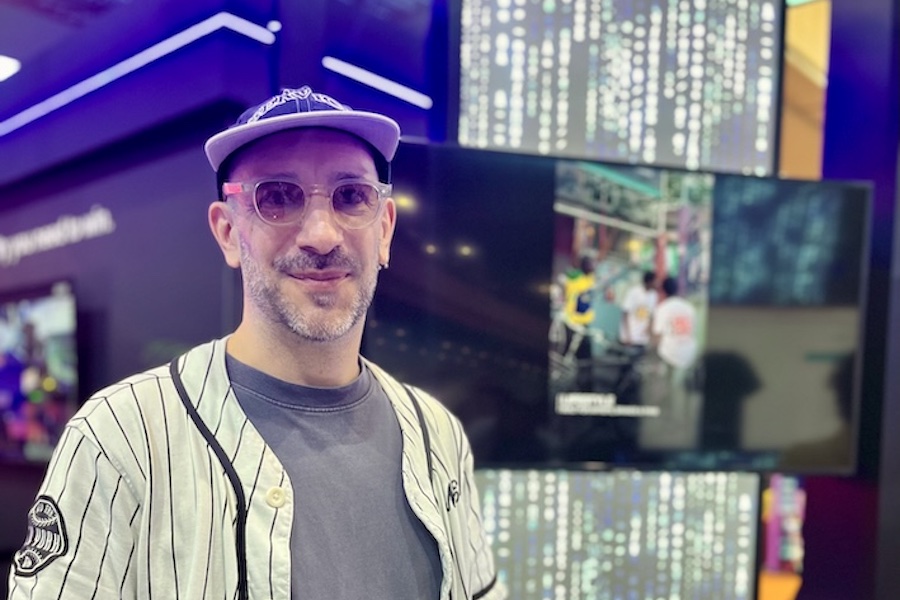
Dr. Stefan Kappaun, Durst Group’s new Textile Printing Segment Manager, who has responsibility for the strategic direction in home textiles, clothing and accessories

Durst, manufacturer of advanced digital printing and production technologies, has restructured its segment for industrial textile printing. The new segment manager, Dr. Stefan Kappaun, has responsibility for the strategic direction in home textiles, clothing and accessories. Dr. Kappaun also will be the connecting link to the Large Format Segment, which takes over soft signage and fabrics in the portfolio.

Dr. Kappaun is a member of Durst Group’s executive team and heads the ink business for all segments as Executive Vice President Inks & Fluids. A technical chemist with a focus on polymer science and a trained business economist, he is an expert in materials science and the development and marketing of ink systems for digital inkjet printing.

This know-how is particularly important within industrial textile printing, because, in contrast to other industries, different materials, pre- and post-treatments as well as large-scale process influences, represent a daily challenge in digital textile production. At the same time, digital textile printing is one of the largest growth markets for inkjet technologies. It is a sector being targeted by advertising media and large format providers in addition to traditional textile producers. All have different textile experiences, but are always looking for new applications and business opportunities.


With the Alpha Series, Durst offers industrial printing systems with water-based reactive, pigment and disperse inks as well as with the pixel-to-output strategy end-to-end software solutions for efficient and cost-transparent digital textile printing.

"The digital textile printing market is fragmented in itself and we see different speeds and developments worldwide," says Dr. Kappaun. "While new, non-industry service providers often already have digital know-how but less textile experience, the traditional manufacturers are masters of textile finishing, but not all analog processing steps can be transferred directly to digital textile printing. Durst has a comprehensive ecosystem to serve the different requirements and to support customers in the digital transformation. Our printing systems are designed for industrial productivity, but also offer profitability from the very first meter. The prerequisite for this is mastery of the pre-treatment and post-treatment steps as well as the digital workflow, in which Durst focuses on the consulting and training services in the new Customer Experience Center at the Durst headquarters in Brixen."

Dr. Stefan Kappaun succeeds Martin Winkler in his expanded role as Segment Manager Textile Printing, who will take on the role of Global Sales Manager Textile Printing in the future. The Textile Printing Team will also be supplemented by the experienced service technician Martin Oberparleiter, as the new Junior Product Manager Textile Printing. New sales and service structures are also being implemented in the core markets.


More News from Durst Phototechnik AG

More News on Digital Printing

#Digital Printing

USColorworks expands digital platform with Kornit Atlas MATRIX and Atlas MAX PLUS solutions

Kornit Digital Ltd. (NASDAQ: KRNT), a global pioneer in sustainable, on-demand digital fashion and textile production, today announced that USColorworks, a North Carolina-based apparel decoration and fulfillment company specializing in custom and on-demand printing for retail and promotional markets, has expanded its Kornit digital production platform with the addition of Atlas MATRIX and Atlas MAX PLUS systems to deliver high-quality, on-demand apparel across cotton, blended fabrics and polyester.

#Digital Printing

DTF vs DTG Printing - The technologies shaping today’s custom merchandise market

From sportswear to branded tote bags, custom merchandise continues to grow in popularity across sectors, driving print shops to cater to short runs, personalisation, and rapid turnaround. As print providers look to this market, two printing technologies often stand out: Direct‑to‑Film (DTF) and Direct‑to‑Garment (DTG). Each offers its own benefits, and understanding these differences helps determine the most suitable production method for print service providers.

#Digital Printing

Mimaki celebrates Triple EDP Award win at FESPA 2026

Mimaki Europe, a leading manufacturer of industrial inkjet printers and cutting plotters, was presented with 3 EDP Awards at the association’s 2026 ceremony, held at FESPA Global Print Expo. These highly acclaimed awards celebrate best-in-class innovation across the print industry, and Mimaki was honoured in three different categories.

#Digital Printing

EFI brings high-performance display graphics, packaging, and textile printing innovations to FESPA 2026

Electronics For Imaging, Inc. (EFI™) is bringing a broad range of new hybrid, roll-to-roll, and textile inkjet innovations to FESPA Global Print Expo 2026, taking place 19-22 May at Fira Barcelona Gran Via. Visitors to the EFI stand (Hall 3, #C85) will see the new EFI VUTEk M3h X hybrid LED printer, new EFI VUTEk® FabriVU® 340 i8 eight-colour dye sublimation printer, the EFI VUTEk X5r roll-to-roll LED printer, and the EFI VUTEk Q3h XP seven-colour hybrid printer in action, each designed to help sign and display producers scale output, diversify applications, and drive more profitable growth.

Latest News

#Spinning

Ibrahim Fibres and Trützschler: A strong partnership enters its next phase with the TC 30Si

For more than two decades, Ibrahim Fibres and Trützschler have grown side by side, driven by a shared ambition to continuously improve spinning performance, strengthen technology leadership and set new benchmarks in the textile industry. Today, Ibrahim Fibres is a leading yarn and polyester staple fiber manufacturer in Pakistan. The company operates the largest number of Trützschler cards in the country, with more than 200 machines running across its mills in Faisalabad, and plays an important role in one of Asia’s largest textile industries.

#Functional Fabrics

CovationBio introduces two new bio-based innovations at Functional Fabric Fair New York

Covation Biomaterials LLC (“CovationBio®”) is showcasing its two new bio-based innovations, Xatryx® and Sorona® elasterell-p fiber, at this year’s Functional Fabric Fair in New York City, July 7–9, 2026. Attendees can visit CovationBio at Booth #404 to explore this next generation of bio-based performance materials.

#Research & Development

Geotextiles made from recycled materials: GREEN leads the way into the industry

For the industry, recycled materials are creating new opportunities in geotextile production. In the GREEN project, the Fraunhofer Cluster of Excellence Circular Plastics Economy CCPE demonstrates that recycled polypro-pylene (PP), polyethylene terephthalate (PET), and high-density polyeth-ylene (HDPE) can be processed into nonwovens, fibers, and membranes that meet industrial requirements. This creates opportunities for use in existing production lines and new value chains in the geotextile market.

#Nonwoven machines

A Penteadora starts up ANDRITZ textile recycling and needlepunch nonwoven lines in Portugal

A Penteadora SA has successfully started up a complete mechanical textile recycling line and a needlepunch nonwoven line supplied by ANDRITZ at its production site in Unhais da Serra, Portugal. This investment enables A Penteadora to expand its industrial capabilities and develop a new generation of solutions based on pre- and post-consumer recycled textiles. The input materials originate from its own production waste and other textile waste streams. Both lines are fully operational, and the first products are expected to reach the market in July.

TOP