[pageLogInLogOut]

#Digital Printing

Durst Como is born

The Durst Group, a leading manufacturer of digital printing and production technologies, is setting another milestone in the digital textile industry: the merger with Aleph SrL is entering its final phase. With legal completion expected by the end of 2025, Aleph will be fully integrated into the Durst Group, and Durst Como will emerge as a new center of excellence for digital textile printing.
© 2025 DURST
© 2025 DURST


Product management will be centralized under the leadership of Andrea Riccardi, Head of Product Management Graphics & Textile at the Durst Group, to ensure a clear strategic direction and seamless integration of all technologies.

Andrea Riccardi, Head of Product Management Graphics & Textile © 2025 DURST


“Durst Como will be our innovation center for the textile future – a hub that unites technology, software, and passion,” says Christoph Gamper, CEO and co-owner of the Durst Group.

The new structure will be supported by a strong leadership team:

+ Alessandro Manes will take on the role of Director Global Sales Industrial Textile, overseeing global sales activities.

+ Roberto Manes will be responsible for Director Development Textile, leading research and development.

+ Roberto Frigerio will serve as Managing Director of Durst Como, expanding and managing the site.

Premiere at FESPA 2025 in Berlin

An initial result of the merger will be showcased by the Durst Group at FESPA 2025 in Berlin, featuring the new Durst LF Series Graphics. These printing systems, developed further from the Aleph Laforte platform for indoor and outdoor applications using water-based inks, enable both high-speed sublimation printing on paper and direct printing on polyester fabrics with sublimation ink. Key features of these advancements include the sticky-belt transport system for textile materials and the patented vacuum-belt transport system for paper media, both ensuring top precision and quality. At FESPA 2025, the Durst Group will exhibit the LF 430 GF (Graphics Direct Fabrics) using water-based pigment inks for direct-to-fabric printing.

This expansion of the Durst Graphics portfolio reinforces the company’s market position in the areas of signage, trade fair construction, and textile advertising.
More News from Durst Phototechnik AG

More News on Digital Printing

#Digital Printing

From a bedroom startup to 3,000 designs: How Lonely Kids Club built its business with DTG printing

Founded in Sydney in 2011, independent clothing label Lonely Kids Club has grown from a bedroom startup into a business offering around 3,000 graphic T-shirt designs. With its own production studio, direct-to-garment printing and a demand-driven manufacturing model, the company demonstrates how smaller apparel brands can combine creative independence with flexible production – while navigating the everyday challenges of quality control, workflow efficiency and sustainability.

#Digital Printing

Mimaki highlights growing demand for hybrid UV printing across European markets

Insights from Mimaki's European partner network reveal how hybrid UV printing is responding to different regional market needs, driven by growing demand for flexible, application-oriented printing technologies.

#Digital Printing

VistaPrint increases apparel production capacity with Kornit Apollo

Kornit Digital (NASDAQ: KRNT), a provider of on-demand digital textile production technologies, reports that VistaPrint has significantly increased its apparel production capacity through the implementation of the Kornit Apollo system. The installation has enabled the international print and design company to add approximately 25,000 units of weekly production capacity while improving production speed, operational efficiency and order turnaround times.

#Digital Printing

Blue Tomato accelerates agile retail apparel production with Kornit Digital

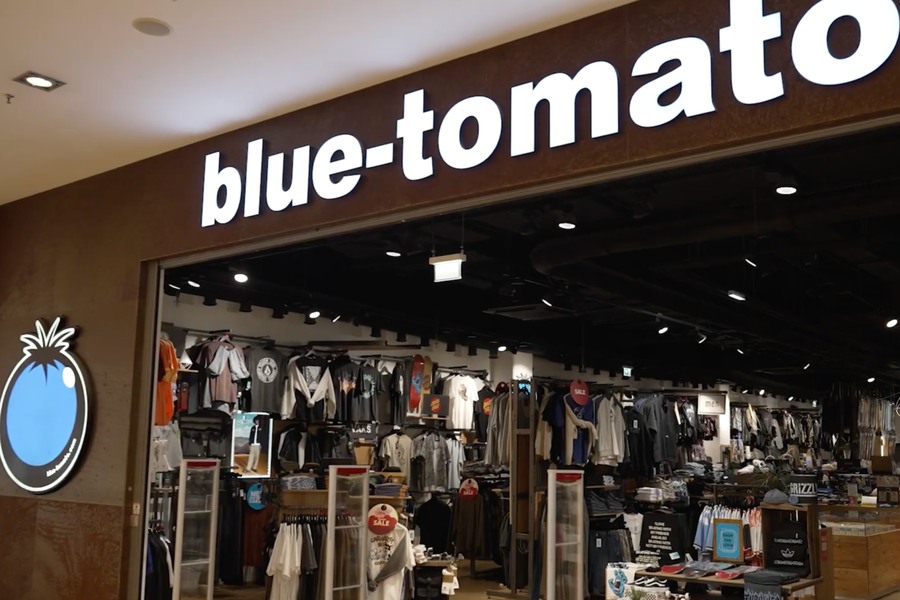
Kornit Digital (NASDAQ: KRNT), a global pioneer in on-demand digital fashion and textile production technologies, is highlighting how Blue Tomato, Europe’s largest board sports retailer, is using two Kornit Atlas MAX PLUS systems to support a more agile approach to in-house apparel production. The systems are helping Blue Tomato respond faster to changing consumer trends, produce high-quality apparel for its network of 86 retail stores across Europe and reduce inventory by printing only what the market demands.

Latest News

#Associations

Christoph René Holler to succeed Uwe Mazura as managing director of textil+mode

Christoph René Holler will take over as managing director of textil+mode, the German textile and fashion industry confederation, on 1 January 2027. He succeeds Uwe Mazura, who has led the association for 13 years and will remain in charge of collective bargaining policy through the next round of negotiations before retiring.

#Heimtextil 2027

Heimtextil and The Florentin showcase the role of textiles in hotel design

Heimtextil has partnered with Frankfurt hotel The Florentin by Althoff Collection for its new Interior.Architecture.Hospitality campaign. The collaboration will give architects, interior designers and other contract-sector professionals a closer look at how textiles were used in the hotel. The two studios behind the project will discuss their work at Heimtextil on 14 January 2027 in Hall 4.1.

#EU Textile Strategy

EU Commission proposes advanced materials agenda with targets for 2035

The European Commission has proposed an Advanced Materials for Europe agenda to accelerate the development, production and adoption of safer and more sustainable advanced materials. The proposal sets three benchmarks for 2035 and calls for closer coordination among EU member states to help move new materials from the laboratory into industrial production.

#Research & Development

Empa develops liquid-core fibre for insecticide-treated mosquito nets

Empa researchers have developed a liquid-core fibre for mosquito nets that can incorporate insecticides unsuitable for conventional melt spinning. The fibre gradually releases the active ingredient through a polymer sheath. The team developed and tested the yarn over three years in the Innosuisse project MalCoFil with Swiss industry partners Vestergaard and Monosuisse.

TOP