#Composites
First thermoplastic composite structure demonstrator
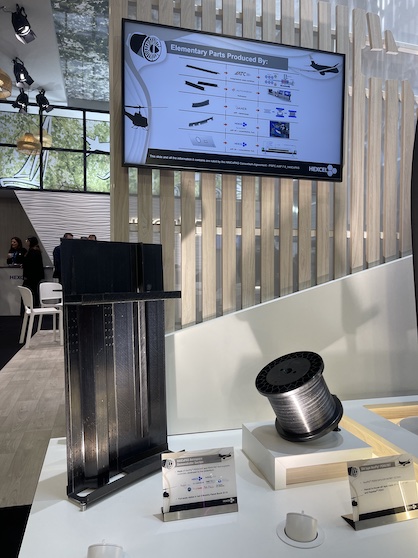
The high-performance thermoplastic composite structure was designed and manufactured using HexPly® thermoplastic tapes. These aerospace-grade materials are developed from Arkema’s Kepstan® PEKK resin and Hexcel HexTow® AS7 and IM7 carbon fibers.
The demonstrator project was carried out as part of the collaborative project known as HAICoPAS. The primary goal of HAICoPAS is to optimize the design and production process for unidirectional composite tapes made from high-performance thermoplastic resins and continuous carbon fibers. Additionally, the project aims to develop a more efficient tape placement technology and a novel continuous and dynamic in-situ welding (ISW) assembly system with real-time quality control. Ultimately, the objective is to produce composite parts that can replace metallic materials (such as steel, aluminum, and titanium) in aircraft structures, achieving both cost competitiveness and high production rates.
The work of the project partners has successfully overcome the technological barriers identified at the beginning of the project, including:
1. The development, implementation, and characterization of carbon/thermoplastic (C/PEKK) tapes.
2. The creation of an automated deposition process for consolidation outside of autoclaves.
3. The establishment of the ISW welding technology for assembly.
The definition of elementary parts intended to form the assembled components of the HAICoPAS demonstrator was carried out in close collaboration with an industrial advisory committee comprising Airbus, Safran, Daher, Hutchinson, and ATC. The final version of the aeronautical demonstrator, made from composite tapes and assembled using ISW technology, is currently on display at the JEC World Innovation Planets exhibition in the Mobility section.
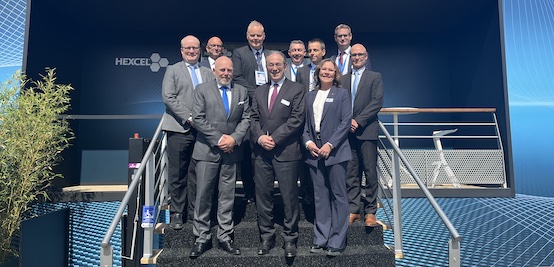
This innovative demonstrator was successfully developed within the framework of the collaborative project “HAICoPAS” (Highly Automatized Integrated Composites for Performing Adaptable Structures). The HAICoPAS project is a collaborative initiative led by Hexcel and Arkema, along with their industrial partners (Ingecal, Coriolis Composites, Pinette Emidecau Industries (PEI), and Institut de Soudure). Additionally, a consortium of university laboratories, spearheaded by CNRS and comprising the PIMM (CNRS - Arts et Métiers ParisTech - Cnam) and LTEN (CNRS - Université de Nantes), played a crucial role in this endeavor. The Structuring R&D Project for Competitiveness (PSPC) received support from Bpifrance as part of the Investment for the Future Program and was endorsed by the Polymeris competitiveness cluster.