[pageLogInLogOut]

#Spinning

Further EvoQuench PA POY systems destined for China

Oerlikon Barmag recently signed contracts for two orders with a total of 120 spinning positions for manufacturing polyamide POY yarn with Chinese yarn manufacturers. What makes this so special is the fact that all positions will be equipped with the EvoQuench radial quenching system for polyamide.

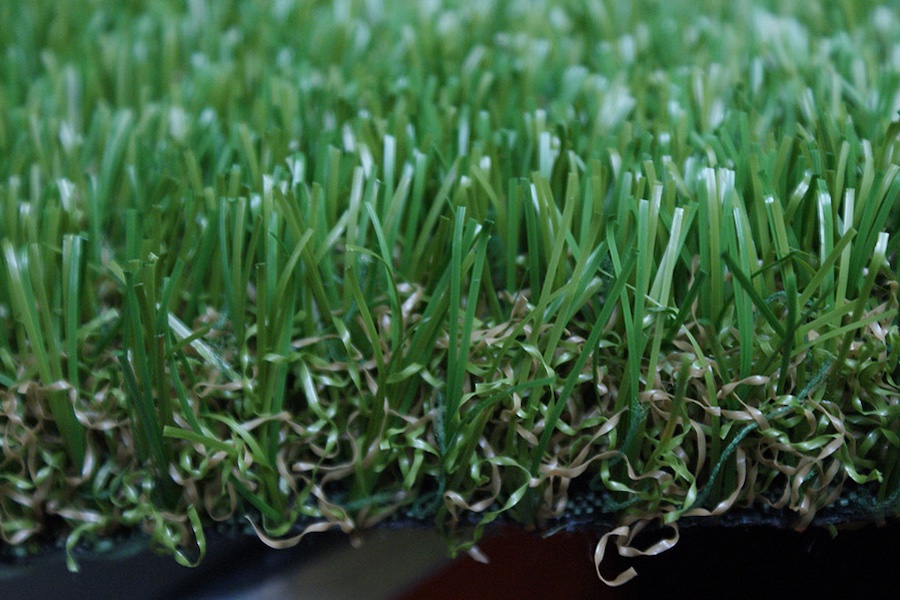
With this, two well-known yarn manufacturers are now committing to the EvoQuench concept to produce polyamide yarn, equipping themselves for the efficient manufacture of microfiber yarns in the process. The benefits of radial quenching vis-à-vis conventional cross-flow quenching when manufacturing microfibers are well-known from polyester processing: manufacturing outstanding quality in a more production-reliable manner, i.e. with fewer yarn breaks, is a convincing argument and makes producing polyamide microfibers considerably more efficient. “Used to create fabrics, the materials feel very pleasant to the touch”, comments Stephan Faulstich, Head of Development POY Process at Oerlikon Barmag, who has held the results of the currently sole operator of such a system in his hands. “I can imagine this will be used above all in the manufacture of sports apparel and underwear.”

Currently, Oerlikon Barmag is the world’s only supplier of an already operating radial quenching concept for polyamide. This was absolutely decisive for both customers – well-known polyamide yarn manufacturers from the Zhejiang and Fujian provinces.

“We are anticipating a similar effect in the development of the polyamide market as we did in the case of polyester. The efficient production of high-end microfiber yarns has become possible with the introduction of radial quenching for polyester yarns; the products have quickly developed from niche into standard products”, assesses Regional Sales Director Detlef Heinze, talking about this quantum leap. The new systems are scheduled to begin manufacturing in early 2021. The high-end yarns are destined for global export.
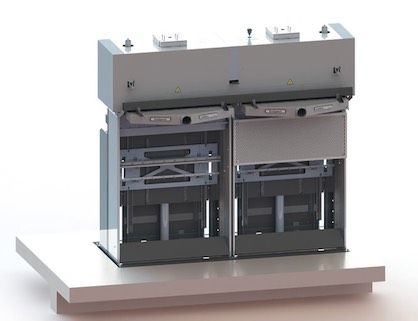
 

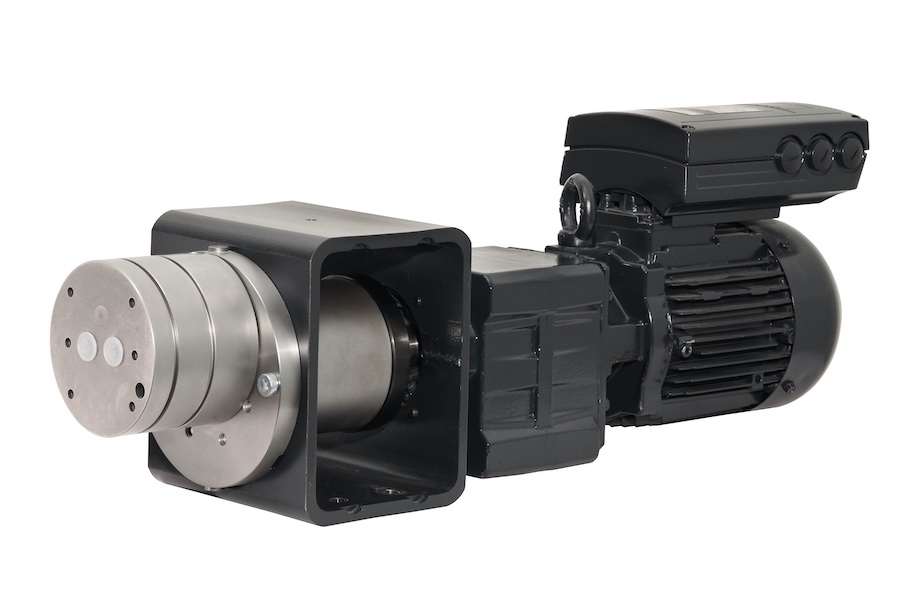
Setting new standards in polyamide microfiber yarn manufacturing: the EvoQuench PA radial quenching system (c) 2019 Oerlikon


More News from Oerlikon Textile GmbH & Co. KG

#Nonwovens / Technical Textiles

Crimper repair workshop begins operations

Since the beginning of the year, Oerlikon Textile Inc. has been offering a crimper repair service, making it the company's first location worldwide to do so. The workshop in Charlotte specializes primarily in Fleissner and Neumag crimpers.

#Spinning

Oerlikon Manmade Fibers Solutions hosted successful Technology Day 2025 in India

Oerlikon Manmade Fibers Solutions recently hosted its highly anticipated Innovation and Technology Day at the Deltin Hotel in Daman by end of January 2025. The event attracted over 300 participants, including industry experts, partners, and stakeholders, who gathered to explore the latest advancements and trends in the manmade fibers industry in India.

#Spinning

Industrial yarn producer sees growth potential in tire cord sector

The Chinese Junma Group has expanded its HMLS capacities by 20 positions, hence becoming one of the largest tire cord manufacturers in China. At present, the company has 64 positions of HMLS systems, all of which are from Oerlikon Barmag.

#Spinning

Oerlikon reports third quarter 2024 results, highlights strong execution in a challenging market landscape

In the third quarter of 2024, Oerlikon reported a stable operational Group EBITDA margin, despite challenging market conditions, thanks to a focus on pricing, cost management, and efficiency across both divisions. Group order intake saw a 4% year-over-year decline at constant FX, attributed to temporary market softness in Surface Solutions, while orders in Polymer Processing Solutions showed signs of stabilization.

More News on Spinning

#Techtextil 2026

DIENES at Techtextil 2026: Flexible pilot lines for bio-based fiber development

The growing relevance of bio-based materials in technical textiles is accompanied by increasing demands for reproducibility, high-quality data, and scalable process routes. Especially when working with cellulose and its derivatives, chitosan, lignin-based approaches, or bio-based PAN as a carbon-fiber precursor, R&D teams face variable feedstock quality, tighter process windows, and the need for reliable comparability across trials. This calls for flexible, data-driven experimental setups that can be reconfigured efficiently when recipes, solvents, and raw-material batches change.

#Techtextil 2026

RETECH showcases high-precision godets for high-performance fiber processing at Techtextil 2026

RETECH designs and manufactures godets and draw frames for heated, ambient and cooled processes, enabling precise heat treatment and consistently high yarn quality for a wide range of polymers and applications, with process temperatures of up to 400 °C for high-performance fibers. The company’s key competence lies in exact and stable temperature and speed control, individually adapted to the specific material and process requirements.

#Spinning

Barmag presents the next generation of POY production – energy-efficient and partial-automated

With POY 2.0, Barmag is introducing a completely redesigned spinning concept that takes the production of partially oriented yarn (POY) to a new level in terms of technology and economy. The solution, which was presented to a selected audience of experts for the first time at ITMA Asia + CITME 2025, was met with great enthusiasm: several yarn producers worldwide immediately expressed their interest in a pilot plant.

#Spinning

Development of bio-based polyethylene fibers for textile applications – BB Engineering partici-pates in the bioPEtex research project

In the German research project bioPEtex, BB Engineering (BBE) is working with other partners to develop textiles made from 100% bio-based polyethylene (PE). The aim is to make use of this poly-mer, which has hardly been used in the chemical fiber industry to date. BBE is contributing its spinning and texturizing expertise and developing the texturing process on an industrial scale. The first promising results are already available – opening up new opportu-nities for sustainable and economically attractive applications in the textile industry.

Latest News

#Composites

Kordsa showcases its global expertise in material technologies at JEC World 2026

Kordsa, a subsidiary of Sabancı Holding, shared its global expertise in material technologies with participants at JEC World 2026, held in Paris. The company’s solutions developed for a wide range of industries—particularly aviation, energy, and automotive—stood out among its key innovations at the exhibition. Throughout the event, Kordsa also presented its vision for sustainable growth and its strategic transformation in composite technologies to international stakeholders.

#HIGHTEX 2026

The global meeting point of the technical Textiles and nonwoven industry: HIGHTEX 2026

One of the world’s most prestigious technical textiles and nonwoven exhibitions, the HIGHTEX 2026 International Technical Textiles and Nonwoven Exhibition, is preparing to open its doors to industry professionals at the Tüyap Fair and Congress Center in Istanbul between June 9–13, 2026. Bringing together manufacturers, technology developers, and global buyers from all around the world in the field of technical textiles, HIGHTEX 2026 will be an important platform showcasing the sector’s innovative solutions and paving the way for new collaborations.

#Texprocess 2026

Texprocess 2026: Automation, digitalisation and AI reshape textile processing

Investment decisions in textile processing have become increasingly complex. Rising energy prices, labour shortages and geopolitical uncertainties are forcing companies to prioritise technologies that deliver measurable improvements in efficiency and process stability. This applies not only to apparel production, but also to the processing of technical textiles and high-performance materials. Modernisation projects are therefore being evaluated more selectively – but the pressure to upgrade production systems continues to grow. Texprocess 2026 reflects this tension between cautious investment behaviour and increasing technological demand.

#Techtextil 2026

Smart sensors, smart savings - Reducing energy and cost in textile finishing

As energy prices, sustainability requirements and quality expectations continue to rise, manufacturers of technical textiles face increasing pressure to optimize efficiency while ensuring process reliability. At the same time, skilled labor shortages require production systems that are intuitive, automated and easy to manage. PLEVA addresses these challenges with robust, maintenance-friendly sensor technologies combined with intelligent process control.

TOP