[pageLogInLogOut]

#Recycling / Circular Economy

EuRIC plastics webinar brings together 250+ participants to tackle Europe’s plastics recycling crisis

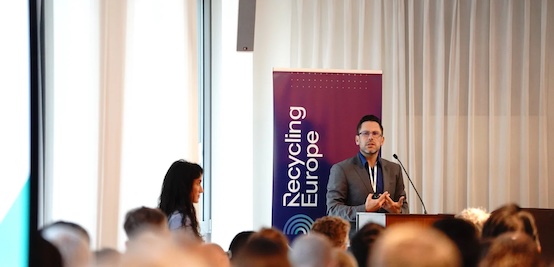
Over 250 industry stakeholders gathered at EuRIC’s webinar on 4 March to address a critical question: How can Europe resolve its plastics recycling crisis? The discussion highlighted the pressing challenges faced by the industry and the policy measures needed to ensure its sustainability and competitiveness.

“The plastics recycling industry is not immune to the pressures of high energy prices and a lack of commitment across the value chain,” stated Sophie Sicard, President of EuRIC’s Plastics Recycling Branch (EPRB), as she opened the webinar. She pointed to weak domestic demand and the surge in imports from third countries as key factors exacerbating the crisis.

Maria Vera Duran, EuRIC’s Senior Technical Manager, presented the EU Plastic Recyclers’ Roadmap released in December, which outlines essential policy recommendations. These include, among others, establishing End-of-Waste (EoW) criteria, introducing financial incentives like lower VAT for circular materials, and adopting a risk-based approach to hazardous substances. Additionally, she stressed that the new Waste Shipment Regulation (WSR) and the upcoming ban on plastic waste exports to non-OECD countries will increase the waste available for recycling in the EU, and thus, intensify the need of a strong internal market for recyclates.

The panel discussion reinforced the urgent need to align sustainability with competitiveness. Featuring insights from Judit Guerra-Falcon (Plastics Europe), Joost Schollaert (Galloo Plastics), and Mathias Bach Kirkegaard (Denmark’s Permanent Representation to the EU), the panel warned of a potential oversupply of recycled plastics by the end of 2026 and the risk of deindustralisation in Europe. The speakers emphasised the necessity of design-for-recycling principles and ambitious mandatory recycled content targets, particularly in light of the proposal for a Regulation on End-of-Life Vehicles (ELVs) and the Clean Industrial Deal.

EuRIC extends its gratitude to all speakers and participants for their valuable contributions to this crucial discussion. The full webinar recording is available here.


More News from Recycling Europe (ex EuRIC AISBL)

More News on Recycling / Circular Economy

#Recycled_Fibers

Reju announces site selection for French Regeneration Hub in Lacq advancing Europe’s circular textile infrastructure

Reju, the textile-to-textile regeneration company based in France, announces the site selection for an industrial sized Regeneration Hub, in Lacq, in the Pyrénées-Atlantiques, on the Induslacq platform. Reju, a Technip Energies owned company, is deepening its roots in France through the development of this new Regeneration Hub.

#Technical Textiles

Covestro showcases monomaterial concept in autonomous SUE People Mover

UE | STUDIOS has unveiled the fully autonomous electric minibus “Self-driving Urban E-Shuttle” (SUE), placing strong emphasis on sustainable material design. Developed within a project funded by the Federal Ministry for Economic Affairs and Energy (BMWE) and the European Union, the vehicle will begin public road testing this year. At the core of the concept is the consistent use of recyclable monomaterials to improve circularity at end of life.

#Recycled_Fibers

Circ announces New Fiber Club partners to accelerate commercial adoption of recycled textiles

Circ®, a global leader in textile‑to‑textile recycling, announced the scaling of its Fiber Club initiative. Building on the success of the inaugural program, Circ is bringing together a new group of brand partners: the lifestyle brand Madewell (under J.Crew Group), sustainable fashion brand Reformation, and European retailer C&A, alongside supply chain partners Lenzing and Linz Textil.

#Recycling / Circular Economy

Circulose restarts commercial-scale production at Ortviken plant in Sundsvall

Circulose today announced the restart of its commercial-scale production plant at Ortviken in Sundsvall, Sweden, marking a significant step in scaling next-generation materials for the global fashion industry. The company plans to resume production of CIRCULOSE®, a recycled pulp made entirely from discarded cotton textiles, in the fourth quarter of 2026.

Latest News

#Raw Materials

Esquel Group adds two new extra-long staple cotton varieties approved

Esquel Group’s Xinjiang Research & Development Center has successfully developed two new Sea Island cotton (Extra-Long-Staple cotton, ELS cotton) varieties named “Yuan Loong 37” and “Yuan Loong 42,” which have been officially approved and granted registration numbers. Both varieties have also obtained Plant Variety Rights certificates, marking another significant breakthrough for the Group in cotton breeding and commercial application.

#Weaving

Itema America acquires Palmetto Loom Reed, strengthening local manufacturing and service in the U.S.

Itema America, the U.S. subsidiary of Italy-based Itema Group, has acquired – through an Assets Purchase Agreement – Palmetto Loom Reed, a Greenville, South Carolina-based manufacturer of weaving reeds and one of the last remaining domestic producers of these precision components in the United States.

#Functional Fabrics

lululemon introduces Unrestricted Power™ — A new sensation for strength training

lululemon (NASDAQ: LULU) has unveiled Unrestricted Power™, a new innovation platform engineered for heavy lifts and demanding gym sessions. The assortment, which launches in North America, is backed by thousands of hours of research and development, providing secure support without compromising comfort and mobility, enabling a distraction-free fit built to match every move.

#Raw Materials

Aid by Trade Foundation reaches new milestones in supply chain transparency

The Aid by Trade Foundation (AbTF) is reaching new milestones as it leads the way towards greater physical traceability for Cotton made in Africa® (CmiA) cotton. With around 700 suppliers and producers in a total of 25 countries, the Aid by Trade Foundation has reached a new record number of partners who can trace CmiA cotton from the product back to its origin. This is more than double the previous year’s figure.

TOP