[pageLogInLogOut]

#Europe

Annual public Textile ETP Conference

This year, the Annual Conference of the European Technology Platform (ETP) for the Future of Textiles and Clothing will take place online on 28 and 29 September, from 14.00 to 17.30 (CET). The full details on speakers and time slots for both days and the registration link will be shared by the organisers in the coming days.

The first day will be dedicated to Research & Innovation Trends & EU Funding Opportunities in Functional and smart materials & Digitalisation. On Wednesday 29, participants will discuss the circular and biobased textile transition. 

During these 4 thematic sessions expert speakers from the European Commission, European Partnerships and ETP members will share their insights into EU policies, funding opportunities and latest research and technology trends.






More News from TEXDATA International

#ITM 2026

ITM 2026: The new geography of textile production

New production hubs are emerging across North Africa and Central Asia, while Türkiye is accelerating its transformation toward higher-value, technology-driven and more sustainable textile manufacturing.

#Research & Development

“Production is a product”

From technical textiles and AI-driven robotics to the limitations of textile circularity: Professor Dr Thomas Gries looks back on more than two decades of development at ITA Aachen. In the interview, he explains why production technology remains a decisive success factor, discusses international collaborations and innovation ecosystems, and shares his views on the transformation of production landscapes and the challenges facing an increasingly regulated industry.

#Knitting & Hosiery

“We need to move away from the price trap and return to a value-driven mindset.”

With its new Textile Innovation Center, KARL MAYER is sending a strong signal for innovation, collaboration, and the future of textile applications. In this interview, Karl Josef Mayer discusses new opportunities in warp knitting, the processing of staple fibres, recycling, the changing role of machinery manufacturers, and why the textile industry must once again focus more strongly on the value of textiles. by Oliver Schmidt

#Associations

“Innovation, resilience and international experience remain the great strengths of the Swiss textile machinery industry”

Geopolitical uncertainty, growing competitive pressure from China, new free trade agreements and the shift towards a circular economy are currently reshaping the global textile industry. In this interview, Cornelia Buchwalder discusses the current mood within the Swiss textile machinery sector, the industry’s distinctive innovative strength, new market opportunities in India and Asia, and the technological trends that could shape the upcoming trade fair cycle leading up to ITMA 2027.

More News on Europe

#Europe

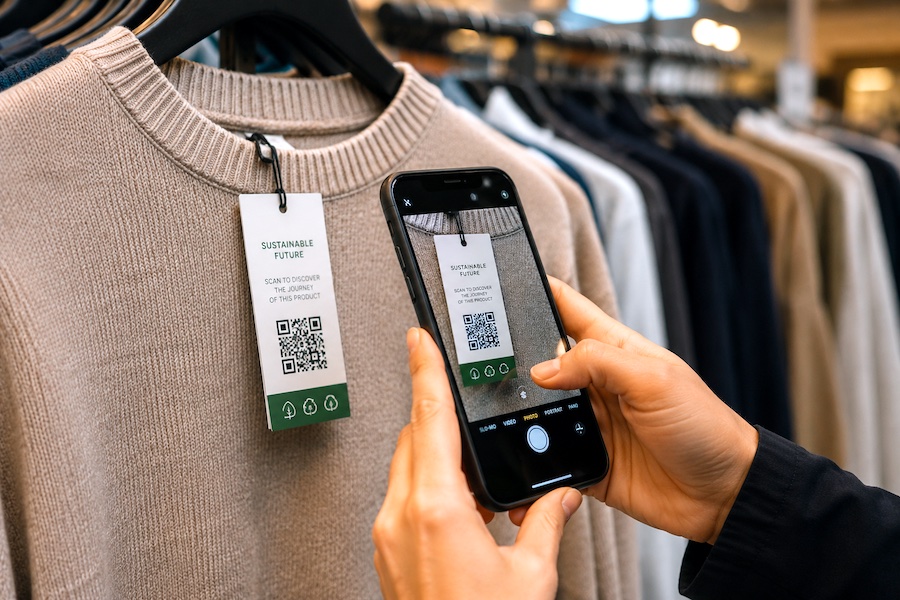
The Digital Product Passport registry is now live

On 20 July, the European Commission launched the Digital Product Passport Registry together with a testing environment, marking an important milestone in making the Digital Product Passport (DPP) a practical reality for businesses placing products on the EU market.

#Europe

EU ban on destroying unsold clothing and footwear now in force

The European Union's ban on the destruction of unsold clothing, clothing accessories and footwear has entered into force. Since July 19, 2026, large companies across the EU have been prohibited from destroying unsold textile products, while medium-sized companies will be required to comply with the same rules from 2030.

#Recycling / Circular Economy

Commission clarifies rules on plastic bottles recycling

The European Commission today adopted new rules on recycling of single-use plastic beverage bottles made primarily of polyethylene terephthalate (PET bottles). These rules establish, for the first time, a methodology to calculate, verify and report chemically recycled content. This is part of the Commission’s December 2025 plastics package.

#Europe

Circular economy offers the EU win-win on environment and economy

Stepping up a circular economy offers the European Union the potential for significant positive impacts on Europe’s environment and poses an untapped and strategic economic opportunity in terms of better access to materials and the creation of new businesses. Three new assessments on circularity, published today by the European Environment Agency (EEA), also stress the need to accelerate investment in circularity efforts to meet EU climate and environment policy targets.

Latest News

#Recycled Fibers

Eastman Naia™ brings its inside-out denim vision to Kingpins New York

Following its debut at Kingpins Amsterdam, Eastman Naia™ brings the next chapter of its denim story to Kingpins New York, taking place July 22–23. At Booth Green 7, Naia™ presents its denim proposition built around three complementary design directions: Performance Denim, Fashion Denim and Authentic Denim.

#Recycling / Circular Economy

Pirelli, Pyrum, Synthos and BASF partner to transform end‑of‑life and scrap tyres into recycled materials for new products

Pirelli, Pyrum, Synthos and BASF are jointly advancing a tyre-to-tyre circular economy initiative in Europe, driving the development of an industrial ecosystem designed to increase the use of recycled materials derived from end-of-life and scrap tyres.

#Recycling / Circular Economy

Recover™ showcases textile recycling to European ambassadors in Bangladesh

Representatives of the European Union, the Netherlands and Spain have visited Recover™’s textile recycling facility in Bangladesh to discuss the implications of upcoming EU textile regulations and the role of textile-to-textile recycling in future supply chains.

#Dyeing, Drying, Finishing

Contactless measurement of coating for Technical Textiles with PLEVA AF 310 and AF 120

Textiles used for protection and defense must perform reliably – whether they are protective garments, tents, tarpaulins, covers, or technical carrier materials. Properties such as flame resistance, water repellency, weather resistance, or defined air permeability are often only achieved through precise coating, finishing, or printing processes.

TOP