[pageLogInLogOut]

#Associations

AATCC method quantifies fiber shedding

Test Method for Fiber Fragment Release During Home Laundering, provides a standardized method for quantifying fiber fragment shedding in the ongoing challenge to combat aquatic pollution. These fragments are sometimes referred to as “microfibers” or “microplastics.” T-shirt breaking into dustAATCC TM212 was developed to provide a means to determine the mass of fiber fragments released in an accelerated laundering setting. This method provides the global industry with a consistent and uniform test method to follow.

AATCC TM212 defines standard nomenclature with the terms fiber fragment and microfiber, which address discrepancies that have long been a source of confusion for many who work to tackle pollution.

Originally assumed to be a plastics problem, natural fibers are also appearing in marine life’s food cycle. AATCC TM212 is not limited to man-made fibers, as it can be used to determine the fiber shedding potential of natural fibers and blends.

trash on beachThe standard is the result of collaboration, not only within AATCC committee RA100 Global Sustainability, but among stakeholders from several organizations including The Microfibre Consortium, headquartered in the UK, and the Cross Industry Agreement of European signatories. The outgoing Chair of RA100, Heather Elliot of Adidas, extends her sincere gratitude. She says, “Thank you to everyone who helped make this test method happen. It has been years in the making and would never have happened without the hands and minds of so many amazing people. We can’t thank you enough! Here’s to measuring our mess so we can figure out how to clean it up!”


The incoming Chair of RA100, Shulong Li of Milliken goes on to add, ” small fiber fragments in the environment is an emerging and serious concern that raises heightened public attention. TM212-2021 results from extensive collaboration representing a broad range of stakeholders in the textile industry, public and private institutions, and technical experts in the Global Sustainability committee. This new standard method provides a common and useful tool for the textile industry to gain a better understanding of the issues.”

Although unofficial and proprietary methods have been in use, AATCC TM212 is the first global standard published to address the issue of quantifying fiber fragment release. The test method was developed and approved by consensus from a diverse group of experts from around the world and across related industries.

AATCC TM212-2021 is now available for purchase at https://members.aatcc.org/store/tm212/3573/. It will also be included in the AATCC 2022 Manual of International Test Methods and Procedures to be released January 2022.




More News from American Association of Textile Chemists and Colorists

#Associations

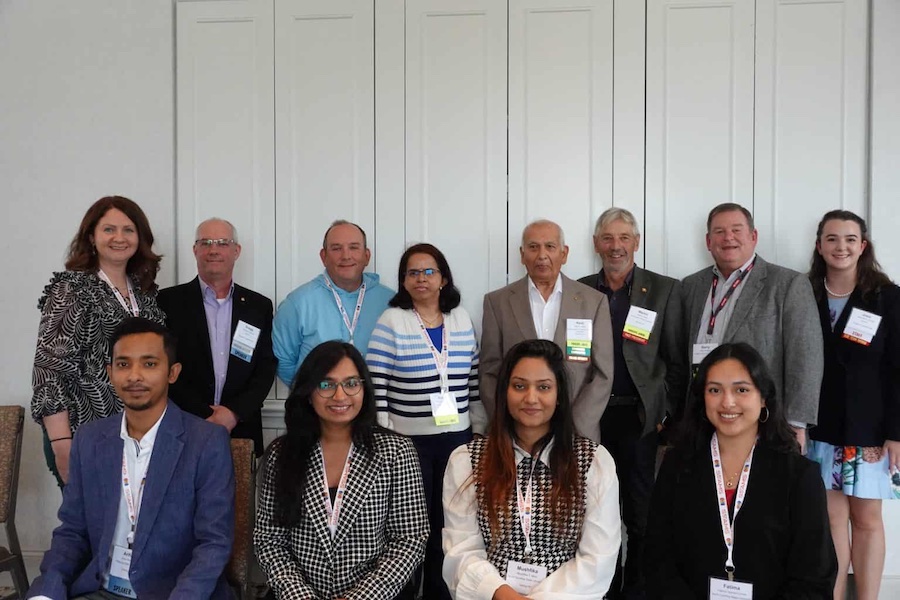
AATCC announces 2025 Herman & Myrtle Goldstein Graduate Student Paper Competition winners

The American Association of Textile Chemists and Colorists (AATCC) recognized the winners of the 2025 Herman & Myrtle Goldstein Graduate Student Paper Competition. Founded in 1982 to give student members the chance to conduct and present original research, the competition was renamed in 1994 in honor of Herman and Myrtle Goldstein, following their US$60,000 endowment. Their gift is a lasting remembrance of their dedication to young people in the textile industry.

#Research & Development

New funding available for textile research

The AATCC Foundation Student Research Support Grant Program provides financial assistance for undergraduate and graduate students pursuing textile-related projects. Students may submit proposals now for funding to be awarded January 2026. Applications must be submitted by October 1, 2025, to be considered.

#Recycling / Circular Economy

AATCC’s Circularity Conference approaches as organization continues 2025 Sustainable Textile Event series

The American Association of Textile Chemists and Colorists (AATCC) announces that registration is closing soon for its highly anticipated Circularity Conference, continuing this year’s sustainability event series that has delivered significant value to industry professionals.

#Associations

AATCC Textile Standards adopted by Colombian and Sri Lankan Governments

AATCC test methods and procedures are international standards, meeting the criteria set forth by the World Trade Organization and used around the globe. The standards gain additional recognition through Memoranda of Understanding with Colombia and Sri Lanka.

More News on Associations

#Associations

European business associations celebrate the signature of the EU-Mercosur FTA

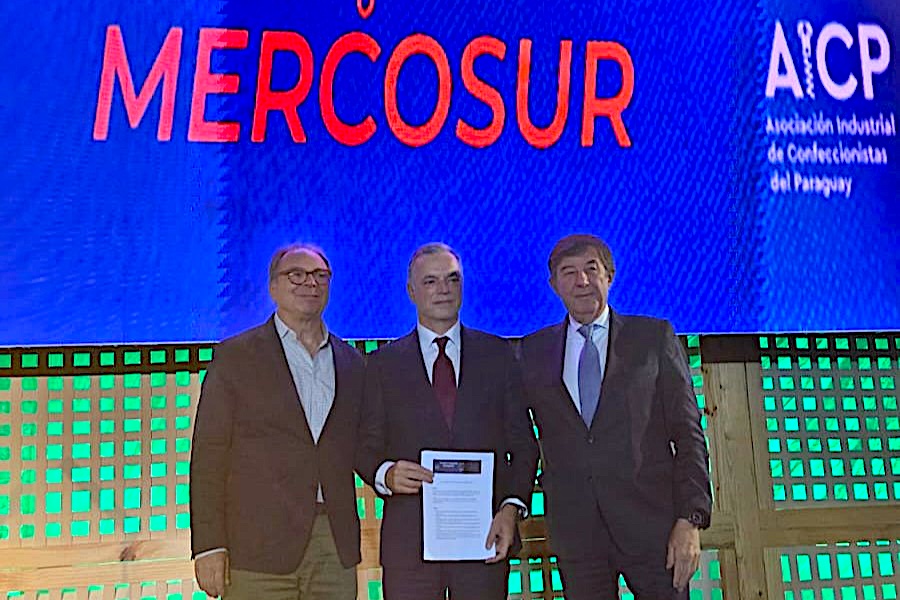
The 17th January marks a historic milestone with the signing of the EU-Mercosur Trade Agreement, creating the biggest trading block in the world. European business – represented by more than 28 associations across a wide range of sectors – warmly welcomes this signature. It sends a strong and timely signal that the EU remains open and is committed to rules-based global trade. In a time of global uncertainty, this agreement is a key growth booster.

#Associations

INDA announces future dates and locations for FiltXPO™ and IDEA® events

INDA, the Association of the Nonwoven Fabrics Industry, announced the future dates and locations for its FiltXPO™ and IDEA® events, reaffirming its long-term commitment to serving the global filtration, nonwovens, and engineered materials communities.

#Associations

Latest news from Bremen: ICAC Plenary Meeting to take place right before the International Cotton Conference

The International Cotton Advisory Committee (ICAC) will hold its 83rd Plenary Meeting on 23–24 March 2026 at the Parliament building in Bremen. The meeting will take place immediately ahead of the 38th International Cotton Conference Bremen (25–27 March 2026) and marks a historic premiere: for the first time, the ICAC Plenary will be hosted in close cooperation with the Bremen Cotton Exchange and the Faserinstitut Bremen e.V. (FIBRE).

#Associations

Textile machinery: the upcoming Colombiatex 2026 speaks Italian

Numerous Italian textile machinery companies will be attending the upcoming Colombiatex, the premier trade fair for the Colombian textile supply chain, held in Medellin from January 27 to 29, 2026. This year’s edition further confirms the strong bond between local textile manufacturers and Italian technology providers.

Latest News

#Fabrics

MUNICH FABRIC START: Between Attitude and Sensuality

The future begins where we reimagine it. After seasons of restraint, Spring.Summer 27 marks a conscious counter-trend: optimism, sensuality, and creative freedom are replacing pragmatism and neutrality. Physical presence and individuality are regaining importance – as a response to uncertainty, exhaustion, and algorithmic predictability. The overarching theme of PLEASURE stands for fashion as an emotional space, as an expression of attitude and cultural reflection. Colours, surfaces, and materials become vehicles for self-confidence and joie de vivre.

#Denim

organIQ seek: smart alternative to potassium permanganate

CHT Group announces new technical findings within its organIQ seek platform that significantly advance the transition toward permanganate-free denim bleaching. Through extensive industrial testing and application research, CHT confirms that organIQ seek can now be used with remarkable effectiveness as a substitute for potassium permanganate in spray bleach, while remaining aligned with sustainability expectations and cost realities in the European market. At the COLOMBIATEX in Medellín as well as at the Exintex in Puebla and the Kingpins Show in Amsterdam the CHT Group will present organIQ seek as an alternative to potassium permanganate.

#Functional Fabrics

PERFORMANCE DAYS: Focus topic shifts to the beginning of the value chain

Following the last Focus Topic in October 2025, which placed Textile-to-Textile Recycling at its core, PERFORMANCE DAYS continues to drive the conversation around circularity – this time with an expanded and more upstream perspective. The upcoming Focus Topic, “Textile to Textile: The Role of Collectors and Sorters,” presented during the spring edition on March 18–19, will spotlight one of the most essential yet often overlooked components of a functioning circular textile system: the efficient collection and sorting of post-consumer textiles.

#Knitting & Hosiery

Proven performance, optimised costs – the new RE 6 EL

Nowadays textile companies increasingly need to produce small production runs and respond to market changes with instantaneous pattern changes in order to operate profitably – meaning they require machines that offer maximum flexibility, reliability and cost efficiency. KARL MAYER understands the challenges of the market and is launching its new RE 6 EL. The Raschel machine offers the core strengths of the classic RSE 6 EL and essentially the same performance parameters, but has been further cost-optimised largely due to local production advantages. This makes the newcomer an efficiency champion in production, especially when it comes to frequent pattern changes.

TOP
