[pageLogInLogOut]

#Associations

EURATEX calls for an effective EU Industrial strategy to counterbalance the effects of the pandemic
© 2021 EURATEX
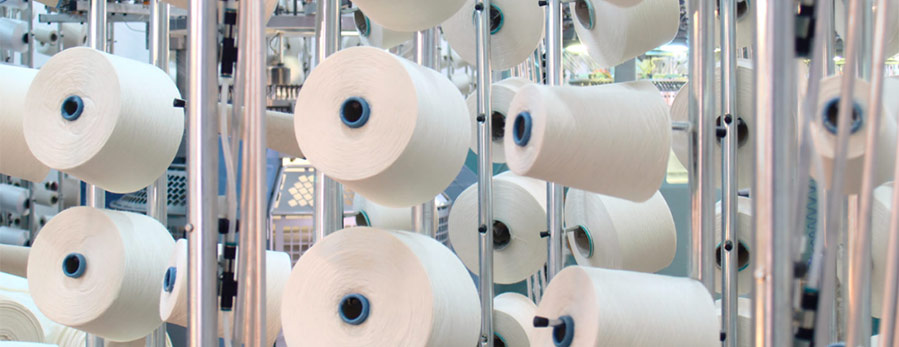
On the occasion of releasing its 2021 Spring Report, EURATEX calls the European Institutions to implement a new Industrial Strategy which will effectively support the European textiles industry. EURATEX welcomes the fact that Textile and Clothing industry is recognised as one of the 14 essential ecosystems of the European economy, but we need to take effective measures to support these sectors, and take into consideration the global dimension.

Economic data for 2020 in EURATEX Spring Report show preoccupying trends.  Figures reflect a dramatic contraction in demand and production: EU turnover contracted by -9.3% in textiles (which is in line with the general manufacturing average) and by -17.7% in clothing, compared with 2019. Furthermore, supply chain disruptions and substantial price increases of some raw materials are putting significant pressure on the T&C industries across Europe.  The trade deficit for European textiles and clothing jumped from € -47 bln in 2019 to € -62 bln in 2020, an increase of more than 30%, which is almost entirely due to the import of Chinese face masks and related products. Fortunately, more recent figures from the 1st quarter of 2021 indicate some signs of recovery.

That figure illustrates very well today’s political discussions on the future of the European industry. Many European companies have made considerable efforts to adapt their production to the pandemic, but clearly this was not enough. Whether the production cost in Europe is too high or the EU should adapt its procurement rules, the industry needs have a coherent long-term plan to become more competitive and conquer new markets.


EURATEX General Assembly highlighted the critical role of the new EU Industrial Strategy. The inclusion of textiles and clothing in the fourteen ecosystems is a step in the right direction to consolidate the industrial base but we should look also at the global challenges. European companies should continue investing in innovation, design and quality, in combination with a structural move towards more sustainable textiles. At the same time, the EU should create an environment - both inside the Single Market and globally - where everybody plays by the same rules.

“We should build a transition pathway which is based on an honest dialogue between the industry and policy makers, ensuring an effective level playing field” commented President Alberto Paccanelli. “I am also glad that TEKO, the Swedish Association for textiles and fashion companies, became again one of our members. It is sign that the industry is united. It is now time that the EU institutions deliver on their promises”.


More News from European Apparel and Textile Confederation (EURATEX)

#Europe

Level playing field at stake: Europe’s textile industry demands decisive action

Yesterday, the European Parliament took a welcomed and necessary step by voting a resolution calling for stronger market surveillance, reinforced customs controls and faster enforcement of the Digital Services Act in case of infringements. For Europe’s textile and clothing manufacturers, this is the first political acknowledgement that the system is broken — and that enforcement must finally match the scale of the problem.

#Recycling / Circular Economy

EURATEX calls for a competitive and harmonised Circular Economy Act For Textiles

EURATEX, representing Europe’s textile and clothing industry with over 200,000 companies and 1.3 million workers, has submitted its official position paper to the European Commission’s consultation on the upcoming Circular Economy Act (CEA). The association welcomes the Commission’s initiative to shape a framework that strengthens Europe’s circular economy while maintaining industrial competitiveness.

#Associations

European textile and clothing federations mobilize against ultra-fast fashion

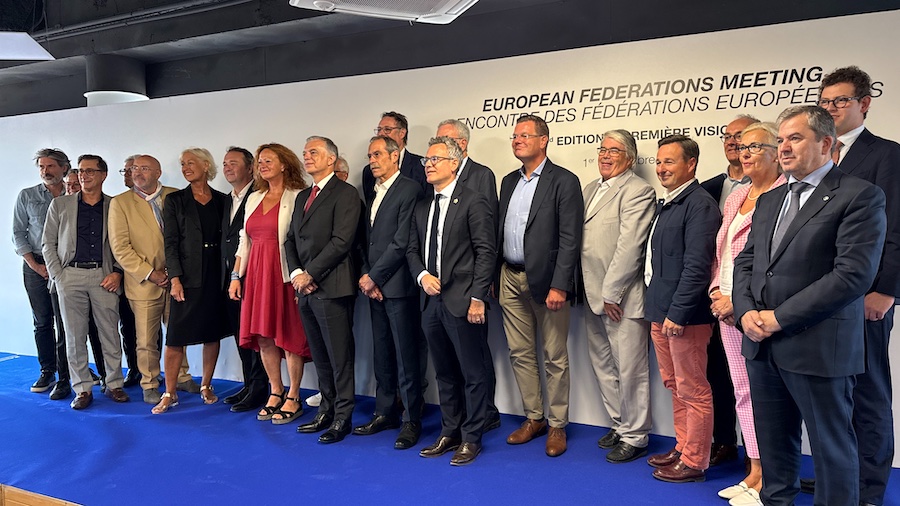
On the occasion of the Première Vision trade fair in Villepinte, the leading European textile and clothing federations issued a solemn call for urgent action against the rapid rise of ultra fast fashion. This model, driven by major non-European e-commerce platforms, already accounted for 4.5 billion imported parcels in the European Union in 2024—representing 5% of clothing sales (20% online)—and continues to grow at a staggering pace.

#Associations

Joint statement by EURATEX and Danish Fashion and Textiles

EURATEX and its Danish member Dansk Mode & Textil are calling upon the Danish Presidency of the EU to bring back stability and transparency to the European agenda. These last few months we have seen major upheavals and turbulence in global markets, as well as uncertainty surrounding a number of regulatory initiatives. All this creates a climate of uncertainty for European industry and anxiety with the consumers. As a result, demand for textile and garments is low, and entrepreneurs are hesitant to make any further investment decisions.

More News on Associations

#Associations

Businesses urge European Commission to allow continued sale of products already lawfully placed on the market before the Empowering Consumers Directive’s application to avoid unnecessary waste and costs

EDANA, the voice of nonwovens, alongside a coalition of leading European business associations, has issued a joint statement urging the European Commission to introduce a "grandfathering clause" to the Empowering Consumers for the Green Transition (ECGT) Directive. The coalition warns that without transitional provisions for products already lawfully placed on the market, the new rules could inadvertently lead to massive waste and economic disruption.

#Associations

Joint Statement: Urgent clarification needed on scope of Textiles EPR for PPE and Medical Devices

EDANA, the voice of nonwovens, alongside fellow industry associations CIRFS (European Man-Made Fibres Association), EURATEX (The European Apparel and Textile Confederation), ESF (European Safety Federation), and EuroCommerce (Retail & Wholesale), has issued a joint statement raising critical concerns regarding the transposition of Directive (EU) 2025/1892, the targeted revision of the Waste Framework Directive.

#Associations

Young researchers recognised for cutting-edge work in recycling, fibre technology and textile mechanics

At the Aachen-Dresden-Denkendorf International Textile Conference held in Aachen at the end of November, Peter D. Dornier, Chairman of the Walter Reiners Foundation of the VDMA, honoured five successful young engineers. Promotion and sustainability prizes were awarded in the categories bachelor/project theses and diploma/master theses. Academic theses that develop solutions for resource-saving products and technologies, for example, are eligible for the sustainability awards.

#Natural Fibers

Better Cotton Initiative partners with Uzbek government agency to offset certification costs

The Better Cotton Initiative (BCI) has today announced a strategic agreement with Uzbekistan’s Light Industry Agency to increase financial support for cotton farming clusters adopting sustainable agricultural practices.

Latest News

#People

Happy Holidays!

Dear reader, the year 2025 is drawing to a close. We are entering what we hope will be a peaceful holiday season, spending time with our families and taking a moment to pause and reflect. We hope we have been able to support you once again this year with relevant news and articles, and we look forward to surprising you with many innovations in the coming year. Enjoy the festive season, stay healthy, and we wish you a happy and joyful holiday season.

#Weaving

Lindauer Dornier announces leadership transition in weaving machine business

After more than ten successful years at Lindauer DORNIER GmbH, Mr Wolfgang Schöffl will leave the family-owned company at the end of the year to enter well-deserved retirement.

#Heimtextil 2026

Texpertise Focus AI: Messe Frankfurt puts Artificial Intelligence centre stage at its international textile and apparel trade fairs

Under the banner 'Texpertise Focus AI, Messe Frankfurt will place a strong emphasis on Artificial Intelligence (AI) across its international textile and apparel trade fairs from 2026 onwards, setting a future-shaping signal for the industry. The initiative highlights the responsible use of AI along the entire textile value chain, from fibre production to the point of sale. The programme will launch at Heimtextil in Frankfurt in January 2026.

#Technical Textiles

Autoneum and Polestar set new benchmarks for passenger experience and sustainability

As the global market leader in sustainable acoustic and thermal management, Autoneum is a key supplier of interior and exterior components for the highly anticipated Polestar 5 model. The successful collaboration between Autoneum and Polestar marks a significant milestone in sustainable automotive engineering: the electric grand tourer sports car features several innovations in lightweight, fully recyclable polyester-based components that ensure a superior driving experience. Polestar 5 was revealed at the IAA Mobility 2025 in Munich and is available in 24 markets.

TOP