[pageLogInLogOut]

#Associations

EU-Mercosur trade deal opens opportunity for textile and clothing companies
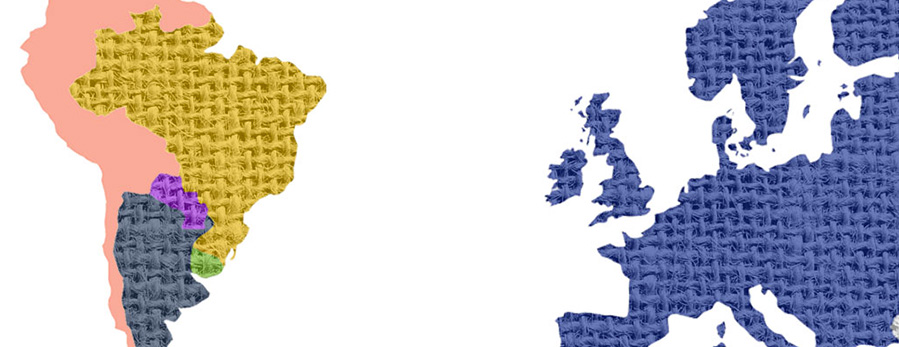
(c) 2019 Euratex
EURATEX, the European Apparel and Textile Confederation, welcomes the conclusion of negotiations for a comprehensive and ambitious Free Trade Agreement between the European Union and Mercosur (Argentina, Brazil, Paraguay and Uruguay).

EURATEX has been actively engaged in the negotiation process to ensure an agreement fit for textile and clothing companies, also preserving social and environmental standards in the manufacturing of high-quality products. “Despite a challenging trade environment, we are glad rules-based trade has prevailed” stated Alberto Paccanelli, EURATEX President.

The EU-Mercosur FTA is the largest trade agreement ever concluded by the European Union, covering a population of 780 million. According to the EU, this agreement will save European companies over 4 billion euros in duties. For the textile and clothing industry in particular tariffs have been very high, reaching 35% in Brazil.


“In 2018 EU exports of textile and clothing products to Mercosur were 460 million euros and the elimination of tariffs will open further business opportunities for our sector” added Paccanelli, “We look forward to a swift approval by the European Council and the European Parliament.”
More News from European Apparel and Textile Confederation (EURATEX)

#Associations

Europe is losing its textile industry

EURATEX has released its latest Economic Update on the performance of the European textile and apparel industry in 2025. For the third consecutive year, the sector recorded negative results across all key indicators — production, turnover and employment — confirming a continued erosion of competitiveness across Europe.

#Associations

European Business Coalition welcomes provisional application of EU–Mercosur Agreement and calls for Swift and full implementation

With the European Commission’s decision to provisionally apply the EU–Mercosur Interim Trade Agreement, a process spanning more than 25 years now moves decisively into its implementation phase.

#Europe

Antwerp Declaration community urges EU leaders to deliver emergency measures as Europe’s competitiveness crisis deepens

EURATEX, representing the European textile and fashion industry, joins the Antwerp Declaration Community’s call on EU Heads of State and Government to adopt emergency measures that restore industrial competitiveness and deliver tangible results for Europe’s manufacturing base in 2026.

#Europe

FITA, ABIT and EURATEX underline strategic importance of Mercosur – EU Partnership Agreement for the textile and apparel industry

The Argentine Textile Industry Federation (FITA), the Brazilian Textile and Apparel Industry Association (ABIT), and the European Apparel and Textile Confederation (EURATEX) continue to monitor the process of internalizing the Mercosur-European Union Partnership Agreement. This agreement is essential for the competitiveness of our industries, on both sides of the Atlantic.

More News on Associations

#Techtextil 2026

VDMA members at Techtextil: Smart technologies for technical textiles

At Techtextil 2026 in Frankfurt, the members of VDMA Textile Machinery underline their key role as global technology leaders for technical textiles and textile processing. With a strong presence of more than 50 members they will highlight how engineering excellence, innovation strength and sustainability expertise from Germany and Europe are shaping the future of the textile industry. Seven companies will be present at the VDMA group stand in the centre of hall 12.0.

#Techtextil 2026

Between geopolitical pressure and industrial resilience

In this interview, Dr. Janpeter Horn (VDMA) discusses the current challenges facing textile machinery manufacturers, shaped by geopolitical tensions, regulatory developments and subdued investment. He also outlines why innovation strength, integrated solutions and strategic positioning remain key to global competitiveness.

#Texprocess 2026

Between investment restraint and modernization pressure

Texprocess 2026 takes place in a complex market environment shaped by uncertainty and innovation pressure. In this interview, Elgar Straub (VDMA) explains why the trade fair is particularly relevant this year and which technologies are driving efficiency and competitiveness.

#Associations

Results of the 37th ITMF Global Textile Industry Survey

The International Textile Manufacturers Federation (ITMF) released findings from its 37th Global Textile Industry Survey (GTIS), conducted in March sharing how regions and segments are impacted by the latest geopolitical disruptions.

Latest News

#Heimtextil 2027

Heimtextil celebrates Milan Design Week honoring partnerships with Patricia Urquiola and Alcova Milano

Heimtextil is represented at Milan Design Week with its strong design partners Patricia Urquiola and Alcova. At Villa Pestarini, the leading trade fair spotlighted its dynamic collaborations with acclaimed designer Patricia Urquiola and Alcova Milano.

#Texprocess 2026

Kornit Digital expands digital production into footwear and technical textiles with Presto MAX PLUS

Kornit Digital (NASDAQ: KRNT) (“Kornit” or the “Company”), a global pioneer in sustainable, on-demand digital fashion and textile production, today unveiled the Kornit Presto MAX PLUS, a new roll-to-roll system expanding digital manufacturing into footwear, automotive interiors, military camouflage, high-performance sportswear, and high-end furnishings. Debuting at Texprocess 2026 in Frankfurt, Presto MAX PLUS enables entirely new applications for on-demand textile production.

#Textile processing

NATULON® zipper series surpasses 50% of YKK’s global zipper sales

YKK Corporation (Headquarters: Chiyoda-ku, Tokyo; President: Koichi Matsushima; hereafter, YKK) announces that the global sales share of its NATULON® zipper series—zippers that incorporate recycled materials—has exceeded 50%.

#Smart Textiles

Covestro, FILK Freiberg, and OUT e.V. develop flexible, conductive polymer smart textile system

As the smart textiles market continues to grow across healthcare, personal protection, sportswear, and automotive applications, developers are seeking new ways to integrate electronic functionality directly into textiles, without the rigidity and complexity of conventional wiring. To address this challenge, FILK Freiberg Institute, an independent research institution with expertise in polymer coatings for textile applications, collaborated with Optotransmitter-Umweltschutz-Technologie (OUT) e.V. The joint project, funded under the German Industrielle Gemeinschaftsforschung (IGF) program of the Bundesministerium für Wirtschaft und Energie (BMWE), focused on developing flexible, conductive polymer surfaces for next-generation smart textiles.

TOP