[pageLogInLogOut]

#Yarn & Fiber

Marchi & Fildi Group presents the selection of metalloplastic yarns with GRS certification of its Gleaming line, coming from 100% post-consumer recycled polyester

© 2021 Marchi & Fildi Group
With the goal to expand the offer of yarns coming from recycled raw materials for a textile more attentive to the consumption of resources, the MFT division of the Marchi & Fildi Group completes the range of metalloplastic yarns of its Gleaming collection with the insertion of 100% recycled polyester yarns coming from post-consumer material and with the GRS (Global Recycle Standard) certification.

Starting from recycled polyester with traceable origin, in compliance with environmental and social criteria extended to all the phases of the supply chain, metalloplastic yarns are obtained with the same esthetic features and performance, compared to similar products based on virgin raw materials.

“Thanks to our commitment in the research of materials, we are able to propose metalloplastic yarns produced with 100% recycled material; the film used for the production of flat yarns, too, is in recycled polyester, with a quality level that is suitable for cutting – the Company explains -. Till now it was possible to find in the market only metalloplastic yarns with not recycled polyester flat yarn, twisted with certified fibers. This represents an important step forward to implement a circular economy possibility for this kind of products too”.

The Gleaming yarns GRS certified can be supplied in gold and silver, colors and transparent, in various counts, widths and types; they are suitable for use in flat and circular knitting, weaving, hosiery and as a component in fancy yarns.

The Gleaming line, with a wide selection of yarns in stock service, represents a completion of the offer of the Marchi & Fildi Group. The Gleaming yarns are offered in different thicknesses, widths and types with both metallized and transparent, iridescent, refracting and phosphorescent effects. The collection also includes items with special features of resistance to chemical and dyeing treatments.

The Gleaming metalloplastic yarns find application in the world of fashion and furniture, for creative and fancy yarns and fabrics, accessories and decorations.

Products with refractive features are also used in technical items like uniforms and workwear, sport garments and accessories, external ribbons and labels.

The Marchi & Fildi Group

Marchi & Fildi S.p.a was established in 2007 through the fusion of the mills Filatura Marchi and Fildi, owned by the Marchi and Dissegna families. Filidea is the youngest company within the Group, and was set up in 2008.


The Marchi & Fildi Group proposal for the fashion world consists of linear or circular knitting, weaving and hosiery. The distinguishing element in the collections is the focus on sustainability, which starts with the selection of the raw materials and finishes with the Ecotec® brand owned by Marchi & Fildi. The Filidea brand presents an assortment of natural, sustainable and certified yarns designed for the high-quality market sector. Filidea is also specialised in the production and development of technical yarns intended for protective and work clothing, for the automotive industry and various industrial uses.

The modern dyeing department and the pilot research and development facility allow the Group to create new yarns for the collections, alongside the collaboration with universities and research centres and with various partners for the development of specialised projects.

Today, with the entry of the third generation of entrepreneurs, Marchi & Fildi S.p.a is a group of mills which is known internationally and which has a constant rate of growth.

Ecotec® is the patented production process developed by Marchi & Fildi to create new yarns by upcycling the pre- and post-consumer cut-offs. The Ecotec® range ensures a reduced environmental footprint: up to 46.9% savings in terms of energy consumption, up to 46.6% reduction in terms of CO2 and up to 61.6% reduction in terms of water consumption along the whole supply chain.
More News from TEXDATA International

#ITM 2026

ITM 2026: The new geography of textile production

New production hubs are emerging across North Africa and Central Asia, while Türkiye is accelerating its transformation toward higher-value, technology-driven and more sustainable textile manufacturing.

#Research & Development

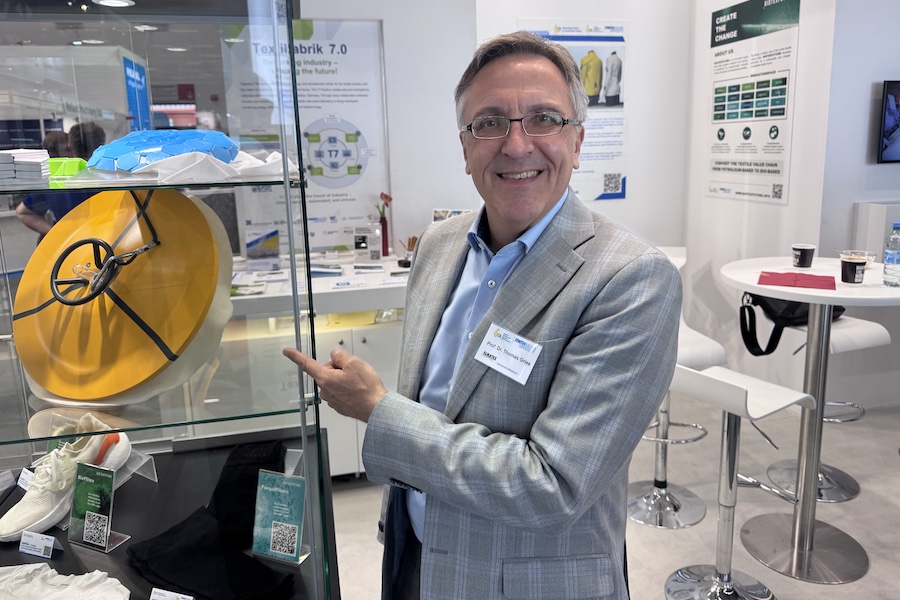
“Production is a product”

From technical textiles and AI-driven robotics to the limitations of textile circularity: Professor Dr Thomas Gries looks back on more than two decades of development at ITA Aachen. In the interview, he explains why production technology remains a decisive success factor, discusses international collaborations and innovation ecosystems, and shares his views on the transformation of production landscapes and the challenges facing an increasingly regulated industry.

#Knitting & Hosiery

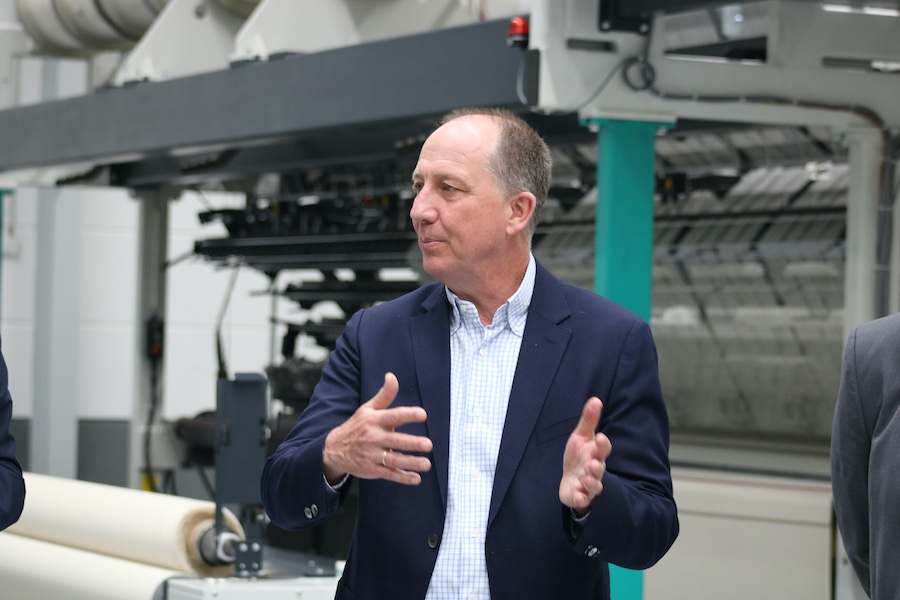
“We need to move away from the price trap and return to a value-driven mindset.”

With its new Textile Innovation Center, KARL MAYER is sending a strong signal for innovation, collaboration, and the future of textile applications. In this interview, Karl Josef Mayer discusses new opportunities in warp knitting, the processing of staple fibres, recycling, the changing role of machinery manufacturers, and why the textile industry must once again focus more strongly on the value of textiles. by Oliver Schmidt

#Associations

“Innovation, resilience and international experience remain the great strengths of the Swiss textile machinery industry”

Geopolitical uncertainty, growing competitive pressure from China, new free trade agreements and the shift towards a circular economy are currently reshaping the global textile industry. In this interview, Cornelia Buchwalder discusses the current mood within the Swiss textile machinery sector, the industry’s distinctive innovative strength, new market opportunities in India and Asia, and the technological trends that could shape the upcoming trade fair cycle leading up to ITMA 2027.

More News on Yarn & Fiber

#Yarns

Yarn Expo Shenzhen 2026 closes doors, advancing sustainable and innovative sourcing in South China

Yarn Expo Shenzhen 2026 served as a strategically positioned mid-year sourcing platform for the Greater Bay Area, highlighting Shenzhen’s role in connecting regional demand, supply and innovation exchange across the textile value chain. During the three-day fair, over 20,000 visits were drawn from 74 countries and regions[1], as exhibitors and buyers engaged with new developments in greener, performance-led, and value-added yarn and fibre solutions. Held in conjunction with Intertextile Shenzhen Apparel Fabrics and PH Value, the fair underscored the benefits of closer synergy and new materials across yarn, fabric and apparel platforms for the South China market.

#Yarns

Yarns and technologies in symbiosis: Biella Yarn presents Fall/Winter 2027/2028 collection “New Romance_”

Biella Yarn, the flat knitting brand of Suedwolle Group, launches new Fall/Winter 2027/2028 collection, inspired by the symbiosis of yarns and technologies – elements that blend, adapt and evolve together, forming something new without losing their origin. The name “Neu Romance_” reflects the emotional and neurological dimension of the yarns: a connection that engages the senses, experienced through material, touch and interaction. The collection is further brought to life through design collaborations, featuring selected yarns used in different design approaches.

#Recycling / Circular Economy

The textile industry in transition

Recycling, traceability, eco-design and digitalisation are among the key future challenges facing the European textile industry. The Erasmus+ project Skills4Circularity, involving 21 partners from twelve countries, is investigating the skills required to address these challenges. As the German industry partner, the Industry Association for Finishing – Yarns – Fabrics – Technical Textiles (IVGT) is bringing the industry’s perspective to the project.

#Research & Development

GenuTrace client advisory: Is your cotton supply chain UFLPA ready?

U.S. Customs and Border Protection has released updated operational guidance (CBP Publication No. 5560-0526) expanding its forced labor enforcement framework. The guidance supersedes the original 2022 UFLPA Operational Guidance and now covers all forced labor enforcement authorities — UFLPA, CAATSA, and WROs/Findings — in a single unified document. For cotton importers, the enforcement posture has not softened. It has become more structured, more documented, and more demanding. Learn more about UFLPA.

Latest News

#Recycling / Circular Economy

RE&UP establishes Fiber Club consortium to scale Next-Gen material sourcing

Originally developed as an umbrella framework by innovation platform Fashion for Good, the RE&UP Fiber Club aims to accelerate the commercial adoption of circular Next-Gen materials across the global fashion ecosystem.

#Research & Development

2026 general meeting of the Friends and Supporters of RWTH Aachen at ITA

The Friends and Supporters of RWTH Aachen e. V. (proRWTH) looked back on a successful year of support at their 2026 general meeting. The meeting took place at Institut für Textiltechnik (ITA) of RWTH Aachen and was combined with a joint session of the Executive Board and the Administrative Board. Before the general meeting began, participants were given a guided tour of ITA, providing them with fascinating insights into current research and development topics in textile engineering.

#Natural Fibers

Cotton ConneXions Insight to Impact brings supply chain leaders together around cotton innovation

Cotton Incorporated’s Cotton ConneXions Insight to Impact brought together more than 300 industry leaders from 140 companies across 10 countries, including more than 45 top global brands and sourcing organizations, underscoring strong global interest in cotton-rich product development, sourcing and supply chain collaboration.

#Knitting & Hosiery

Footwear innovation enabled by warp knitting technology– insights from New Balance

The future of the athletic shoe is increasingly being shaped on warp knitting machines. For KARL MAYER, the footwear industry is one of the most important growth markets – and one of the sectors where innovative textiles can realize their full potential. In his keynote address at the opening of KARL MAYER’s TEXTILE INNOVATION CENTER in Obertshausen in April, Vishnu Prakash Muthusamy, Senior Textile and Materials Engineer at New Balance, explained the opportunities that warp knitting technology opens up for performance, sustainability, and faster development processes, and why textile manufacturers are transitioning from suppliers to development partners.

TOP