[pageLogInLogOut]

#Yarn & Fiber

Teijin, JGC and Itochu Conclude joint agreement on the license business of Polyester chemical recycling technology

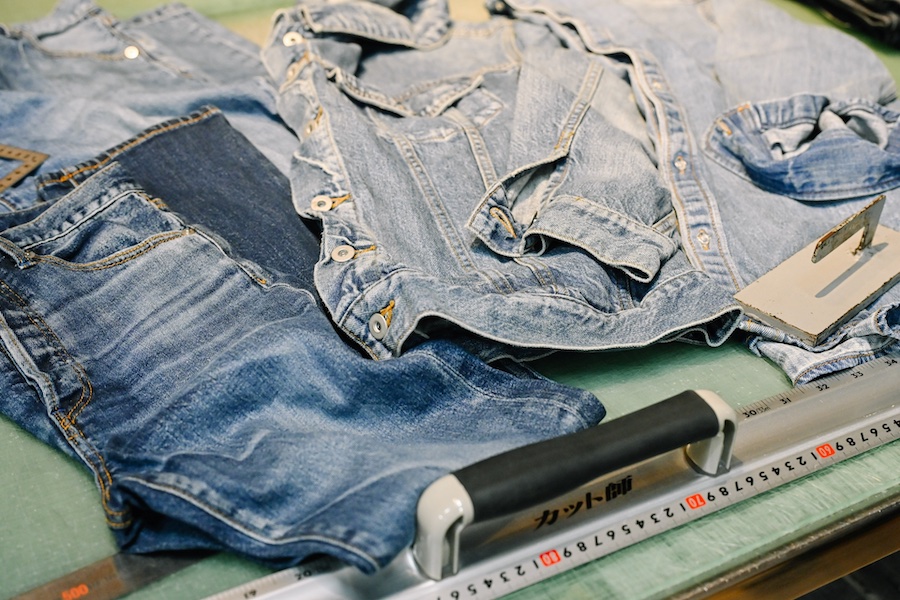
Teijin Limited, JGC Holdings Corporation and ITOCHU Corporation have signed a joint agreement on the license business of polyester chemical recycling technology from discarded polyester textile products.

In recent years, environmental damage—such as global warming caused by greenhouse gases and marine pollution caused by waste plastic and abandoned fishing gear—has become more serious, and global countermeasures are urgently needed. Japan has implemented various initiatives aimed at helping to realize a more sustainable society, such as targeting the achievement of net zero emissions by 2050. In the fiber and textile industry, there is an urgent need to address sustainability issues such as the mass disposal of clothing as well as environmental challenges such as high levels of CO2 emitted during manufacturing.

Teijin has extensive and global experience in this area as a result of its operation of the world’s first large-scale plant utilizing chemical recycling technology to produce polyester from discarded polyester textile products.

JGC has developed world-class engineering technology and has acquired a wide range of expertise in the oil & gas sectors, among others. It is now focusing on the construction of environmentally friendly plants and on other technologies and businesses related to the protection of the environment.


In 2019, ITOCHU launched its “RENU” project, aiming to address the problem of excessive waste in the textile industry; it is also developing a global market for recycled polyester materials derived from used clothing and spare fabric generated during textile manufacture.

This agreement will bring together Teijin's proprietary chemical recycling technology deployed in the manufacture of polyester, the expertise of the JGC derived from its global engineering business, and ITOCHU's extensive network of textile industry players. The three companies intend to establish a system for collecting discarded polyester fiber products and cost-effective chemical recycling technology for using such products as raw materials.

Going forward, Teijin, the JGC and ITOCHU aim to expand the range of effective solutions for the mass disposal of used textile products.




More News from Teijin Aramid

#Yarn & Fiber

Teijin Aramid: Taiichi Machida to succeed Peter ter Horst as CEO

Peter ter Horst will step down as Chief Executive Officer at the end of 2025, after 19 years of dedicated service. Effective October 1, 2025, Taiichi Machida will take over as CEO.

#Yarn & Fiber

Teijin announces availability of DPP-compliant products aligned with Europe’s ESPR Environmental Regulation

Teijin Limited announced today that it has started rolling out initiatives to enable aramid fibers and carbon fibers to be accompanied by Digital Product Passport (DPP) technology, which enhances supply chain transparency by verifying the origins of materials and supporting sustainability claims. The company is using the supply chain traceability system from Netherlands-based Circularise B.V., in which Teijin has invested since November 2024, to develop DPPs for each product.

#Composites

Teijin Carbon showcases new eco-friendly Tenax Next™ R2S 513 6mm short carbon fiber at JEC World 2025

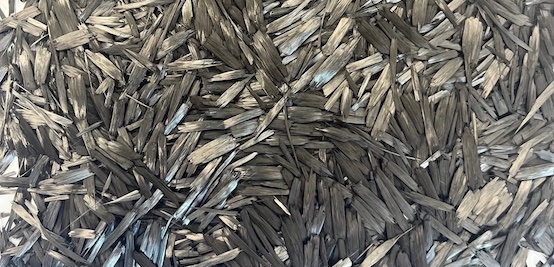
Teijin Carbon, a leading manufacturer of carbon fiber products, is presenting its latest development in sustainable materials at JEC World 2025 (hall 6, G22). New Tenax Next™ R2S 513 6mm is a short carbon fiber product in rice-shaped form for reinforcing thermoplastic compounds that not only offers exceptional performance characteristics but also reinforces the company’s commitment to environmental responsibility and circularity.

#Recycling / Circular Economy

Teijin to invest in Circularise B.V. and adopt its supply chain traceability platform to promote the Circular Economy

Teijin Limited announced today that it will invest in Circularise B.V., a company based in The Hague, Netherlands, which develops product traceability management systems using blockchain technology. Teijin will also implement Circularise’s software to improve visibility into its global supply chain. Circularise’s proprietary “Smart Questioning”(*) solution, which utilizes Zero-Knowledge Proof (ZKP) technology, provides both anonymity and transparency to ensure a highly reliable product traceability system.

More News on Yarn & Fiber

#Recycling / Circular Economy

The textile industry in transition

Recycling, traceability, eco-design and digitalisation are among the key future challenges facing the European textile industry. The Erasmus+ project Skills4Circularity, involving 21 partners from twelve countries, is investigating the skills required to address these challenges. As the German industry partner, the Industry Association for Finishing – Yarns – Fabrics – Technical Textiles (IVGT) is bringing the industry’s perspective to the project.

#Research & Development

GenuTrace client advisory: Is your cotton supply chain UFLPA ready?

U.S. Customs and Border Protection has released updated operational guidance (CBP Publication No. 5560-0526) expanding its forced labor enforcement framework. The guidance supersedes the original 2022 UFLPA Operational Guidance and now covers all forced labor enforcement authorities — UFLPA, CAATSA, and WROs/Findings — in a single unified document. For cotton importers, the enforcement posture has not softened. It has become more structured, more documented, and more demanding. Learn more about UFLPA.

#Spinning

"We will become a recycling powerhouse"

The textile industry is now in its fourth consecutive year of crisis, while automation, artificial intelligence and recycling are reshaping the rules of the game. In this interview, Rieter CEO Thomas Oetterli discusses the first signs of a market recovery, reflects on his first three years at the helm of the company, explains the integration of Barmag, outlines Rieter’s vision of the fully automated spinning mill and highlights the strategic importance of recycling. In doing so, he explains why the new Rieter Group aims to play a leading role in transforming the textile value chain into a circular economy.

#Man-Made Fibers

ROICA™ launches new global brand identity and digital experience

ROICA™, the premium stretch fiber developed by Asahi Kasei, today announced the launch of its new global brand identity, including a new key visual and a fully redesigned website. This milestone initiative marks the beginning of a new phase in ROICA™’s evolution as a global brand.

Latest News

#Natural Fibers

Bremen Cotton Exchange: Fritz A. Grobien re-elected as President

The members of the Bremen Cotton Exchange have re-elected Fritz A. Grobien as President during the association’s 152nd General Assembly on June 18, 2026. The election confirms the organization’s commitment to maintaining its role as a leading international platform for the cotton and fiber industry amid a period of geopolitical and economic uncertainty.

#Natural Fibers

Organic cotton at the crossroads: Ideology, evidence, and the road ahead

Organic cotton occupies one of the most contentious spaces in global agriculture. While praised by brands and consumers for its environmental ideals, it also faces persistent questions about yield stability, certification integrity, and scalability. The current edition of The ICAC Recorder cuts through the ideology to deliver a rigorous, evidence-based assessment of both sides of the debate.

#Spinning

New spinning package with two-step filtration for recycled yarns and more

At the ITM in Istanbul, BB Engineering unveiled its new, patented ValuePack spinning package for the first time, which features a two-stage filtration system. This is particularly beneficial for re-cycling processes. Until now, spinning packs have used either metal powder (“sand”) or filter candles as filter media. Both options are suitable for differ-ent applications, and each has its own specific advantages and dis-advantages.

#ITMA 2027

ITMA 2027 gains strong momentum

In line with the theme "Co-creating the future of textiles", ITMA continues to strengthen its support for start-ups, recognising their role in driving innovation and shaping the future of textile and garment manufacturing. Through the Start-Up Valley, emerging companies gain access to a global marketplace where they can connect with industry leaders, potential partners, investors and customers.

TOP

