[pageLogInLogOut]

#Yarn & Fiber

PEF compliance for Radigreen® synthetic turf yarn study

Certiquality has recently issued a Product Environmental Footprint (PEF) Statement of Compliance to Tessiture Pietro Radici for its Radigreen® MFL PE, a yarn ideal for the manufacture of synthetic turf. In line with the RadiciGroup sustainability strategy (the first Group PEF certification dates back to 2013), Tessiture Pietro Radici, a Group company engaged in the production of artificial grass yarn, decided to pursue the approach of voluntary environmental impact measurement of its products.

Environmental impact study validated by Certiquality

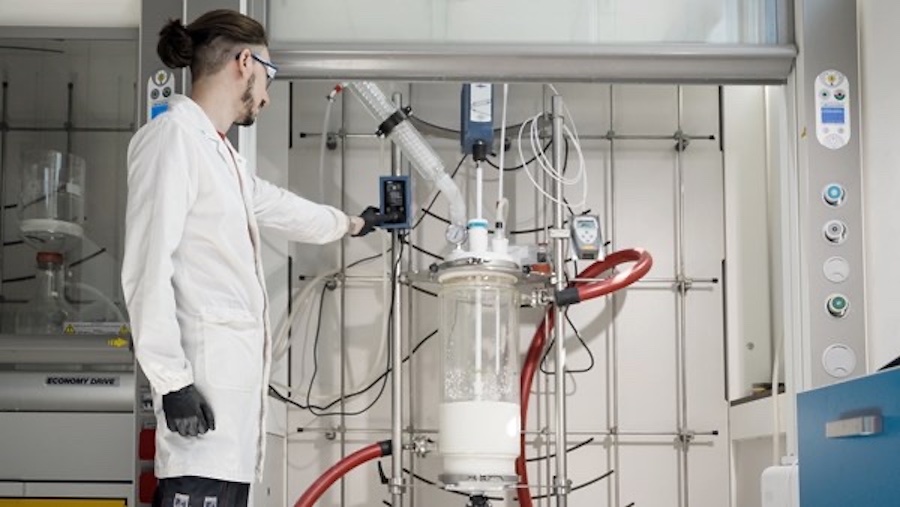
The PEF Statement of Compliance refers to a study of the entire yarn production process – from the extraction of crude oil to the production of polyethylene polymer (used as raw material for the process), down to the manufacture of yarn ready for delivery to customers.

It is a short, traceable production chain, in which the environmental impacts are measured for each and every process phase. The results attest to the fact that the environmental impact of the Radigreen® MFL PE production process is among the lowest in the synthetic turf yarn market.

With the EU Commission Recommendation 2013/179/EU, the European Union introduced the Product Environmental Footprint (PEF) method for the calculation, assessment and third party validation of the environmental impacts of products and services along their entire life cycle.
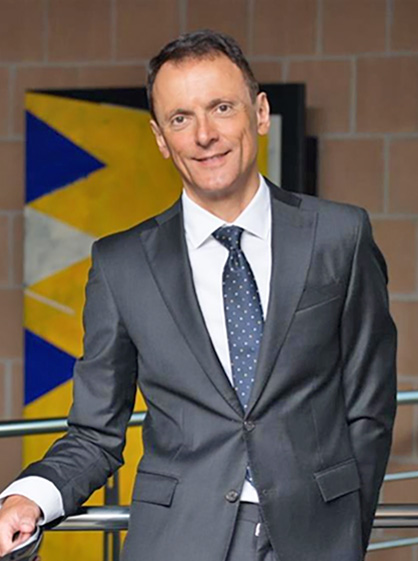
Enrico Buriani, managing director of Tessiture Pietro Radici (c) 2018 Radici


“We live in a context in which there is much talk about sustainability and reducing the environmental impact of industrial activities, but there is also a need for harmonising the diverse measurement methodologies available today,” stressed Enrico Buriani, managing director of Tessiture Pietro Radici.
(c) 2018 Radici
(c) 2018 Radici


“By adopting the methodology recommended by the EU, we aim to be as transparent as possible with our customers: we supply them with reliable and comparable environmental data, in light of continuous improvement in performance. Our Radigreen® yarns are all 100% recyclable and, as such, contribute to the recyclability of synthetic turf at the end of its life,” Mr. Buriani added. “With the PEF methodology, we are able to supply accurate identity cards of our products, certified by Certiquality, an impartial third-party verifier.”

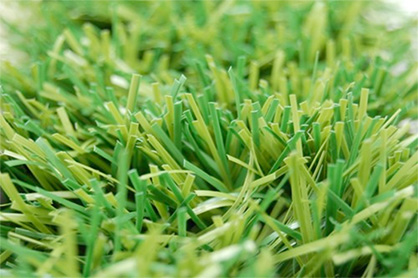
The Radigreen® range of products is always evolving and includes yarns endowed with characteristics that ensure the uniformity of the playing field over time. The needed characteristics are guaranteed by the rigorous testing the yarn undergoes before reaching the market: checking the resistance to UV radiation, to weather, and wear and tear in the long run. The yarns are soft but always resistant, minimizing skin abrasion risk while delivering superior resilience.

Radigreen® yarns are subjected to chemical analysis by the Italian Institute for Toy Safety in order to verify that the yarn formulation does not include dangerous substances and complies with safety limits established by the law for the content of heavy metals and other substances hazardous to human health. Test results show that Radigreen® yarns are practically lead and plasticizer free.

“PEF compliance certification,” Mr. Buriani concluded, “is yet another stage in a long journey involving the whole Group and focusing on containing environmental impact and ensuring the health and safety of people. Quality, safety, and respect for the environment have always been the operative words of our production activities.”

For over ten years, RadiciGroup has published a Sustainability Report based on GRI standards, which examines the economic, environmental and social performance of the entire Group.
More News from Radici Partecipazioni SpA

#Recycled_Fibers

Recycling mixed-fibre garments becomes a reality: RadiciGroup, The LYCRA Company and Triumph take circular fashion a step forward

The process, which is both economically and environmentally sustainable, has enabled the production of an underwear set made from 100% recycled nylon and LYCRA® fibre in a closed-loop system.

#Sustainability

RadiciGroup: 21st Sustainability Report published

RadiciGroup has published its 21st Sustainability Report, covering the year 2024, confirming more than two decades of transparency and measurement in the economic, environmental, and social dimensions. From its first Social Report in 2004 to the current reporting aligned with the GRI Universal Standards, the Group is now preparing for its next challenge: the adoption of the criteria that will be set out by the Corporate Sustainability Reporting Directive (CSRD).

#Recycling / Circular Economy

RadiciGroup and Ferragamo team up for an eco-design project under the Monitor for Circular Fashion initiative

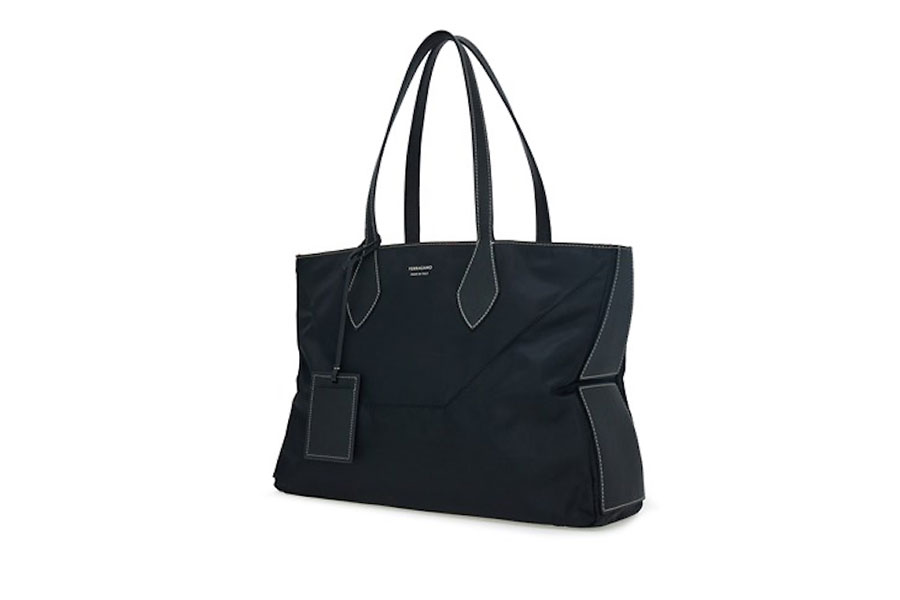
RadiciGroup, a leading player in sustainable textile solutions, has partnered with Ferragamo to develop “Nova – The evolution of a Star”, an eco-design project that reimagines one of the Maison’s iconic handbags through the lens of circularity.

#Yarn & Fiber

Twenty years of Sustainability Report for RadiciGroup

The RadiciGroup Sustainability Report reaches an important milestone this year: twenty years have in fact passed since the Group published its first Social Report in 2004, qualifying it as one of the pioneering companies in the realisation of voluntary non-financial reporting. The document measures the Group’s achievements and the actions it has taken to reduce its environmental impact, respect social values, and implement good business management practices.

More News on Yarn & Fiber

#Yarns

Yarn Expo Spring 2026 concludes, connecting buyers with innovative selection of sustainable yarns and fibres

Yarn Expo Spring 2026 wrapped up successfully on 13 March, as a record-high of over 600 exhibitors from 12 countries and regions welcomed more than 25,000 visitors from 113 countries and regions. Held across 27,000 sqm in Hall 8.2 of the National Exhibition and Convention Center (Shanghai), the fair highlighted the textile industry’s accelerating shift toward a lower-impact, more functional future. Exhibitors presented eco-friendly organic, regenerated and recycled yarns and fibres, alongside innovative options such as sweat-resistant and high-performance materials. A comprehensive fringe programme further enriched the event, offering practical market insights and new networking opportunities.

#Man-Made Fibers

Lenzing advances its transformation: Higher EBITDA, stronger free cash flow and more than EUR 200 million in cost savings

The business performance of the Lenzing Group in 2025 was affected particularly in the second half of the year by external factors such as international tariff measures, subdued demand and declining market prices. As a result, revenue decreased slightly by 2.3 percent to EUR 2.6 billion, primarily due to lower fiber sales volumes and lower prices for fibers and pulp, which were further negatively impacted by currency developments. Nevertheless, thanks to the comprehensive Performance Program, Lenzing was able to improve its operating performance and key financial indicators compared with the previous year.

#Man-Made Fibers

“Lead Transformation – Generate Impact”: Lenzing presents its 2025 Annual and Sustainability Report

The Lenzing Group has published its 2025 Annual and Sustainability Report, entitled LEAD TRANSFORMATION – GENERATE IMPACT. The report shows how Lenzing is actively shaping change in the industry and making a lasting impact: economically, ecologically, and socially. Lenzing is consistently focused on the future: with targeted investments in premiumization, excellence, innovation, and sustainability, the company is strengthening its position as a leading provider of sustainable, cellulose-based premium fibers. The combined report is available in digital format.

#Raw Materials

Lenzing Group positions bio‑based materials as a strategic asset for Europe’s economic security

The Lenzing Group, a leading supplier of regenerated cellulose fibers for the textile and nonwovens industries, hosted a high‑level roundtable in Brussels to discuss how bio‑based materials can strengthen Europe’s economic security and support the shift toward a fossil‑free future. Organized in cooperation with Euractiv, the event brought together representatives of the European Commission, the UK Mission to the EU, academia, civil society, and industry.

Latest News

#Techtextil 2026

Performance Apparels: Functional textiles drive innovation at Techtextil 2026

From high-performance fibres and advanced membranes to smart textiles and sustainable material concepts – functional apparel is becoming one of the most dynamic innovation fields in technical textiles. At Techtextil 2026, exhibitors demonstrate how new materials, finishing technologies and digital functions are shaping the next generation of protective, workwear and outdoor systems.

#Textile chemistry

A flagship for chemical production: BASF inaugurates world-scale Verbund site in China

BASF today (March 26, 2026) celebrated the official inauguration of its newly built, world-scale Verbund site in Zhanjiang, Guangdong Province in southern China. Covering an area of around four square kilometers, it is more than a major BASF project in the chemical growth market of China. “Zhanjiang shows what the future of chemistry looks like: efficient, digital and sustainable by design. The site showcases a smart integrated Verbund structure on an industrial scale,” said Dr. Markus Kamieth, CEO of BASF, at the ceremony attended by representatives from government, customers, business partners and employees.

#Nonwovens

VEOCEL™ Lyocell production expands to Asia – Launching a new chapter for nonwovens in the region

VEOCEL™, Lenzing's flagship specialty nonwovens brand, expands production at its Thai plant in Prachinburi. This is the first-ever production of its nonwoven-grade lyocell fibers in Asia. Built in 2022 with a 100,000-ton annual production capacity, the facility - previously focused on fibers for textile applications - now can directly meet the demand for VEOCEL™’s biodegradable¹, wood-based lyocell fibers for nonwovens products. These fibers are an essential ingredient for high-quality nonwovens products, ranging from baby wipes to facial sheet masks and everyday personal hygiene items.

#Research & Development

Hof University develops sustainable textile coating for the fashion of tomorrow from mushrooms

Clothing is often treated as disposable: T-shirts for events, general merchandise, or short-term campaigns frequently end up in the trash after only a few uses. This is particularly problematic given that their production still largely relies on fossil-based materials. This is precisely where a new research project at Hof University of Applied Sciences comes in.

TOP