#Weaving
Warp feeding: creative as always
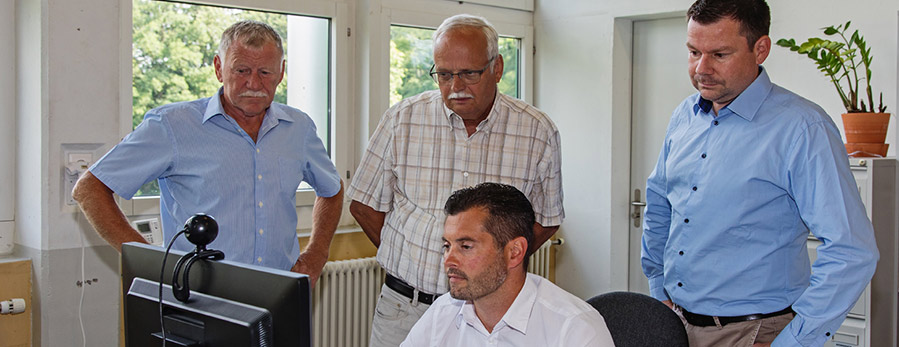
Crealet management passes to the next generation
Crealet AG was founded through a management buyout from Willy Grob AG in 2003. The advantages of existing operational know-how, experience and relationships with suppliers and customers were already in place. But a new brand name was needed. The name Crealet derives from ‘creative let-off motion’, based on the core competence of warp feeding and the specialty of engineering unique customized solutions.
Opportunity and challenge
Since the late 1990s, increasing competition from the Asian textile industry was having a strong impact in Europe. Leading manufacturers responded by shifting their business focus towards the ever-growing market for technical textiles. Textile companies saw chances in special fabrics for those markets with most demanding requirements. “We saw an opportunity for our company in this challenging field of specialty fabrics. Successful production of woven technical textiles requires know-how and ingenious ideas as well creative warp let-off systems,” says Walter Wirz, one of the founders and Crealet CEO.
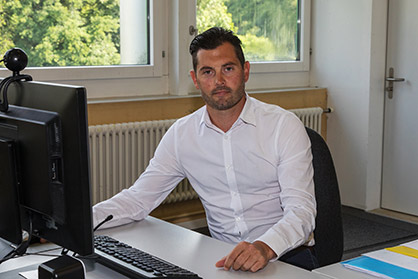
Crealet built a strong reputation for its knowledgeable support for weaving professionals, with a reliable range of products and innovative solutions. At this time, the global business climate was tough, and many countries were facing a recession. “We proved our creativity and technical excellence to respond to market demands. We were focused on practical and forward-looking solutions that bring real and tangible benefits to our customers,” says Leo Kuster, another founder and Head of Engineering at Crealet.
New generation
In 2007, Mario Kuster joined Crealet as mechanical engineer. He specialized in plant engineering and drove the latest developments in feeding carbon fiber from creel to the weaving machine. He also took responsibility for engineering projects for the automotive industry. Qualified electrical engineer Andreas Wirz joined the company as technical administrator, and extended his area of responsibility in 2015, becoming sales manager, progressing into operational management later. He today leads product development in the field of electronic applications.
These two, the sons of the aforementioned founders, now take on management duties. Andreas Wirz is the new Crealet CEO and Mario Kuster is Head of R&D. The official handover was on May 9th, 2022. At the same time as the management change, there is a change of location. Crealet moves its headquarters from Eschenbach to Wald (an area in Switzerland where textile history started from 1800). Larger production halls were needed to assemble warp systems of up to 540 cm standard length and 650 to 680 cm on customer request with a diameter of up to 1600 mm.
Clear mission
Crealet continues to focus on responding to the increasing demand for clever – and inspiring – solutions and products in the field of electronics and embedded systems. Ambitious textile companies in particular are looking for software-supported innovations. “Our recent and future developments go clearly in this direction and include a supplement to our product range in the area of tension-controlled creels,” says Mario Kuster. Crealet will also launch a new product for warp tension control for belt weaving, for which field trials are ongoing.
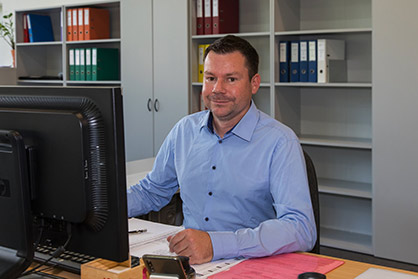
Certainly, supply chains need to be challenged, as the new management strives to keep pricing stable as far as possible. Another short-term goal focuses on after-sales visits and face-to-face customer meetings, which have suffered as a result of the pandemic. For a start, the company will welcome business partners at Techtextil Frankfurt 2022, from June 21 to 24. The Crealet booth will be a one-stop choice for advanced customized warp yarn feeding systems and weaving preparation solutions.
“Since the first day of Crealet, our goal has been to provide products and solutions for peace of mind for our customers. We are very proud of what has been achieved, but we will never be satisfied. Nothing inspires us more than satisfied customers. We’re looking forward to meet you at Techtextil,” says Andreas Wirz.