[pageLogInLogOut]

#Textiles & Apparel / Garment

Carrington Textiles’ Portuguese factory cuts CO2 emissions by 45% with biomass boiler installation
(c) 2024 Carrington Textiles
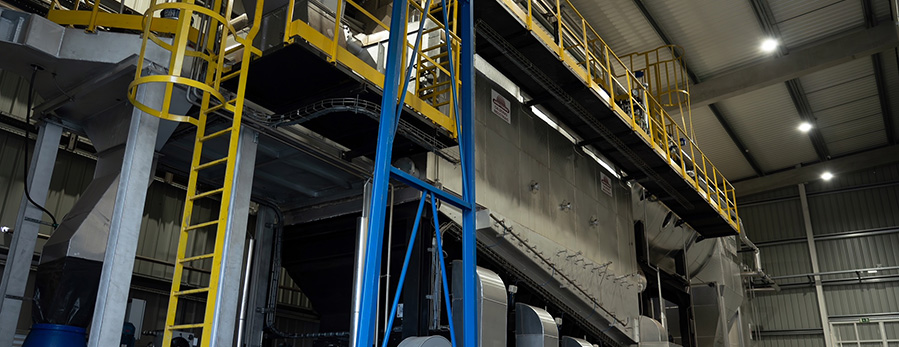
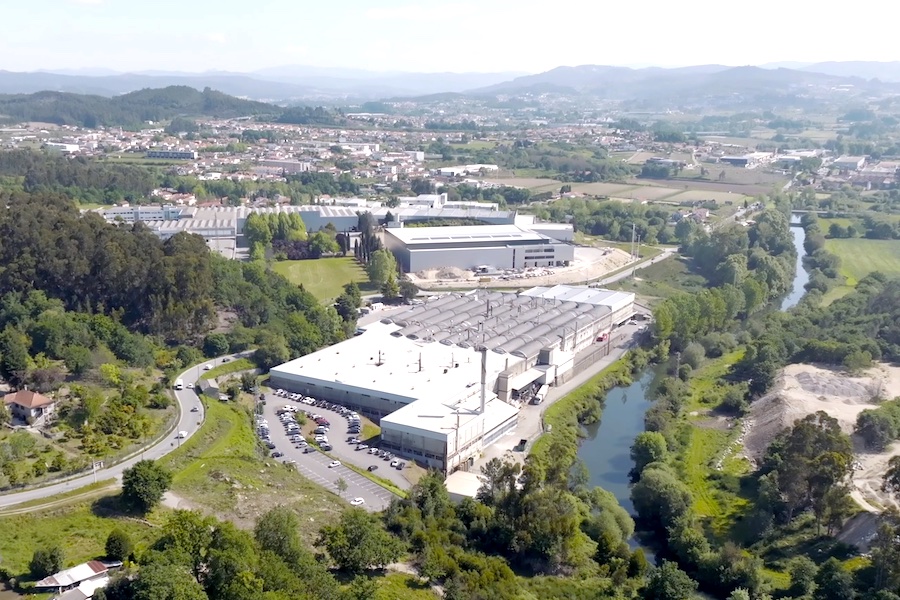
Global workwear textile manufacturer Carrington Textiles, along with its joint venture in Portugal, MGC, has achieved significant carbon emission reductions following the installation of a biomass boiler at the site in 2023.

This initiative has allowed the factory to produce 95% of the steam needed for manufacturing while reducing natural gas consumption by 70%, marking a substantial step towards more sustainable textile production practices.

A biomass boiler is a device that uses organic materials, such as wood chips, agricultural residues, or other biological matter, to produce heat and energy. This technology serves as an alternative to fossil fuels, significantly cutting down on greenhouse gas emissions.

MGC’s biomass boiler uses responsibly sourced wood chips from local forests within a 50 km radius of the factory, all certified by SURE (Sustainable Resources). This raw material consists of leftover wood intended for the paper industry that needs to be removed to prevent fires. The ash generated in the process is used as soil fertiliser after being treated to avoid soil contamination.

This new equipment is carbon neutral and has allowed the textile manufacturer to decrease its overall CO2 emissions by 45% compared to 2022.

Jose Melo, MGC’s Managing Director, commented on the achievement: “The installation of the biomass boiler marks a significant milestone in our journey towards driving energy efficiency in our manufacturing processes. The substantial reduction in our CO2 emissions is a testament to our commitment to environmental stewardship.”


Comprehensive Environmental Initiatives

Beyond the biomass boiler, MGC has implemented a series of initiatives that showcase its commitment to sustainability. This includes reduction in water consumption by over 13%, waste and plastic usage reduction, environmental management training to all employees, energy management systems, wastewater treatment to remove microplastics and PFAs, to name a few.

These initiatives and the implementation of the biomass boiler illustrate Carrington Textiles and MGC's dedication to investing in technologies that reduce their impact on the environment.

More News from Carrington Textiles

#Technical Textiles

Carrington Textiles and Pincroft unite defence expertise at Enforce Tac

Carrington Textiles and Pincroft return to Enforce Tac for the third time, presenting a co-branded stand that brings together textile manufacturing and specialist finishing under one roof.

#Fabrics

Carrington Textiles launches new Fabric Collection Guides at A+A

Global workwear textiles manufacturer Carrington Textiles marked a successful return to A+A in Düsseldorf with the launch of 13 new fabrics and the official debut of their redesigned Fabric Collection Guides. The stand attracted a high number of visitors across the four days of the exhibition, with excellent feedback on both the new products and the innovative format of the guides.

#Fabrics

Carrington Textiles stretches the standard at A+A

Global workwear textiles manufacturer Carrington Textiles has announced the launch of 12 new fabrics at A+A in Düsseldorf this November. With 75% of the new range featuring stretch technology, eight products incorporating sustainable fibres and four delivering flame retardant protection, the company is reinforcing its drive to raise comfort and performance standards across workwear.

#Fabrics

Carrington Textiles joins TRSA to strengthen presence in US market

Carrington Textiles, a global manufacturer of workwear fabrics, has become a member of the Textile Rental Services Association (TRSA), marking a strategic step to expand its presence in the United States.

More News on Textiles & Apparel / Garment

#Sustainability

Practical toolkit to drive coordinated climate action launched

An open-access workshop toolkit enables brands, suppliers, policymakers and investors across the textile industry to apply the System Map in their own work, identifying leverage points to halve emissions and enable a just transition.

#Textiles & Apparel / Garment

YKK launches “YZiP® Light” aluminum alloy zipper for cotton pants

YKK Corporation (Headquarters: Chiyoda-ku, Tokyo; President: Koichi Matsushima; hereafter, YKK) has launched YZiP® Light, a lightweight aluminum alloy zipper for cotton pants, with sales beginning in late March. The introduction of YZiP® Light expands YKK’s zipper portfolio—led by the flagship YZiP® copper alloy zipper—providing customers with greater flexibility to meet diverse garment needs.

#Textiles & Apparel / Garment

Coats to showcase innovative reinforcement and filler materials for leather goods and accessories at APLF 2026

Coats, a world-class Tier 2 manufacturer and trusted partner for the apparel and footwear industries, will be promoting four advanced materials from its ‘Lifestyle Solutions’ portfolio at APLF 2026 in Hong Kong in March. Each innovation has been specifically engineered to help luxury and premium brands elevate the craft, durability, sustainability and creative expression required in the manufacturing of handbags, purses, and other high-end designer accessories.

#Textiles & Apparel / Garment

Design, innovation and sustainability propel VIATT 2026’s expanding role in ASEAN textile sourcing

At its third edition, the Vietnam International Trade Fair for Apparel, Textiles, and Textile Technologies (VIATT) further reinforced its role as a key sourcing and business platform for ASEAN’s textile industry. The three-day fair welcomed over 17,000 visits from 54 countries and regions, and featured over 460 exhibitors from 21 countries and regions across 18,000 sqm. The 2026 edition was marked by the introduction of new international pavilions and zones, broadening the fair’s sourcing scope across new geographies and product categories. The fringe programme, headlined by the debut Trend Forum, further distinguished VIATT as the region’s most integrated textile trade platform – uniquely spanning the entire value chain.

Latest News

#Techtextil 2026

AI, Start-ups, Research: Techtextil and Texprocess bring together players in the textile industry

From start-ups to universities and research institutes: at Techtextil and Texprocess, the world’s leading innovation trade fairs in Frankfurt am Main, exhibitors present future-oriented concepts for the global textile industry. With the international Campus & Research area, a strong participation from start-ups and the latest AI applications for textile processing, both trade fairs showcase current developments in the textile industry. By bringing together innovation, research and application, they enable new partnerships across the textile value chain.

#Techtextil 2026

IVGT joint stand brings innovation and networking to Techtextil 2026

At Techtextil 2026 and the parallel Texprocess 2026, key transformation topics such as artificial intelligence, digitalisation, sustainability, recycling and the circular economy will be reflected across the show. Against this backdrop, the IVGT, together with 16 member companies, will present its joint stand in Hall 12.1 (Stand D62) as a platform for exchange and networking.

#Man-Made Fibers

Indorama Ventures supports Southeast Asia’s textile customers with reliable regional supply and global innovative portfolio

Indorama Ventures, one of the leading global polyester fiber and filament yarn suppliers globally, will participate in Indo Intertex 2026 in Jakarta this April, making its diverse global portfolio available to apparel, home textile, and hygiene customers across Southeast Asia.

#Raw Materials

New study shows low environmental impact by Cotton made in Africa Organic Cotton from Tanzania

Today, the Aid by Trade Foundation (AbTF) is announcing the results of a comprehensive life-cycle analysis (LCA) for cotton produced in Tanzania under the Cotton made in Africa Organic (CmiA Organic) standard. The study emphasises the small ecological footprint of CmiA Organic verified cotton. This can largely be traced back to the absence of synthetic pesticides, artificial fertilisers, and artificial irrigation. Consequently, CmiA Organic cotton can help the textile industry meet regulatory requirements as well as science-based targets. The results also show that the consequences of climate change threaten the livelihoods of these cotton farmers, even though the type of agriculture they practise barely contributes to climate change.

TOP