[pageLogInLogOut]

#Texprocess 2019

Clothing production in the future
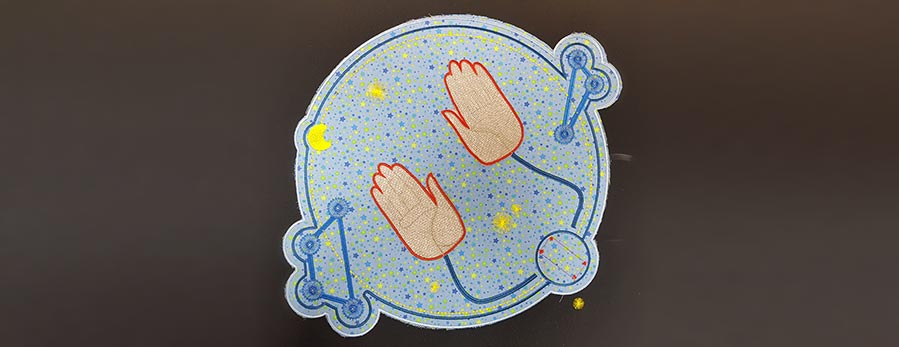
Smart-Pillow with applique? (c) 2019 Messe Frankfurt
Individualization, automation and digitalization: micro-factories are the way forward for the future of clothing production. Texprocess, Frankfurt/Main, the international trade fair for processing textile and flexible materials with its 2019 edition from 14 to 17 May will display the main theme broadly and prominently.

ITA introduces Smart Textiles Micro-Factory at Texprocess 2019

“Send your favorite design to the manufacturer today via an app and wear your individually designed, perfectly fitting trainers or shirt tomorrow. It’s a long time since this was just a pipe dream for the future,” says Michael Jänecke, Director Brand Management Technical Textiles and Textile Processing at Messe Frankfurt. “Behind it, however, lies a host of complex processes, involving production, processing and logistics. Microfactories, based on networked and integrated procedures, represent the progressive way of making textile processing quicker, more flexible and, because it is more local, also more sustainable; whilst, at the same time, producing personalized products.”

In a total of four micro-factories launched by Messe Frankfurt itself visitors will be able to get an idea of how integrated textile processing works and where micro-factories are already being used.

One of those contemporary show highlights to be the ‘Smart Textiles Micro-Factory’, located in the walkway between Halls 4.1 and 5.1 of Frankfurt fairground, the Institute for Textile Technology (ITA) at the RWTH Aachen University, together with partners from industry and research, will be producing a ‘smart’ pillow which, with the application of integrated LEDs, provides a platform for all new ways of interaction. With this demonstration, the partners in the project will present an exemplary, fully connected manufacturing process for a smart textile from design to finished product. Prof. Thomas Gries ITA Director and holder of the Chair for Textile Machinery at the Institute for Textile Technology at RWTH Aachen explained: “As a matter of fact the Smart Textiles Micro-Factory  will represent a double premiere: the operational implementation of an on-demand integrated manufacturing process and this a smart, in this conductive sewn end-product. 

“Microfactories represent the progressive way of making textile processing quicker, more flexible and more sustainable”.  – Michael Jänecke, responsible for Messe Frankfurt’s Brand Management Technical Textiles and Textile Processing. © Messe Frankfurt GmbH
“Microfactories represent the progressive way of making textile processing quicker, more flexible and more sustainable”. – Michael Jänecke, responsible for Messe Frankfurt’s Brand Management Technical Textiles and Textile Processing. © Messe Frankfurt GmbH


Sneak preview: The prototype of the smart pillow as it was displayed in advance at Heimtextil 2019. (c) 2019 Messe Frankfurt


Under the leadership of his team of dedicated engineers for the various technologies and along the principals of agile project management the following partners are now developing concept and implementation for the ambitious Microfactory application:

  • Gerber Technology
  • Korea Institute for Industrial Technology KITECH
  • VETRON TYPICAL Europe GmbH (sewing), 
  • Wear it GmbH 
  • ZSK Stickmaschinen   

“With ITA Institute Messe Frankfurt succeeded to take the most experienced specialist for Microfactory developments and implementations on board”, said Yvonne Heinen-Foudeh, Gerber Technology’s Marketing Director for EMEA


More News from Gerber Technology

More News on Texprocess 2019

Latest News

#Dyeing, Drying, Finishing

Orthopac RVMC-20 plus: German Engineering for Smarter Weft Straightening

In times of rising cost pressure and growing quality demands, textile producers worldwide are searching for solutions that combine precision, efficiency, and sustainability. With its latest innovation, the Orthopac RVMC-20 plus, Mahlo once again demonstrates the strength of German engineering: improving proven technology to meet today’s challenges.

#Knitting & Hosiery

KARL MAYER and Lenzing partner to advance warp knitting with scalable cellulose fiber solutions

The Lenzing Group, a leading supplier of regenerated cellulosic fibers for the textile and nonwovens industries, together with KARL MAYER, the global market leader in warp knitting machines and warp preparation systems, debut a joint innovation project during Premiere Vision, Paris.

#Textile chemistry

RUDOLF gets the exclusive global distribution rights for Sanitized® textile technologies

With effect from today, RUDOLF officially assumes exclusive global distribution rights for Sanitized® textile technologies from SANITIZED AG. This is the next milestone in the strategic collaboration announced in 2025, with the partnership between the two companies now fully implemented and expanded worldwide.

#Europe

ICAC to support European Commission on pending PEF legislation

The International Cotton Advisory Committee (ICAC) is proud to announce that it has been included as a member of the European Commission’s Technical Advisory Board (TAB) on the Product Environmental Footprint methodology. The Commission developed the Product Environmental Footprint (PEF) to assess and communicate the life cycle environmental performance of products and organizations.

TOP

