[pageLogInLogOut]

#Techtextil / Texprocess 2024

Bio-based insulation textiles instead of synthetic insulation materials are set to revolutionise the construction world
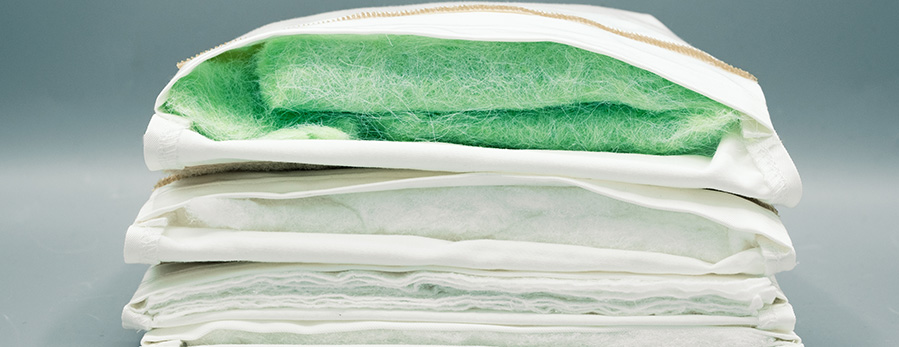
(c) 2024 ITA - The insulation of various aerogel fibres is illustrated using the example of a cushion
Using bio-based and bio-degradable, recyclable insulation textiles to sustainably insulate heat and reduce energy consumption and the carbon footprint - the Aachen-based start-up SA-Dynamics has developed a solution for this dream of many building owners together with industrial partners. SA-Dynamics won the second Innovation Award in the "New Technologies on Sustainability & Recycling" category at the leading textile trade fairs Techtextil and Texprocess for this development.

The bio-based recyclable insulation textiles consist of 100 percent bio-based aerogel-fibres. They contain up to 90 percent air, trapped in the nano-pore system of the aerogel-fibres. The bio-based raw material is sustainably sourced and certified. The insulation textiles made from bio-based aerogel fibres are said to insulate the same or even better than synthetic insulating materials of fossil origin like PET, PE or PP and mineral or stone wool.

"By using bio-based aerogels, we are doing away with fossil-based materials and doing something for the environment and climate," explains Maximilian Mohr, Chief Technical Officer (CTO) at SA-Dynamics. "We are thus meeting the regulatory measures of the EU and the governments of many countries for more climate and environmental protection. By using bio-based, recyclable aerogels, we can revolutionise the world of construction. Come to Techtextil at our booth at the Elmatex joint booth in hall 12.0 D63 and see for yourself."

The Techtextil and Texprocess Innovation Awards ceremony will take place on 23 April 2024 at 12.30 pm in Hall 9.0 in Frankfurt/Main, Germany.

The Aachen-based start-up SA-Dynamics is made up of researchers from the Institut für Textiltechnik (ITA) and the Institute of Industrial Furnace Construction and Heat Engineering (IOB) at RWTH Aachen University.

The bio-based aerogel fibres originate from the LIGHT LINING research project of the BIOTEXFUTURE innovation area. The LIGHT LINING research project focussed on sports and outdoor textiles. The research results are transferable to the construction sector.


More News from Institut für Textiltechnik of RWTH Aachen University (ITA)

#Research & Development

Solid Air Dynamics wins second place at RWTH Innovation Award

On 30 January, RWTH spin-off Solid Air Dynamics was awarded second place in the RWTH Innovation Awards for its research in the field of aerogel fibres. Manufactured from renewable raw materials, aerogel fibres offer outstanding thermal insulation, are extremely lightweight and completely biodegradable, and can consist of over 90 per cent air.

#Research & Development

Award-winning research for sustainable carbon fibre cycles

Sustainable recycling of carbon fibres is possible through targeted electrochemical surface modification, which makes the sizing of carbon fibres resistant to solvolysis. ITA PhD student Sabina Dann was awarded the MSW Award from RWTH Aachen University for her master's thesis on this development. The award ceremony took place on 12 November 2025 in Aachen.

#Research & Development

Kick-off for the Textile Production of the Future: Establishment of a Textile Technology and Development Centre in Mönchengladbach, Germany

The Institut für Textiltechnik (ITA) of RWTH Aachen University, together with its partners, is pleased to announce that it has received approval for its joint initiative, ‘Textile Factory 7.0’. The goal of the project is the establishment of a technology and development centre for the textile industry in Mönchengladbach.

#Research & Development

Exchange data between textile companies openly, securely and cost-effectively without a central platform – ITA makes it possible

The Institut für Textiltechnik (ITA) of RWTH Aachen University has launched a new demonstrator for an open and secure data space in the textile industry at the Digital Innovation Centre Europe (DICE). For the first time, the demonstrator shows directly and clearly how companies can share their data securely with each other without the need for a central platform. Data exchange is based on shared, freely usable technical foundations.

More News on Techtextil / Texprocess 2024

Latest News

#ITM 2026

The hub of smart and sustainable transformation in yarn technologies: ITM 2026

With global fiber production projected to reach 169 million tons by 2030, yarn manufacturing is becoming one of the most strategic fields within the textile machinery industry. Located in Halls 6, 7, and 10, the Yarn Hall at ITM 2026 is set to bring together industry professionals with innovative solutions developed around automation, energy efficiency, digitalization, and circular production.

#Research & Development

New DIN SPEC assesses environmental impact of textile fragments in soil

Textile products made from synthetic fibres, finished fabrics or dyed materials release fibre fragments into the environment at every stage of their life cycle. With the new DIN SPEC 19296, Hohenstein has developed a standardised testing method to analyse how these fragments behave in soil under natural conditions. Until now, little was known about their environmental behaviour or potential ecological effects once released.

#Europe

Antwerp Declaration community urges EU leaders to deliver emergency measures as Europe’s competitiveness crisis deepens

EURATEX, representing the European textile and fashion industry, joins the Antwerp Declaration Community’s call on EU Heads of State and Government to adopt emergency measures that restore industrial competitiveness and deliver tangible results for Europe’s manufacturing base in 2026.

#Recycled_Fibers

Advancing the future of stretch: Fashion for Good launches new project to validate bio-based and recycled elastane

Launched today, Stretching Circularity is a collaborative project initiated by Fashion for Good dedicated to accelerating the adoption of lower-impact elastane alternatives that are compatible with circular textile systems. By validating bio-based and recycled elastane solutions through pilot-scale testing and demonstrator garments, the initiative aims to remove one of the most significant technical barriers to a circular textile economy.

TOP