[pageLogInLogOut]

#Sustainability

Cascale announces Better Buying asset purchase to advance responsible purchasing practices and decent work for all
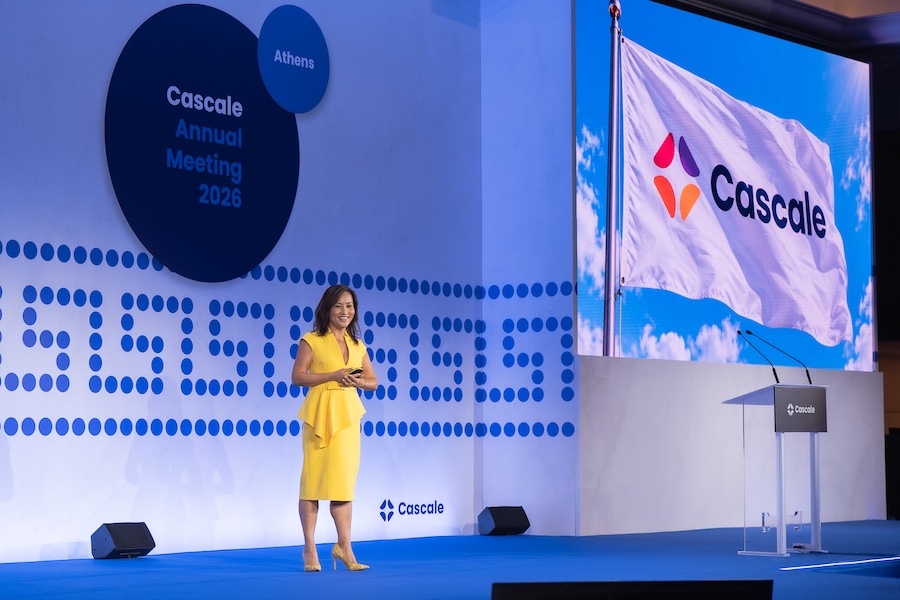
Cascale, the global nonprofit alliance formerly known as the Sustainable Apparel Coalition, today announced the purchase of key assets of Better Buying Institute (BBI), including the widely-recognized Better Buying Purchasing Practices Index (BBPPI) and the Better Buying Partnership Index (BBPI). This milestone reflects Cascale’s commitment to advancing responsible purchasing practices and promoting fair, accountable, and socially just supply chains.
Integration of Better Buying tools and methodologies positions Cascale to amplify supplier voices, promote industry accountability, and foster more resilient global supply chains © 2025 Cascale


The purchase of key BBI assets strengthens Cascale’s ability to address critical supply chain challenges such as unfair purchasing practices—behaviors like last-minute order changes, delayed payments, and below-cost pricing—that harm manufacturers and workers while destabilizing supply chains. By integrating BBI’s tools and methodologies and employing the BBI staff, Cascale is more equipped to promote the adoption of fair purchasing practices with brands and manufacturers, empowering facilities to plan effectively, improve labor conditions, and ensure fair wages. This directly aligns with Cascale’s Support Decent Work for All strategic pillar, which addresses systemic labor challenges and works to drive safe, fair, and dignified working conditions throughout global supply chains.

“Incorporating Better Buying’s tools into Cascale is a pivotal step in transforming supply chain relationships,” said Colin Browne, CEO of Cascale. “These proven methodologies will enable us to tackle systemic challenges such as unfair purchasing practices, amplify supplier voices, and advance meaningful industry-wide change. Moreover, this work will align seamlessly with our Decent Work for All strategic pillar, furthering our mission to foster fairer, more equitable supply chains that prioritize people and the planet.”

Guided by Dr. Marsha Dickson’s vision, BBI has been instrumental in putting responsible purchasing practices firmly on the global agenda. Dr. Dickson, president and co-founder of BBI, said, “Better Buying Institute’s decision to align with Cascale is a strategic choice to ensure our mission—to improve purchasing practices—can achieve greater scale and impact. By integrating our tools and methodologies into Cascale, we can continue driving positive change while benefiting from Cascale’s extensive networks and strategic resources to maximize industry transformation. Cascale and BBI already share significant alignment on mission and goals, as well as many members and subscribers, and the acquisition of these valuable assets by Cascale is perhaps the most logical solution for them.” Dr. Dickson will work with Cascale as a consultant during this transition to support the integration.

Anant Ahuja, director, ESG and sustainability at Shahi Exports and BBI board member, said, “Advancing responsible purchasing practices is central to driving a sustainable fashion industry. This transition presents a crucial opportunity to strengthen accountability across the apparel value chain and foster greater alignment between brands and manufacturers. This is a pivotal moment to reinforce shared responsibility and build more equitable and collaborative business relationships.”

“This milestone underscores Cascale’s role in uniting stakeholders and driving accountability across the industry,” said Fiona Sadler, Cascale board director and global head of responsible sourcing at Marks & Spencer, a Better Buying Partnership Index subscriber. “Cascale’s global reach and resources provide a powerful platform to scale the impact of Better Buying tools, ensuring their reach extends further than before. By integrating these proven methodologies in Cascale, we can empower companies to strengthen supplier relationships, improve purchasing practices, and drive measurable progress in labor conditions and environmental performance. This transformative step paves the way for a future where buyers and suppliers collaborate more effectively to address shared challenges, from workers’ rights to sustainability, creating lasting systemic change.”

Alexander Kohnstamm, executive director at Fair Wear, said, “As Cascale’s content partner on decent work and responsible purchasing practices, we support Cascale’s investment in Better Buying’s future. We look forward to continued work with Cascale and other key stakeholders to create a strong ecosystem of approaches and tools aligned towards the goal of equitable partnerships between brands and suppliers. This is a crucial factor in improving working conditions for the people who make our clothes.”

Cascale is committed to maintaining data protection, trust, and continuity throughout this transition. Suppliers will continue contributing their data and insights anonymously and securely, with all existing safeguards remaining fully intact. The integration process will be seamless, ensuring no immediate changes to pricing or access for BBI tool subscribers and Cascale members.



More News from Cascale

More News on Sustainability

#Sustainability

Practical toolkit to drive coordinated climate action launched

An open-access workshop toolkit enables brands, suppliers, policymakers and investors across the textile industry to apply the System Map in their own work, identifying leverage points to halve emissions and enable a just transition.

#Raw Materials

Textile Exchange publishes cotton Life Cycle Assessment study to strengthen impact data

Textile Exchange has published the first in a series of seven Life Cycle Assessment (LCA) studies designed to improve the quality and robustness of environmental impact data for raw material production across the fashion, textile, and apparel industry. The first LCA study focuses on cotton and addresses critical data gaps and methodology variability through new high-quality data across key producing countries. The study includes organic, regenerative, recycled, and country averages for conventional cotton production systems, providing a clearer picture of the associated environmental impact.

#Sustainability

GOTS version 8.0 released: advanced supply chain accountability, from fibre to finished product

Global Standard is pleased to announce the release of GOTS Version 8.0, the latest update to the world's leading processing standard for organic textiles. The updated Standard strengthens requirements for air emissions and waste management, as well as criteria for product safety. It introduces new provisions on circularity, microfibre management and updates in residue testing. Version 8.0 also elevates due diligence obligations and formalises governance requirements, including ESG disclosure, anti-corruption policies and conflict-of-interest safeguards, to support credible, responsible business conduct.

#Sustainability

The nova-Institute establishes new Renewable Feedstock Department to lay the groundwork for industrial defossilisation

The transition from fossil-based to renewable carbon – sourced from biomass, CO₂ utilisation and recycling – is the cornerstone of a climate-neutral chemical industry. The nova-Institute’s new department is dedicated to providing the essential data, analyses and strategic roadmaps required to secure a reliable future feedstock supply and make this transition a commercial and ecological reality.

Latest News

#Techtextil 2026

LineONE – Smart performance, smart investment at Techtextil 2026

At Techtextil 2026 in Frankfurt (April 21–24, Hall 12, Booth C79), AUTEFA Solutions will present its LineONE concepts for cost-efficient nonwoven production. As a full-line supplier for nonwoven production lines, AUTEFA Solutions covers the entire process chain – from fibre opening through to web bonding. With its LineONE line concepts, the company combines proven technologies into well-balanced, cost-efficient turnkey solutions. These concepts are designed for capacity expansions, modernisation projects and new production lines, offering robust design and high flexibility for applications such as filtration, geotextiles and automotive.

#Europe

EU and Australia strengthen relations with Security and Defence Partnership and Trade Agreement

The EU and Australia have today announced the adoption of a groundbreaking Security and Defence Partnership. They have also concluded negotiations for an ambitious and balanced free trade agreement (FTA) and agreed to launch formal negotiations for the association of Australia to Horizon Europe, the world's largest funding programme for research and innovation. With these steps, the EU and Australia are delivering mutually beneficial outcomes and further reinforcing their already close relations in a time of geopolitical uncertainty.

#Technical Textiles

DuPont introduces Tyvek® APX™ 400 protective coverall, setting a new benchmark for extreme breathability

DuPont (NYSE:DD) announced the launch of the Tyvek® APX™ 400 protective coverall, the first in a new generation of extremely breathable disposable chemical protection garments. Manufactured using DuPont™ Tyvek® APX™ groundbreaking fabric, the new garment combines 360° protection and durability with extreme breathability, taking worker comfort and safety to a whole new level.

#Spinning

Graf at EXINTEX – Strengthening presence in Latin America

Graf successfully participated in EXINTEX, one of the leading textile exhibitions in Latin America, together with its local agent Eurotecnica. The exhibition provided an excellent platform to engage with customers, partners and industry experts across the region.

TOP