[pageLogInLogOut]

#Sustainability

BASF is founding member of “value balancing alliance e.V.”

Which values do companies create for society – in environmental, human, social, and financial terms? And how can these contributions be measured and compared? Together with seven international companies of the recently founded “value balancing alliance e.V.”, based in Frankfurt am Main, Germany, BASF strives to create a standard that makes this holistic value creation transparent in monetary terms.

The alliance is supported by the accounting firms Deloitte, EY, KPMG, PwC and by the OECD amongst others. Founding members of the nonprofit organization are, next to BASF, the companies Bosch, Deutsche Bank, LafargeHolcim, Novartis, Philip Morris International, SAP, and SK.

“It is about changing the perspective on how companies create value,” said Saori Dubourg, Member of the Board of Executive Directors of BASF SE. “With a holistic view on values, we want to take into account our impacts on the environment, society and businesses. Creating long-term values is the foundation for sustainable business success.”

The target of the value balancing alliance is to create and pilot a model for the calculation of the multidimensional value contribution and to further develop the disclosing and reporting obligations accordingly within the next three years. “In the alliance, we want to standardize the different approaches that are currently used by the companies to make the results comparable. In this way, we can make the real value creation to the society by companies transparent,” explains Christian Heller, CEO of the value balancing alliance e.V.
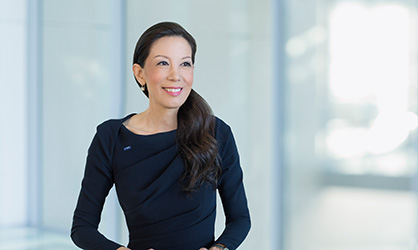
Saori Dubourg, Member of the Board of Executive Directors of BASF SE (c) 2019 BASF


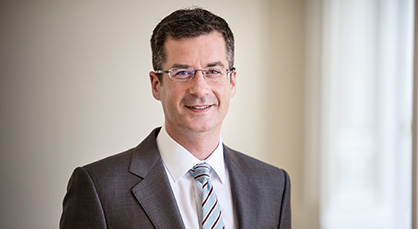
Christian Heller, CEO of the recently founded “value balancing alliance e.V.” (c) 2019 BASF


BASF for example has measured its multidimensional value creation along the value chain with its “Value-to-Society” program since 2013. Together with external experts, BASF has developed this approach to perform a monetary assessment of the economic, ecological, and social impacts of its business activities along the value chain. BASF shares its experiences in networks and initiatives such as the World Business Council for Sustainable Development (WBCSD), the Natural Capital Coalition, the Impact Valuation Roundtable or the Embankment Project for Inclusive Capitalism. BASF is also involved in the corresponding standardization processes within the International Organization for Standardization (ISO).

For more information about the value balancing alliance, visit: https://www.value-balancing.com/ . 

Further information on BASF’s "Value-to-Society" approach can be found here:

https://www.basf.com/global/en/who-we-are/sustainability/management-and-instruments/quantifying-sustainability/we-create-value.html
More News from BASF Aktiengesellschaft
Performance Chemicals for Textiles Europe

#Nonwovens

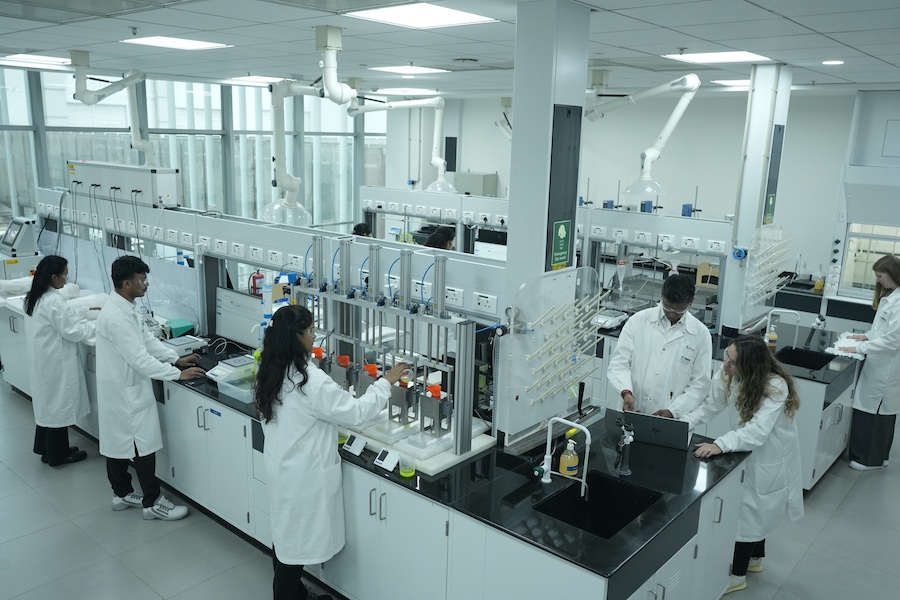
BASF opens global diaper and superabsorbents performance lab in Mumbai

BASF has officially inaugurated its new Performance Lab for diapers and superabsorbents (SAP) in Mumbai on August 18, 2026, which will provide technical and application services to superabsorbent customers globally. The new lab of BASF’s Hygiene Solutions business has been established in less than a year and is part of BASF’s Innovation Campus Asia Pacific in Mumbai, BASF’s second largest R&D site in Asia Pacific established in 2017 under BASF Chemicals India Private Limited.

#Recycling / Circular Economy

Pirelli, Pyrum, Synthos and BASF partner to transform end‑of‑life and scrap tyres into recycled materials for new products

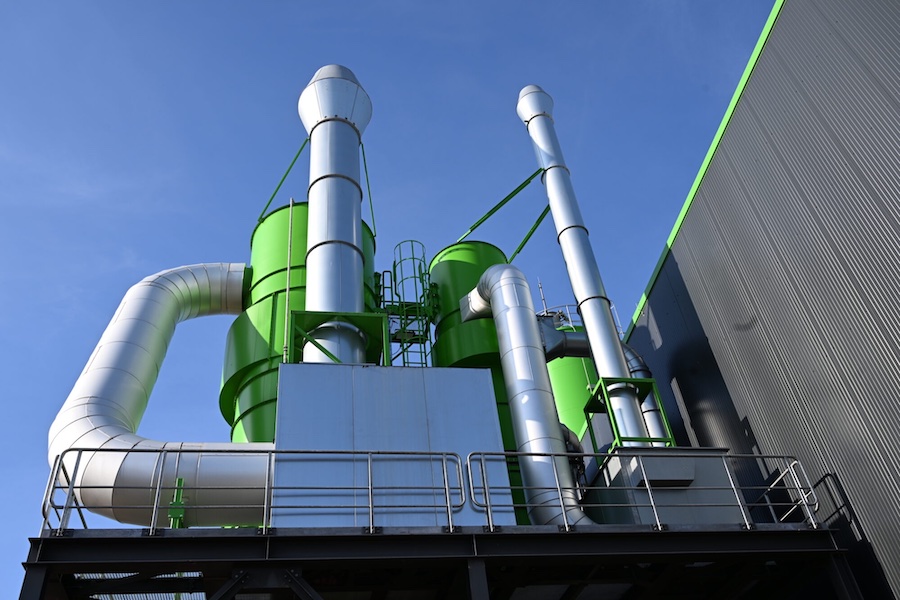
Pirelli, Pyrum, Synthos and BASF are jointly advancing a tyre-to-tyre circular economy initiative in Europe, driving the development of an industrial ecosystem designed to increase the use of recycled materials derived from end-of-life and scrap tyres.

#Recycled Fibers

Lindex and BASF partner to bring textile-­to­-textile recycled polyamide to lingerie sector

Lindex has partnered with BASF’s loopamid® to accelerate textile-­to-­textile recycling and advance the shift towards more circular material solutions in the fashion industry. Together they introduce loopamid to the lingerie sector.

#Textile processing

trinamiX mobile NIR spectroscopy: New applications for the footwear and textile industry

trinamiX GmbH expands its solution portfolio for the circular economy, now enabling the identification of materials used in the footwear and textile industries. With its mobile near-infrared (NIR) spectroscopy solutions, trinamiX supports manufacturers, sorters, recyclers, and brand owners in reliably identifying materials and improving transparency across increasingly complex value chains.

More News on Sustainability

#Sustainability

Execs help steer Cascale’s consumer goods agenda in Athens

The 2026 Cascale Annual Meeting, taking place September 15–17 in Athens, Greece, will convene leaders from across the global consumer goods value chain to tackle one of the industry’s defining questions: how to accelerate meaningful, system-wide transformation. Guiding those conversations as this year’s co-chairs are Sean Cady, vice president, global sustainability, responsibility, trade, and government affairs at VF Corporation, and Dr. Delman Lee, vice chair at TAL Apparel Limited.

#Textiles & Apparel / Garment

SAITEX reports efficiency gains and greater transparency in 2025 Impact Report

Vietnam-based denim manufacturer SAITEX has published its 2025 Impact Report, documenting progress in resource efficiency, chemical management, digital traceability and knowledge sharing across its manufacturing operations in Vietnam and the United States. Rather than focusing on sustainability ambitions, the report presents operational data, manufacturing developments and lessons learned from the past year.

#Raw Materials

Aid by Trade Foundation presents annual report for 2025: Market position and impact of sustainably verified natural fibres strengthened

Despite global supply chain challenges, the Aid by Trade Foundation (AbTF) was able to further expand its international role in promoting sustainably verified natural fibres in 2025. In doing so, the foundation remains true to its fundamental approach of leveraging market forces. Last year, it generated total revenues of EUR 7.8 million; this included EUR 6.7 million collected through the successful marketing of four standards: Cotton made in Africa (CmiA), CmiA Organic, The Good Cashmere Standard (GCS), and the Regenerative Cotton Standard (RCS). AbTF invested the resulting income in projects aiming to protect biodiversity, support women, increase transparency in the textile supply chain, and implement its verification system.

#Sustainability

Textile Exchange reports growth in certifications and industry engagement

Textile Exchange has published its 2025 Annual Report, highlighting continued growth in certified sites, industry participation and the development of its standards and membership structure. According to the report, more than 100,000 sites worldwide are now certified to Textile Exchange standards, more than three times the number recorded in 2020. Preliminary figures also indicate 12% year-on-year growth across the organization's current standards, including the Global Recycled Standard (GRS), Recycled Claim Standard (RCS) and the Responsible Animal Fiber standards.

Latest News

#Weaving

"Dynamic markets do not only create uncertainty – they also create opportunities."

Volatile markets, increasingly complex materials and growing demands for flexibility are changing the weaving industry. At the same time, new opportunities are emerging in technical textiles, filtration, composites and many other specialised applications. Since taking over as Head of DORNIER's Weaving Machines Product Line at the beginning of 2026, Yvonne Schuberth has been helping to shape this development. In this interview with TexData, she explains why process stability and customer proximity remain the foundation of innovation, how digitalisation is transforming weaving mills, and why she believes the future belongs to technologically demanding applications.

#Dyeing, Drying, Finishing

Ready for the future: PI Cottex chooses Brückner again for reliable quality and efficiency

PI Cottex, based in Ludhiana in the Indian state of Punjab, has developed into a leading manufacturer of high-quality knitted fabrics in recent years. Thanks to consistent vertical integration, modern pro-duction technologies and a clear focus on quality, the company supplies renowned national and inter-national clothing brands. In this interview, the team at PI Cottex talks to Brückner about its market strategy, future growth plans and its long-standing partnership with the German premium machinery manufacturer.

#Textiles & Apparel / Garment

Hong Kong strengthens position as Asia's leading sustainable fashion hub

Hong Kong's position as one of Asia's most prominent sustainable fashion hubs has been further strengthened, with the HKTDC ESG Index 2026 released by the Hong Kong Trade Development Council (HKTDC) for the fashion industry rising to 65.5 in 2026, up 2.3 percentage points from 2025. The increase reflects growing industry confidence in Hong Kong as a premier platform for sustainable fashion development and ESG-related business opportunities.

#Man-Made Fibers

Capturing malodor rather than masking it: Indorama Ventures presents innovative odor capturing technology at Dornbirn Global Fiber Congress

Indorama Ventures, a global leader in fibers and nonwovens serving customers in hygiene and technical markets, will present its latest technological innovation in odor management at the Dornbirn Global Fiber Congress.

TOP