[pageLogInLogOut]

#Sustainability

Innovation through sustainability

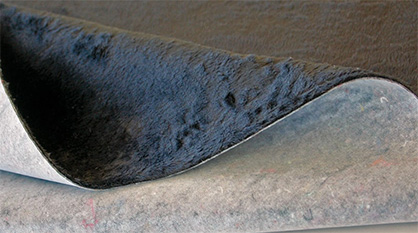
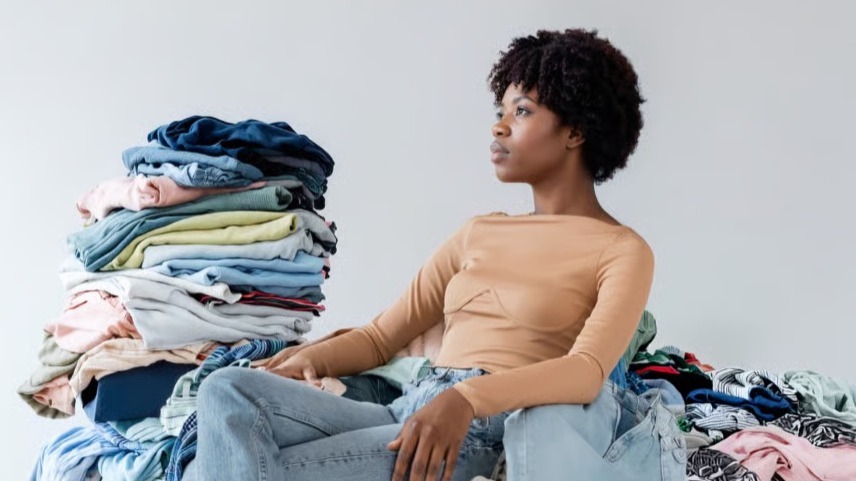
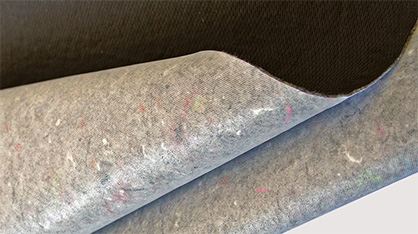
At this year’s Lineapelle (February 20-22, Milan), Sympatex (hall 22P, booths M11-M19 / N12-N20) will premier a new line of functional materials for footwear in which PU foams commonly used in the lining of the laminate are completely replaced by a fleece-like compound made from recycled clothing fibers.

This innovation dovetails with several of the ecological goals set down in the Sympatex “Agenda 2020” sustainability strategy: avoiding waste while reusing valuable and scarce raw materials, replacing controversial chemicals with more sustainable alternatives, reducing CO2 emissions and significantly reducing water consumption during the production of the laminate. With the new footwear line, Sympatex is not only feeding valuable raw materials back into the textile loop while curbing CO2 emissions. The material also boasts impressive performance. Replacing the PU foam with recycled textiles has a decidedly positive impact on the breathability of the laminated material.

The recycled textiles are collected by a Sympatex partner in Italy, where they are also integrated into the Sympatex laminate. According to data from the SAC (Sustainable Apparel Coalition) HIGG Index, omitting the PU foam leads to significant improvements in the ecobalance. Using conventional manufacturing technologies, 800 kg of CO2 are released for every 1,000 linear meters of PU foam, which roughly equates to the amount of CO2 that can be absorbed by 65 beech trees each year, or the production of 49 pairs of running shoes. 
(c) 2019 Sympatex
(c) 2019 Sympatex


(c) 2019 Sympatex
(c) 2019 Sympatex

When measured by the manufacture of one linear meter of Sympatex laminate, replacing the foam reduces CO2 emissions by around 15 percent, and water consumption by roughly one-third.

“It is our conviction that our firm commitment to sustainability is serving as an impetus for innovation, becomes again evident in this new footwear line of materials in a highly-convincing fashion,” explains Dr. Rüdiger Fox, CEO at Sympatex Technologies. “While many market partners view sustainability as a stranglehold on creativity, maintaining a clear focus with our innovation processes helps us to concentrate our energy, and thus produce new solutions for our customers at a much faster pace. We encourage the market to resort to these solutions in order to prepare for an unavoidable future in which there will be clear limits placed on the current overexploitation of our resources,” adds Fox.
More News from Sympatex Holding GmbH

More News on Sustainability

#Sustainability

YKK recognized with Top ‘A’ rating by CDP for climate change leadership for third consecutive year

YKK Corporation announced its achievement of the highest “A List” rating in the 2025 Climate Change survey conducted by the global environmental disclosure nonprofit, CDP . This marks the third consecutive year YKK has received this prestigious recognition.

#Weaving

Itema announces strategic partnership with Ivy Decarb to accelerate decarbonization in weaving process

Itema is pleased to announce the strategic partnership with Ivy Decarb, the digital platform helping textile companies measure and reduce their carbon footprint.

#Man-Made Fibers

Teijin Carbon Europe receives EcoVadis Silver status – ranked among the top 15% of evaluated companies

Teijin Carbon Europe (TCE) has been recognized for its sustainability performance and has been awarded the EcoVadis Silver Medal in the latest assessment. In its first-ever EcoVadis evaluation, the company achieved a notable 72 out of 100 points, ranking among the top 15% of all companies evaluated worldwide, within the “Manufacture of Man-Made Fibres” category.

#Research & Development

The region of renewable raw materials: Central German Alliance for Bioplastics

The development of sustainable plastic solutions is rapidly gaining importance in light of global environ- mental pollution, dwindling fossil resources and ambitious climate protection targets. As part of the re- gional alliance RUBIO, which brings together 18 partners from central Germany and the Berlin-Branden- burg area, the bio-based and biodegradable plastic polybutylene succinate (PBS) was comprehensively investigated, starting with the raw material, through the manufacturing process, to industrial application.

Latest News

#Natural Fibers

38th International Cotton Conference Bremen: Let´s Talk about Cotton!

The 38th International Cotton Conference Bremen, to be held on 25-27 March 2026 in Bremen’s parliament building on market square, once again sends a powerful signal for professional excellence and international dialogue. The focus is on the latest market trends and technical innovations throughout the entire value chain – from agriculture and quality assurance to processing and the circular economy. With its high-calibre speakers, the conference remains an indispensable forum for anyone involved in shaping the cotton industry scientifically, technically, or economically.

#Recycled_Fibers

Leading fashion brands step up to unlock the next chapter of Circulose

Since 2024, under new ownership and leadership, Circulose has set a renewed strategic direction focused on securing long-term commitments with partner brands to bring CIRCULOSE® back to market at scale. This strategy has proven successful.

#Research & Development

More safety and comfort for protective clothing thanks to auxetic fabrics

When everyday materials are pulled, they stretch or elongate in the direction of the pull and become narrower in cross-section. We can also observe this property in two-dimensional textiles. Auxetic structures behave differently here. They have the striking property of not changing under tensile stress or even increasing their width or thickness. These properties are advantageous, for example, in protective textiles or textile filter media. The DITF are researching auxetic fabrics for various applications.

#Recycled_Fibers

Recycling mixed-fibre garments becomes a reality: RadiciGroup, The LYCRA Company and Triumph take circular fashion a step forward

The process, which is both economically and environmentally sustainable, has enabled the production of an underwear set made from 100% recycled nylon and LYCRA® fibre in a closed-loop system.

TOP