[pageLogInLogOut]

#Spinning

China expands HMLS capacities

Demand for high-performance yarns on the rise
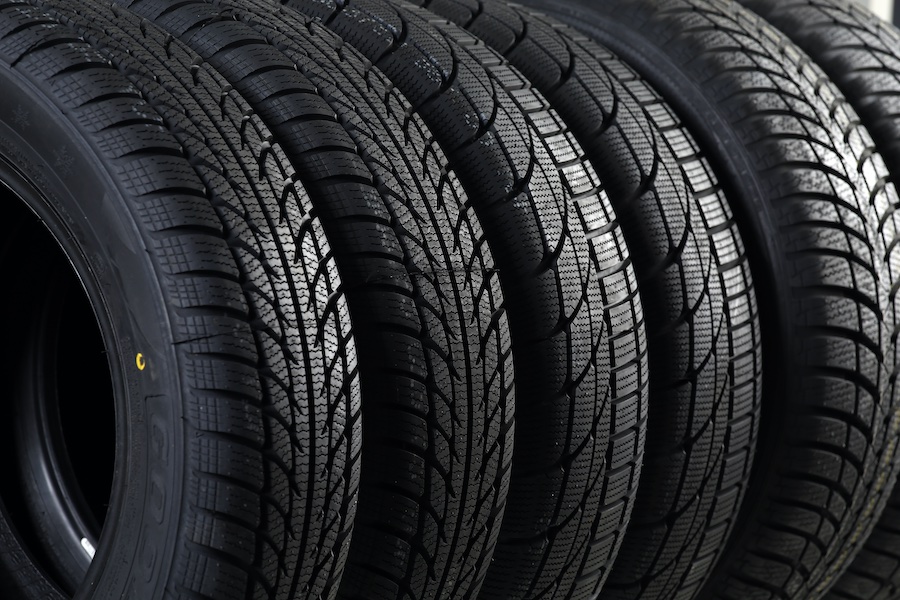
Reinforced with dimensionally stable HMLS yarn, tires remain dimensionally stable even under load and temperature © 2025 Barmag
Barmag, a subsidiary of the Swiss Oerlikon Group, will commission three HMLS yarn systems with a total of 30 stations at renowned technical yarn manufacturers in China over the next three months.

Particularly noteworthy: among them are two HMLS producers who had previously purchased from competitors. "They were convinced by our process technology, which guarantees the economic production of HMLS yarns of the very best quality," says Sales Director Oliver Lemke, who, together with his colleagues on site, provides support to customers in the field of technical yarns. The sophisticated material obtains its special properties during the spinning process. High speeds in the production process guarantee a stable arrangement of the molecules within the polymer that forms the actual thread. The internal structure of the molecular chain, in turn, is decisive for the dimensional stability of the final yarn.

Growing demand for HMLS yarns

The industry expects demand for HMLS yarns to increase in the coming years. This is mainly due to the trend toward lighter tires. Whereas high-modulus polyester yarn (HMLS) was previously used mainly in high-speed tires, its properties now also allow the tire carcass of small vans to be converted from steel cord to polyester. HMLS yarn is extremely tear-resistant, yet highly elastic and temperature- and dimensionally stable. 

Another factor is the steadily increasing number of vehicle registrations worldwide. In China in particular, the production of local car brands has increased rapidly in recent years, which explains the expansion of capacity in the country.
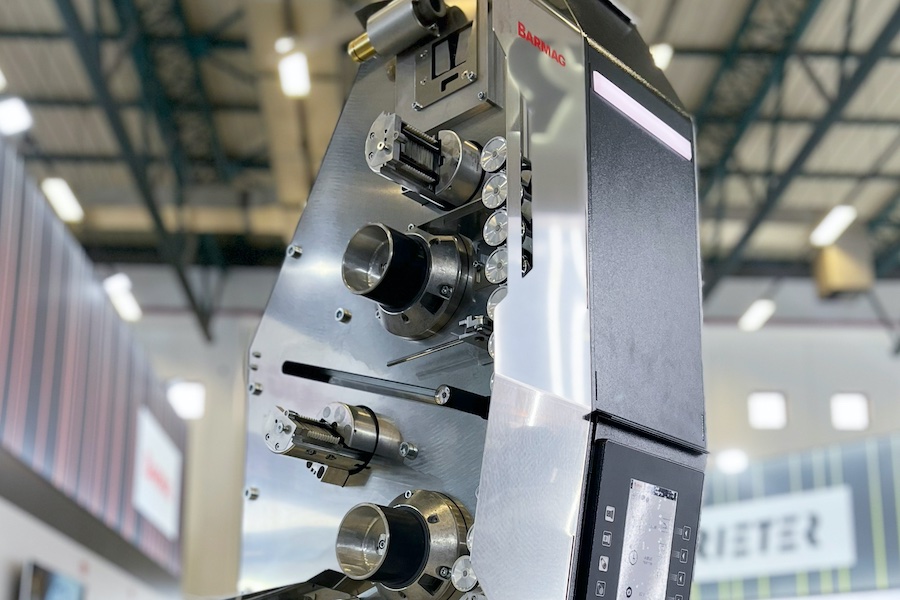
More News from Barmag, Zweigniederlassung der Barmag GmbH & Co. KG

#Spinning

Object Carpet tests production of rPET BCF yarn on Neumag BCF line

In a joint project with Object Carpet GmbH, Denkendorf; the Institute for Textile Technology (ITA), Augsburg; and Next Generation Recyclingmaschinen GmbH (NGR), Feldkirchen, Austria, Barmag investigated the processing of recycled polyester for BCF yarn. The goal was to evaluate the fundamental suitability of 100% recycled carpet material for reuse in carpet yarn production to create a closed-loop system in carpet manufacturing. To date, commercial rPET BCF processes have been based solely on rPET from bottle pellets.

#Spinning

Barmag and Hitech Automation enter into partnership for an auto-doff system for texturing machines

Barmag (Suzhou) Technology Co., Ltd. and Hitech Automation Solutions PVT LTD. of Surat, India, have agreed to an exclusive partnership to jointly market Hitech’s Doffmatic automation solution for Barmag’s proven manual eFK texturing machines. In many texturing facilities, manual doffing processes remain heavily operator-dependent – resulting in issues such as increased scrap, inconsistent quality, and limited productivity.

#Spinning

Specialist in fine counts: New type 2777 ceramic oiler

With the new Type 2777 ceramic oiler, Barmag has added a solution for fine titers and microfilaments to its portfolio of original parts.

#ITM 2026

Barmag and Neumag showcase innovations across all manmade fiber processes

For the first time, Barmag is presenting itself alongside its new parent company, Rieter: At this year’s ITM in Istanbul, both companies will be represented from June 9 to 13 at the Tüyap Fair Convention and Congress Center in Hall 7, Booth 702B. As a technology leader in the field of chemical fiber equipment, Barmag will showcase its entire portfolio of systems for filament yarn, staple fiber, and nonwoven production, as well as solutions for the networked factory.

More News on Spinning

#Spinning

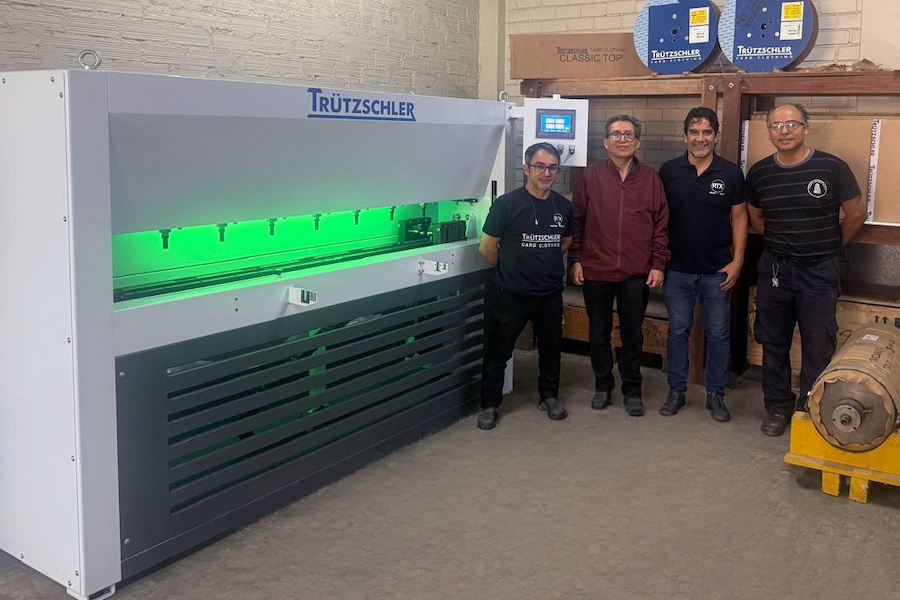
Ibrahim Fibres and Trützschler: A strong partnership enters its next phase with the TC 30Si

For more than two decades, Ibrahim Fibres and Trützschler have grown side by side, driven by a shared ambition to continuously improve spinning performance, strengthen technology leadership and set new benchmarks in the textile industry. Today, Ibrahim Fibres is a leading yarn and polyester staple fiber manufacturer in Pakistan. The company operates the largest number of Trützschler cards in the country, with more than 200 machines running across its mills in Faisalabad, and plays an important role in one of Asia’s largest textile industries.

#Spinning

New spinning package with two-step filtration for recycled yarns and more

At the ITM in Istanbul, BB Engineering unveiled its new, patented ValuePack spinning package for the first time, which features a two-stage filtration system. This is particularly beneficial for re-cycling processes. Until now, spinning packs have used either metal powder (“sand”) or filter candles as filter media. Both options are suitable for differ-ent applications, and each has its own specific advantages and dis-advantages.

#Research & Development

GenuTrace client advisory: Is your cotton supply chain UFLPA ready?

U.S. Customs and Border Protection has released updated operational guidance (CBP Publication No. 5560-0526) expanding its forced labor enforcement framework. The guidance supersedes the original 2022 UFLPA Operational Guidance and now covers all forced labor enforcement authorities — UFLPA, CAATSA, and WROs/Findings — in a single unified document. For cotton importers, the enforcement posture has not softened. It has become more structured, more documented, and more demanding. Learn more about UFLPA.

#Spinning

"We will become a recycling powerhouse"

The textile industry is now in its fourth consecutive year of crisis, while automation, artificial intelligence and recycling are reshaping the rules of the game. In this interview, Rieter CEO Thomas Oetterli discusses the first signs of a market recovery, reflects on his first three years at the helm of the company, explains the integration of Barmag, outlines Rieter’s vision of the fully automated spinning mill and highlights the strategic importance of recycling. In doing so, he explains why the new Rieter Group aims to play a leading role in transforming the textile value chain into a circular economy.

Latest News

#Textile processing

YKK develops concept EXCELLA® zipper tape using nonwoven fabric partially derived from used clothing

YKK Corporation has developed a concept version of its premium EXCELLA® zipper series made from nonwoven fabric sheets created by fiberizing used clothing and other textile materials. Based on a proposal by fashion designer Yuima Nakazato, this item was created as a result of collaboration between Nakazato, Seiko Epson Corporation and YKK. The concept zipper was incorporated as a material component for pieces in the newest YUIMA NAKAZATO Couture Collection, “INFERNO,” which was unveiled in Paris, France on July 8, 2026.

#Textiles & Apparel / Garment

Texworld Apparel Sourcing Paris highlights evolving global sourcing landscape

From 31 August to 2 September 2026, Texworld Apparel Sourcing Paris will bring together more than 1,000 international exhibitors at Paris-Le Bourget Exhibition Centre. This edition reflects the new global balance of textile and apparel sourcing, highlighting a strong diversity of sourcing countries — some unexpected.

#Textile processing

Dedicated car seat model of SHIMA SEIKI’s P-CAM® R Cutting Machine unveiled

Leading Japanese textile solutions provider SHIMA SEIKI MFG., LTD. of Wakayama, Japan, showed a special version of its P-CAM® R multi-ply computerized cutting machine dedicated to the production of car seats for the first time, at a private exhibition held over two days on Thursday, July 2nd and Friday, July 3rd at the Kariya City Industrial Promotion Center in Aichi Prefecture.

#Research & Development

ALADIN paves the way for circular and demand-driven textile production in Europe

Textile production can be organized sustainably by utilizing short supply chains and preventing overproduction. This can already be achieved today by intelligently connecting and efficiently utilizing existing infrastructure. At the same time, production becomes circular when innovative technologies and materials are used that enable high-quality recycling. The ALADIN research project, launched in May 2026 and co-funded with five million euros under the EU Horizon Europe program, is creating the conditions for this.

TOP