[pageLogInLogOut]

#Spinning

India: Growing interest in Oerlikon Barmag industrial yarn systems

As a traditional textile country, India has also established a strong position in the field of manmade fiber production in recent decades. The West Asian country has now become the second largest polyester yarn manufacturer in the world. The Indian textile industry covers the entire value chain from the melt to the finished textile end product.
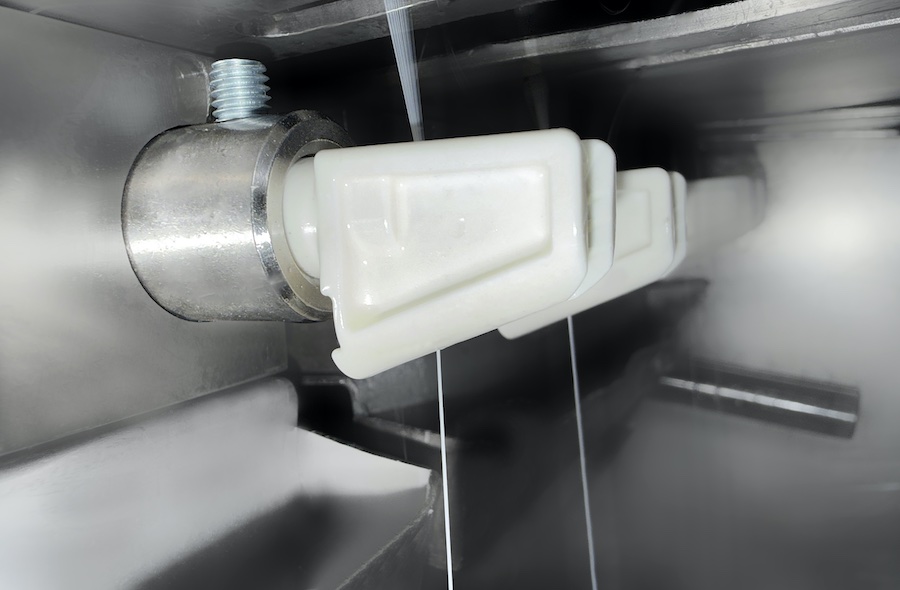
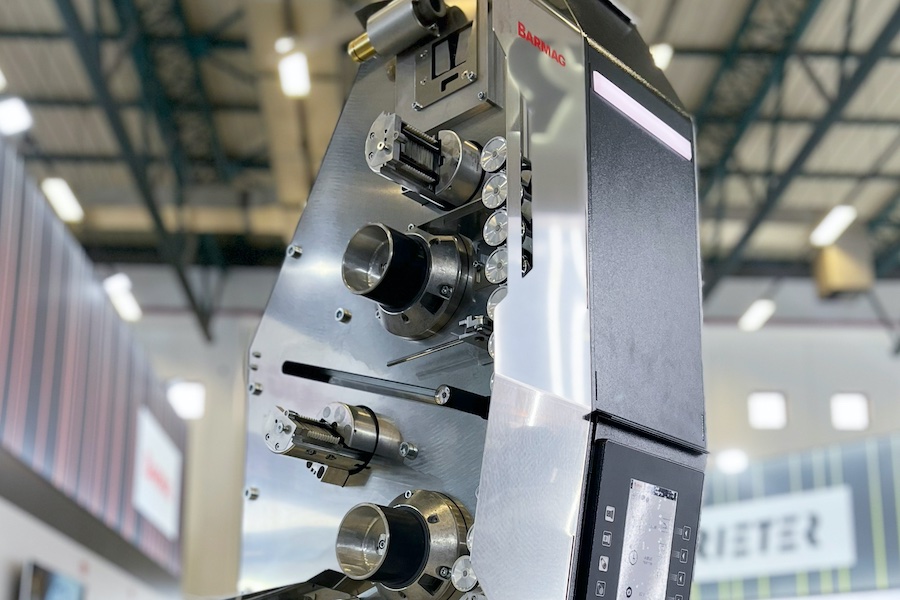
Oerlikon Barmag supplies its industrial yarn systems individually configured; the system concept for High Tenacity (HT) yarns and its unique properties on the market ensure the production of high-quality yarn for the manufacture of seat belts  © 2024 Oerlikon
Oerlikon Barmag supplies its industrial yarn systems individually configured; the system concept for High Tenacity (HT) yarns and its unique properties on the market ensure the production of high-quality yarn for the manufacture of seat belts © 2024 Oerlikon


Technical textiles on the rise

The technical textiles sector in particular is regarded as a future market. With an average growth rate of 12% since 2013, this dynamic sector accounts for around 13% of the entire Indian textile and clothing market, according to the government organization Invest India. The market volume has almost doubled in the past ten years. In India, the production of industrial yarn has so far relied heavily on polyamide. Oerlikon Barmag has a strong market position here. "In recent years, we have commissioned plants for numerous customers," says Dr. Wolfgang Ernst, Head of Sales of the Oerlikon Business Unit Manmade Fibers Solutions.

Increasing demand for industrial polyester yarns

The construction boom and the increasing use of geotextiles and industrial textiles in various infrastructure projects as well as in agriculture and aquaculture show enormous growth potential. This is supported by the government's 2021 industrial development program, which includes technical textiles as one of ten priority sectors. The program is based on reducing dependence on imports. Until now, a large proportion of the technical textiles and yarns required in the country have been imported. 

The trend towards high-quality technical textiles for the domestic market has also been noted by the Remscheid-based machine and plant manufacturer. "We are receiving more and more inquiries from Indian customers for spinning systems for industrial yarns," says Dr. Wolfgang Ernst. "What is new is the great interest shown by companies from downstream processes that are looking for backward integration. We attribute this to the stricter regulations of the Bureau of Indian Standards. Until now, industrial yarns were mainly imported from China. In order to guarantee the quality of the processed yarns, this has been strictly regulated by the government since last year. It therefore makes sense for Indian textile producers to enter the yarn manufacturing sector." This development was also noticeable at this year's Techtextil in Frankfurt, where the experts from Oerlikon Barmag were able to hold a disproportionately high number of technical discussions with Indian customers and interested parties. 

Oerlikon Barmag's industrial yarn technology offers an extensive process window - without compromising on yarn quality. The flexible spinning concepts enable a variety of possible yarn products for numerous applications. The portfolio includes processes for the production of polyamide and polyester yarns with the required physical properties for a wide range of end applications. Whether HMLS yarns for car tires, yarns for geotextiles, safety belts or even airbags - yarn producers will find a tailor-made concept for every end application at the Remscheid-based solution provider.

Seat belts need high-quality yarns  © 2024 Oerlikon
Seat belts need high-quality yarns © 2024 Oerlikon


More News from Oerlikon Textile GmbH & Co. KG

#Nonwovens / Technical Textiles

Crimper repair workshop begins operations

Since the beginning of the year, Oerlikon Textile Inc. has been offering a crimper repair service, making it the company's first location worldwide to do so. The workshop in Charlotte specializes primarily in Fleissner and Neumag crimpers.

#Spinning

Oerlikon Manmade Fibers Solutions hosted successful Technology Day 2025 in India

Oerlikon Manmade Fibers Solutions recently hosted its highly anticipated Innovation and Technology Day at the Deltin Hotel in Daman by end of January 2025. The event attracted over 300 participants, including industry experts, partners, and stakeholders, who gathered to explore the latest advancements and trends in the manmade fibers industry in India.

#Spinning

Industrial yarn producer sees growth potential in tire cord sector

The Chinese Junma Group has expanded its HMLS capacities by 20 positions, hence becoming one of the largest tire cord manufacturers in China. At present, the company has 64 positions of HMLS systems, all of which are from Oerlikon Barmag.

#Spinning

Oerlikon reports third quarter 2024 results, highlights strong execution in a challenging market landscape

In the third quarter of 2024, Oerlikon reported a stable operational Group EBITDA margin, despite challenging market conditions, thanks to a focus on pricing, cost management, and efficiency across both divisions. Group order intake saw a 4% year-over-year decline at constant FX, attributed to temporary market softness in Surface Solutions, while orders in Polymer Processing Solutions showed signs of stabilization.

More News on Spinning

#Spinning

Temco launches a new DTY all-in-one solution

Temco introduces the DTY All-in-One Solution – a fully harmonized set of components engineered to give customers a highly stable, low maintenance and reproducible process environment. The solution reduces interruptions, extends component lifetimes and supports consistent yarn quality across all machine positions. All-in-One Solution – a fully harmonized set of components engineered to provide maintenance and reproducible process environment.

#Techtextil 2026

DIENES at Techtextil 2026: Flexible pilot lines for bio-based fiber development

The growing relevance of bio-based materials in technical textiles is accompanied by increasing demands for reproducibility, high-quality data, and scalable process routes. Especially when working with cellulose and its derivatives, chitosan, lignin-based approaches, or bio-based PAN as a carbon-fiber precursor, R&D teams face variable feedstock quality, tighter process windows, and the need for reliable comparability across trials. This calls for flexible, data-driven experimental setups that can be reconfigured efficiently when recipes, solvents, and raw-material batches change.

#Techtextil 2026

RETECH showcases high-precision godets for high-performance fiber processing at Techtextil 2026

RETECH designs and manufactures godets and draw frames for heated, ambient and cooled processes, enabling precise heat treatment and consistently high yarn quality for a wide range of polymers and applications, with process temperatures of up to 400 °C for high-performance fibers. The company’s key competence lies in exact and stable temperature and speed control, individually adapted to the specific material and process requirements.

#Spinning

Barmag presents the next generation of POY production – energy-efficient and partial-automated

With POY 2.0, Barmag is introducing a completely redesigned spinning concept that takes the production of partially oriented yarn (POY) to a new level in terms of technology and economy. The solution, which was presented to a selected audience of experts for the first time at ITMA Asia + CITME 2025, was met with great enthusiasm: several yarn producers worldwide immediately expressed their interest in a pilot plant.

Latest News

#Techtextil 2026

Gebr. Otto highlights versatility at Techtextil with regional supply chains, yarn innovations and new hygiene segment

At this year’s Techtextil, Gebr. Otto places its versatility at the center of its presentation. In addition to spinning, twisting and dyeing – traditionally focused on fine cotton – textile processors will also find a competent development partner for technical specialty solutions. The Dietenheim-based spinning mill has now built up a decade of experience in the production of technical yarns, particularly from aramids. A new hygiene segment has also been established, where yarns for medical and hygiene products are currently being produced. In the future, this department could also develop textile products for the food sector. Gebr. Otto will once again be present at the BW-i joint stand, booth D81, hall 12.1. What is wound onto the spool is determined by the customer: Gebr. Otto develops according to specific customer requirements and transforms its own ideas into yarn innovations.

#Europe

Commission presents proposal for EU Inc. - unlocking the full potential of the Single Market for Europe's entrepreneurs

Today, the European Commission presented its proposal for EU Inc., a new single set of corporate rules, building the cornerstone and starting point for the EU's 28th regime. EU Inc. is an optional, digital-by-default European corporate framework. It will make it easier for businesses to start, operate and grow across the EU – incentivising them to stay in Europe, and encourage those who once looked elsewhere to return.

#Man-Made Fibers

OnceMore® from Södra brings end-to-end traceability for circular Man-made Cellulosic Fibers (MMCF) using TextileGenesis

OnceMore® from Södra, the world’s first large-scale process for recycling blended fabrics into high‐quality dissolving pulp, will begin using TextileGenesis, a Lectra company, to strengthen traceability from raw material to retail across the value chain. OnceMore® produces dissolving pulp made from blended textile waste and wood sourced from responsibly managed Swedish forests. By integrating TextileGenesis, OnceMore® supports the growing need for verified data and secure, transparent tracking throughout increasingly complex supply chain.

#Sustainability

Experts publish APAC policy priorities

Cascale today announced the publication of its APAC Policy Priorities Paper, developed by the Asia-Pacific (APAC) Policy Member Expert Team (MET) to identify key regional sustainability challenges and provide practical, aligned recommendations for policymakers and industry stakeholders across Asia-Pacific.

TOP