[pageLogInLogOut]

#Spinning

MillMaster LabTrend offers new functions and more benefits

With its “Lab Trend”, MillMaster TOP offers a comprehensive analysis tool for determining deviating yarn properties and their causes.

Deviations in the yarn quality produced may result from the following factors:

  • Raw material change
  • Settings change
  • Wear and tear
  • Dirt
  • Climate changes 

The “Lab Trend” collects various data and displays trends, based on the following data items:

  • Cut
  • Imperfections
  • Hairiness
  • Evenness
  • Yarn classification

Each “Lab Trend” report contains a graphic representation of the quality fluctuation. This easily visualizes the progression over time.
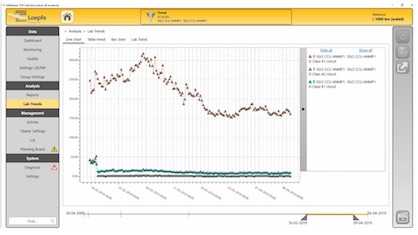
Graphic representation (c) 2020 Loepfe


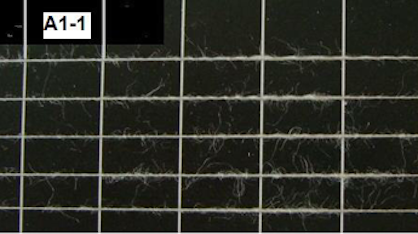
An overview shows the yarn class in which the quality deviation occurs and a sample representation of the yarn defects within the respective yarn class.
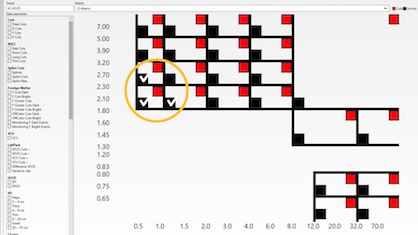
Identification of the yarn classes (c) 2020 Loepfe


Yarn defect example  (c) 2020 Loepfe
Yarn defect example (c) 2020 Loepfe


Solutions and benefits

The extensive information of the “LabTrend” can now be compared with the “Classification of yarn faults” matrix. This allows for precise identification and fast correction of the causes responsible for the encountered quality fluctuations, from raw material throughout the various preparation stages and up to the ringspinning process, ultimately providing complete control over the whole production process.
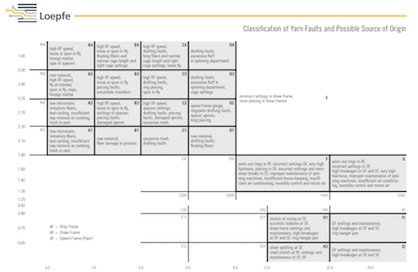
Classification of yarn faults and possible source of origin (c) 2020 Loepfe


MillMaster is a great tool for any spinning mill tackling their daily quality and production challenges. It’s “LabTrend” not only allows for a fast and well-aimed action, but it also leads to a constant yarn quality and provides the basis for efficient machine maintenance, eventually also leading to a significant reduction in maintenance costs.
More News from LOEPFE BROTHERS LTD.

#ITMA Asia + CITME Singapore 2025

A tradition of innovation celebrated at ITMA 2025 in Singapore

For 70 years, Loepfe has embodied precision, technological excellence, and uncompromising quality. Join us as we proudly celebrate seven decades of innovation at ITMA 2025 in Singapore. Founded in 1955 by two visionary brothers, Helmut and Erich Loepfe, the company has been a pioneer in yarn quality control – continuously pushing technological boundaries to meet and exceed industry expectations.

#Weaving

Leadership transition at Loepfe

Loepfe Brothers Ltd. has embarked on a new chapter with the appointment of Markus Kleindorp as the new CEO, ushering in a fresh era of leadership. Former CEO Ralph Mennicke's departure prompts restructuring, including the addition of Gregor Stalder as CFO. With this seasoned team, Loepfe aims to maintain its excellence in the textile industry.

#Weaving

Thermal fabric cutting system - Weftmaster cut-it for airbag fabrics

WeftMaster CUT-iT for airbag fabrics. In case of the unexpected while driving a car, people are relying on airbags for their life protection. Hence, airbag fabrics must have flawless quality. Renowned weavers of airbag fabrics take no risk; they rely on Loepfe's CUT-iT to ensure their top quality fabrics have a perfectly defined and uniform selvedge.

#ITMA Asia + CITME 2022

Loepfe will present groundbreaking technology at ITMA ASIA 2022

Loepfe has redefined the landscape in textile manufacturing with cutting-edge sensor solutions. At ITMA Asia 2023, Loepfe is taking a new approach and inviting visitors to witness firsthand the remarkable advantages Loepfe users experience with its cutting-edge sensor technology. Profitable, efficient, and easy with a high-quality output - that is what Loepfe stands for.

More News on Spinning

#Spinning

Temco launches a new DTY all-in-one solution

Temco introduces the DTY All-in-One Solution – a fully harmonized set of components engineered to give customers a highly stable, low maintenance and reproducible process environment. The solution reduces interruptions, extends component lifetimes and supports consistent yarn quality across all machine positions. All-in-One Solution – a fully harmonized set of components engineered to provide maintenance and reproducible process environment.

#Techtextil 2026

DIENES at Techtextil 2026: Flexible pilot lines for bio-based fiber development

The growing relevance of bio-based materials in technical textiles is accompanied by increasing demands for reproducibility, high-quality data, and scalable process routes. Especially when working with cellulose and its derivatives, chitosan, lignin-based approaches, or bio-based PAN as a carbon-fiber precursor, R&D teams face variable feedstock quality, tighter process windows, and the need for reliable comparability across trials. This calls for flexible, data-driven experimental setups that can be reconfigured efficiently when recipes, solvents, and raw-material batches change.

#Techtextil 2026

RETECH showcases high-precision godets for high-performance fiber processing at Techtextil 2026

RETECH designs and manufactures godets and draw frames for heated, ambient and cooled processes, enabling precise heat treatment and consistently high yarn quality for a wide range of polymers and applications, with process temperatures of up to 400 °C for high-performance fibers. The company’s key competence lies in exact and stable temperature and speed control, individually adapted to the specific material and process requirements.

#Spinning

Barmag presents the next generation of POY production – energy-efficient and partial-automated

With POY 2.0, Barmag is introducing a completely redesigned spinning concept that takes the production of partially oriented yarn (POY) to a new level in terms of technology and economy. The solution, which was presented to a selected audience of experts for the first time at ITMA Asia + CITME 2025, was met with great enthusiasm: several yarn producers worldwide immediately expressed their interest in a pilot plant.

Latest News

#Techtextil 2026

Performance Apparels: Functional textiles drive innovation at Techtextil 2026

From high-performance fibres and advanced membranes to smart textiles and sustainable material concepts – functional apparel is becoming one of the most dynamic innovation fields in technical textiles. At Techtextil 2026, exhibitors demonstrate how new materials, finishing technologies and digital functions are shaping the next generation of protective, workwear and outdoor systems.

#Textile chemistry

A flagship for chemical production: BASF inaugurates world-scale Verbund site in China

BASF today (March 26, 2026) celebrated the official inauguration of its newly built, world-scale Verbund site in Zhanjiang, Guangdong Province in southern China. Covering an area of around four square kilometers, it is more than a major BASF project in the chemical growth market of China. “Zhanjiang shows what the future of chemistry looks like: efficient, digital and sustainable by design. The site showcases a smart integrated Verbund structure on an industrial scale,” said Dr. Markus Kamieth, CEO of BASF, at the ceremony attended by representatives from government, customers, business partners and employees.

#Nonwovens

VEOCEL™ Lyocell production expands to Asia – Launching a new chapter for nonwovens in the region

VEOCEL™, Lenzing's flagship specialty nonwovens brand, expands production at its Thai plant in Prachinburi. This is the first-ever production of its nonwoven-grade lyocell fibers in Asia. Built in 2022 with a 100,000-ton annual production capacity, the facility - previously focused on fibers for textile applications - now can directly meet the demand for VEOCEL™’s biodegradable¹, wood-based lyocell fibers for nonwovens products. These fibers are an essential ingredient for high-quality nonwovens products, ranging from baby wipes to facial sheet masks and everyday personal hygiene items.

#Research & Development

Hof University develops sustainable textile coating for the fashion of tomorrow from mushrooms

Clothing is often treated as disposable: T-shirts for events, general merchandise, or short-term campaigns frequently end up in the trash after only a few uses. This is particularly problematic given that their production still largely relies on fossil-based materials. This is precisely where a new research project at Hof University of Applied Sciences comes in.

TOP