[pageLogInLogOut]

#Recycling / Circular Economy

CARBIOS and FCC Environment announce joint project to establish UK-based PET biorecycling facility

CARBIOS, (Euronext Growth Paris : ALCRB), a pioneer in the development and industrialization of biological technologies to reinvent the life cycle of plastic and textiles, and FCC Environment UK (“FCC”), one of the UK’s leading recycling and waste management companies, have signed a Letter of Intent (LOI) to jointly study the implementation of a UK-based plant using CARBIOS’ PET biorecycling licensed technology.

CARBIOS’ biorecycling technology is key to supporting FCC’s continuing goal of contributing to the circular economy by exploring new processes and technologies to produce recycled PET (r-PET) from PET plastic and textiles. For CARBIOS, this LOI confirms interest from the waste management sector, in addition to plastic producers, and would mean a foothold for its technology in the UK.

FCC’s continuing contribution to the UK circular economy

Recycling has plateaued in the UK in recent years, but UK Government policy very much supports a continual move to a more circular economy which FCC Environment supports. Achieving a circular economy however requires innovation and investment to deliver real environmental change. Exploring biorecycling is one way of doing this, so FCC is keen to understand this technology better by seeking an evidence based view on the advantages of using enzymes for the treatment of PET such as lower energy consumption and better circularity of the polymers back into the PET production lines. The innovative depolymerization process developed by CARBIOS also facilitates the recycling of all kinds of PET waste, including problematic fractions such as polyester textiles, into high-quality recycled PET.

UK PET biorecycling plant would process hard-to-recycle waste

In order to tackle the plastic waste crisis, CARBIOS has developed a revolutionary enzymatic depolymerization technology that enables efficient and solvent-free recycling of PET plastic and textile waste into virgin-like products. CARBIOS has ambitious plans to become a leading technology provider in the recycling of PET by 2035. In addition to the world’s first industrial-scale enzymatic PET recycling plant which is currently under construction in Longlaville, France, this UK-based plant would process PET waste that is currently not recyclable using conventional recycling technologies, such as colored, multilayered or textile waste.

By creating value from waste, CARBIOS’ PET biorecycling technology is generating significant interest from waste management companies, proving that CARBIOS’ solution is relevant to both PET producers and waste management companies. For CARBIOS, partnering with FCC means access to feedstock at the source through its established collection systems, enhancing the efficiency and impact of our sustainable waste solution. I’m confident that the combination of our complementary areas of expertise will benefit both our companies, and the acceleration of a circular economy", comments CARBIOS CEO  Emmanuel Ladent.

FCC Environment UK  CEO, Steve Longdon, says: "To deliver the challenges set out in the Environment Act, we need to think creatively about how we recover the value in materials that society no longer wants, and textiles, as we know from our work promoting a reuse culture, pose a huge challenge to our sector. We are keen to explore with CARBIOS what contribution this technology could make to the UK circular economy and to examine further its place in the UK waste hierarchy from a firm evidence base."



More News from CARBIOS

#Recycled Fibers

Carbios and Wankai postpone startup of China’s first PET biorecycling plant to 2028

The industrial deployment of enzymatic PET recycling in Asia is progressing, but at a slower pace than initially planned. French recycling technology company Carbios and its Chinese partner Wankai New Materials have announced that the commissioning of their planned PET biorecycling facility in Haining, Zhejiang Province, has been postponed and is now expected in the first half of 2028.

#Recycling / Circular Economy

Carbios confirms Longlaville plant in France following financing progress

Carbios has reaffirmed its plans to build its Longlaville plant in France within a project financing framework, targeting the start of production in the first half of 2028. The company also reports a solid cash position of around €60 million at the end of 2025 and has appointed Benoît Grenot as Deputy Chief Executive Officer to support the execution of its strategic projects.

#Recycled Fibers

CARBIOS and Wankai sign strategic PET biorecycling pact

CARBIOS (Euronext Growth Paris: ALCRB) and Wankai New Materials (“Wankai”), a listed subsidiary of Zhink Group, the 3rd largest PET producer in China and 4th worldwide, announce the signing of the definitive agreement establishing a strategic partnership for the industrial rollout of CARBIOS’s PET biorecycling technology in Asia. The first milestone will be the construction of a PET biorecycling plant in China.

#Recycled Fibers

CARBIOS and Wankai plan 1 million tonnes of PET biorecycling capacity in Asia

CARBIOS and Wankai New Materials, a subsidiary of Zhink Group, are committed to the large-scale deployment of CARBIOS’ PET biorecycling technology in Asia, with the first step being the construction of a PET biorecycling plant in China.

More News on Recycling / Circular Economy

#Spinning

"We will become a recycling powerhouse"

The textile industry is now in its fourth consecutive year of crisis, while automation, artificial intelligence and recycling are reshaping the rules of the game. In this interview, Rieter CEO Thomas Oetterli discusses the first signs of a market recovery, reflects on his first three years at the helm of the company, explains the integration of Barmag, outlines Rieter’s vision of the fully automated spinning mill and highlights the strategic importance of recycling. In doing so, he explains why the new Rieter Group aims to play a leading role in transforming the textile value chain into a circular economy.

#Recycling / Circular Economy

Countdown to Textiles Recycling Expo 2026: Brussels prepares for Europe’s textile recycling gathering

With only two weeks remaining until the start of the second edition of the Textiles Recycling Expo 2026, preparations are entering the final phase. The exhibition and conference, dedicated exclusively to textile recycling and circularity, will take place on 24–25 June 2026 at Brussels Expo and is expected to attract stakeholders from across the textile recycling value chain.

#Recycled Fibers

Indorama Ventures enables brands to scale circular textiles through proven, traceable supply chains

Indorama Ventures, a global leader in recycled polyester staple fibers and filament yarns, will exhibit at Textiles Recycling Expo in Brussels on June 24–25. At the event, the company will show how brands and textile manufacturers can build traceable, circular textile supply chains by working with proven partners who deliver recycled materials on an industrial scale.

#Recycled Fibers

RECOVER™ launches Recover™ Yarns to accelerate recycled cotton uptake

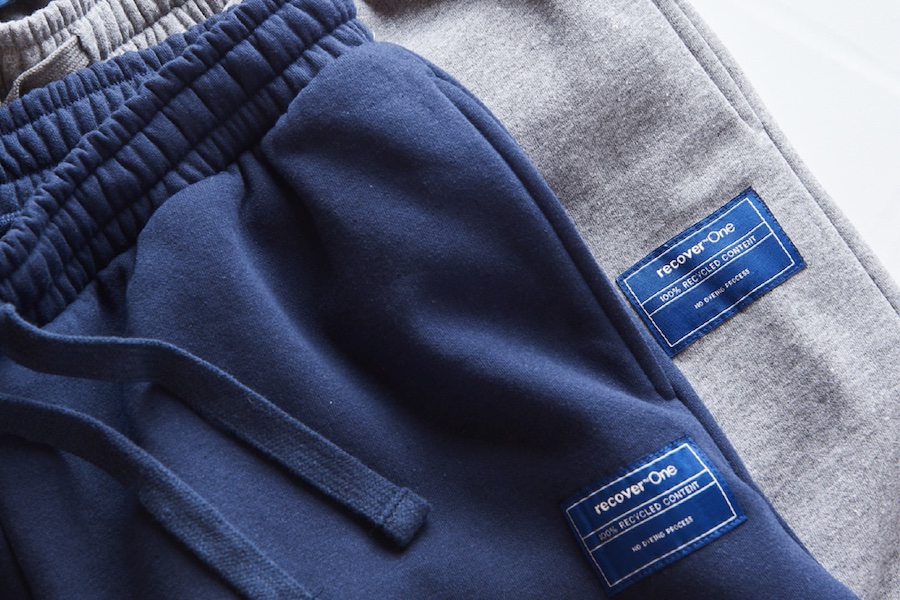
Recover™, a leading materials science company and one of the world’s largest producers of recycled cotton fiber, today announces the launch of Recover™ Yarns, a curated portfolio of ready-to-use yarn solutions designed to accelerate the adoption of recycled cotton across the apparel supply chain.

Latest News

#Research & Development

Carbon-ceramic hybrid fibre proves its worth – NRW Minister for Science Mona Neubaur congratulates ITA start-up TERNAfil

MAXCarbon technology, a novel carbon-ceramic hybrid fibre developed by ITA spin-off TERNAfil, secured third place at the HIGH-TECH.NRW Demo Day on the TÜV NORD campus in Essen. The technology combines the strength of carbon fibres with the temperature and corrosion resistance of ceramic materials. Mona Neubaur, Minister for Science in North Rhine-Westphalia, congratulated the team on their success and on winning prize money of 4,000 euros.

#

DTF vs DTG Printing - The technologies shaping today’s custom merchandise market

From sportswear to branded tote bags, custom merchandise continues to grow in popularity across sectors, driving print shops to cater to short runs, personalisation, and rapid turnaround. As print providers look to this market, two printing technologies often stand out: Direct‑to‑Film (DTF) and Direct‑to‑Garment (DTG). Each offers its own benefits, and understanding these differences helps determine the most suitable production method for print service providers.

#Associations

Towards pragmatic and harmonised labelling in the EU

EDANA, alongside 14 European associations, urges the European Commission and Member States to adopt a pragmatic approach for the future harmonised packaging labels, in line with the EU’s agenda for the EU Single Market, simplification and competitiveness. The system should rely on text-free pictograms, available in achromatic or monochromatic versions matching the packaging palette, with the possibility of using digital labelling as a core element. Our associations represent manufacturers of consumer goods across Europe.

#Sustainability

Textile Exchange unveils agenda for 2026 conference in Vancouver

Textile Exchange has released the agenda for its 2026 Conference, which will take place from October 12–16 in Vancouver, Canada. Under the theme “The Implementation Era,” the event will focus on translating sustainability commitments into practical action and scaling solutions across businesses, supply systems, and landscapes.

TOP