[pageLogInLogOut]

#Recycling / Circular Economy

CARBIOS and SASA enter discussions for license of 100k ton/year PET biorecycling facility in Turkey
CARBIOS, (Euronext Growth Paris : ALCRB), a pioneer in the development and industrialization of biological technologies to reinvent the life cycle of plastic and textiles, and SASA, one of the world's leading manufacturers of polyester, fiber, filament yarn, polyester-based polymers, specialty polymers and intermediates, have signed a Letter of Intent (LOI) to cooperate through SASA’s potential acquisition of a license for CARBIOS’ unique PET biorecycling technology.
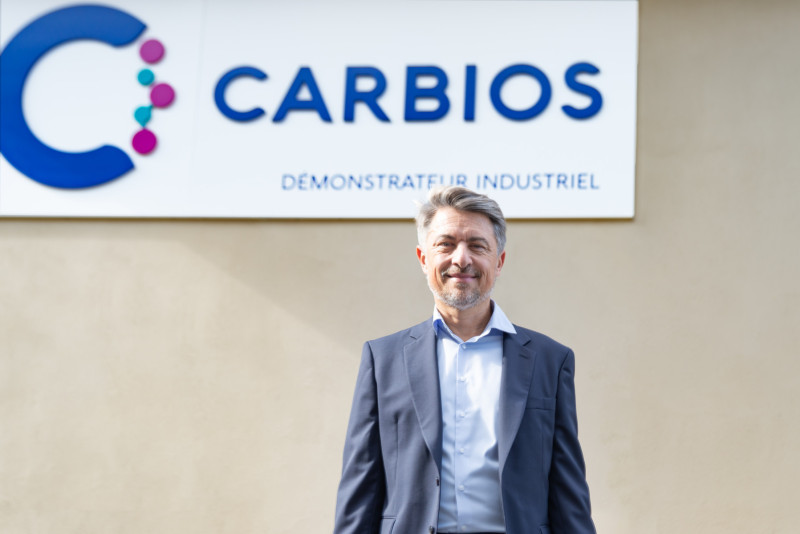
Emmanuel Ladent, CEO - in front of demonstration plant © 2024 CARBIOS / Christian Jaquet


This licensing agreement would allow SASA to construct and operate an enzymatic depolymerization plant in Adana, Turkey, with a capacity of 100,000 tons per year of prepared PET waste, and would give access to a circular recycling technology, enabling the production of polyester pellets, fibers and textiles from various waste sources, including polyester textile waste. With CARBIOS' biorecycling technology, SASA would diversify its offering to meet the growing global demand for sustainable materials in the textile industry, primarily catering to the European market.

SASA and CARBIOS’ partnership : a boost for European recycled polyester production

Less than 1% of textile waste is currently recycled into new textile fibers[1]. With European regulations moving towards the incorporation of more recycled content (at least 20% of recycled fibers by 2030), demand for recycled polyester in the EU is anticipated to increase, naturally positioning Turkey as a major producer alongside Asian countries. In this context, SASA is striving to become the largest supplier of high value-added polyester in the region and beyond. To achieve this, SASA aims to introduce recycling as part of its activities, which already encompass the whole value chain from PET production to fiber and textile conversion. CARBIOS’ PET biorecycling technology plays an important part in SASA’s ongoing transformation strategy, which includes back integration, capacity expansion, even higher competitiveness, as well as circularity.

CARBIOS has developed a revolutionary enzymatic depolymerization technology that enables efficient and solvent-free recycling of PET plastic and textile waste into virgin-like products. CARBIOS has ambitious plans to become a leading technology provider in the recycling of PET by 2035. After the recent announcement of a joint Letter of Intent with Zhink Group in China, this new Letter of Intent for a potential licensing agreement in Europe confirms global traction for CARBIOS biorecycling technology, and marks another significant step in the international roll-out of its licensing model. In addition to the world’s first industrial-scale enzymatic PET recycling plant which is currently under construction in Longlaville, France, this potential plant in Turkey would process PET waste that is currently not recyclable using conventional recycling technologies.

With the creation of a major PET yarn and fiber manufacturing capacity on a European scale, we believe Turkey will play a pivotal role in the expanding textile market. Partnering with SASA, a leader in polyester production, is a natural fit for CARBIOS’ international ambitions for licensing our biorecycling technology, and will contribute to a more circular and sustainable textile industry", says Emmanuel Ladent, CEO of CARBIOS.

Dr. M. Kemal Öz, General Manager, SASA says:"As a leading producer of polyester, it’s our duty to pave the way in terms of sustainability and environmental responsibility. SASA needs to be a part of the recycling business and our partnership with CARBIOS reinforces our commitment to innovation to advance a circular economy for textiles." 

[1] System Circularity and Innovative Recycling of Textiles | Circular Cities and Regions Initiative (europa.eu)




More News from CARBIOS

#Recycled Fibers

Carbios and Wankai postpone startup of China’s first PET biorecycling plant to 2028

The industrial deployment of enzymatic PET recycling in Asia is progressing, but at a slower pace than initially planned. French recycling technology company Carbios and its Chinese partner Wankai New Materials have announced that the commissioning of their planned PET biorecycling facility in Haining, Zhejiang Province, has been postponed and is now expected in the first half of 2028.

#Recycling / Circular Economy

Carbios confirms Longlaville plant in France following financing progress

Carbios has reaffirmed its plans to build its Longlaville plant in France within a project financing framework, targeting the start of production in the first half of 2028. The company also reports a solid cash position of around €60 million at the end of 2025 and has appointed Benoît Grenot as Deputy Chief Executive Officer to support the execution of its strategic projects.

#Recycled Fibers

CARBIOS and Wankai sign strategic PET biorecycling pact

CARBIOS (Euronext Growth Paris: ALCRB) and Wankai New Materials (“Wankai”), a listed subsidiary of Zhink Group, the 3rd largest PET producer in China and 4th worldwide, announce the signing of the definitive agreement establishing a strategic partnership for the industrial rollout of CARBIOS’s PET biorecycling technology in Asia. The first milestone will be the construction of a PET biorecycling plant in China.

#Recycled Fibers

CARBIOS and Wankai plan 1 million tonnes of PET biorecycling capacity in Asia

CARBIOS and Wankai New Materials, a subsidiary of Zhink Group, are committed to the large-scale deployment of CARBIOS’ PET biorecycling technology in Asia, with the first step being the construction of a PET biorecycling plant in China.

More News on Recycling / Circular Economy

#Recycling / Circular Economy

Recover™ names Enes Adak and Fehmi Yüksel as Co-CEOs to accelerate its next growth phase

Recover™, a leading materials science company and global producer of consistent high-quality, recycled cotton fibers and circular material solutions at scale, today announced the appointment of Enes Adak and Fehmi Yüksel as Co-Chief Executive Officers. This leadership transition marks an important step in Recover’s evolution as the company enters its next stage of development.

#Recycling / Circular Economy

Arc'teryx introduces System 0™, a new framework for the future of product design and circularity

Arc'teryx Equipment, the global design company specializing in technical high-performance apparel and equipment, today introduced System 0™, a new framework that reimagines how products can be designed, manufactured, used, repaired, and ultimately regenerated. System 0 represents the next evolution for sustainability in the outdoor industry, as it embeds circular thinking across an entire product lifecycle while maintaining the uncompromising performance standards that define the Arc’teryx brand.

#Recycling / Circular Economy

2. RETRAKT EU Conference - „Join the Circle“: Turning challenges of the textile sector into chances

On 19 November 2026, the second RETRAKT EU Conference – “Join the Circle” will take place in Brussels. The event, which focuses on the transformation of the textile sector towards a circular economy, will be held under the motto: “Turning Challenges in the Textile Sector into Chances.”

#Recycled Fibers

Indorama Ventures supports KH Editions in building on its RECO experience Taking Thai circular fashion to New York Fashion Week

Indorama Ventures Public Company Limited, a global sustainable chemical company, is supporting KH Editions, a Thai fashion brand that has grown through the RECO program, by providing fabrics woven with deja™ recycled polyester yarn. The fabrics have been used to create two fashion looks and accessories from the brand’s ten-look Spring/Summer 2027 collection, which will be presented in New York City, United States, on 15 September 2026 during New York Fashion Week.

Latest News

#Spinning

Barmag showcases pump solutions for demanding PU applications at PU China 2026

At PU China, taking place November 3–5, 2026, at the Shanghai World Expo Exhibition Center in Shanghai, Barmag’s Pumps Division will present high-performance metering solutions for the processing of polyurethane systems (Hall 1, Booth 135). The focus is on high-precision gear metering pumps that enable the exact delivery of PUR components as well as other high-viscosity and reactive media. With their high metering accuracy, they help reduce material consumption, stabilize processes, and ensure consistently high product quality.

#Associations

Automation, digitalization and new business models are shaping the future of footwear and leather technology

The European footwear and leather machinery industry is facing profound transformations. Global competitive dynamics, technological innovation, automation and digitalization are fundamentally reshaping markets, production processes and business models. This is one of the key findings of the new study “Threads of the Future – Footwear and Leather Technology Edition”, which was presented today by VDMA Textile Care, Fabric and Leather Technologies (VDMA TFL) during a press conference at SIMAC Tanning Tech in Milan.

#Knitting & Hosiery

SHIMA SEIKI to showcase flat knitting and digital design solutions at Egypt Stitch & Tex

Leading Japanese computerized flat knitting technologist SHIMA SEIKI MFG., LTD. of Wakayama, Japan, together with its sales representative in Egypt, TTS (EL MASRIA FOR TRADE & TECHNICAL SERVICES), will participate in the upcoming 24th International Exhibition for Textile & Carpet Machineries, Printing Technologies and Accessories (Egypt Stitch & Tex) to be held in Cairo, Egypt this month.

#Associations

EURATEX calls for urgent action on industrial competitiveness

EURATEX, the European Apparel and Textile Confederation, welcomes today’s State of the Union Address by European Commission President, Ursula von der Leyen, and in particular her recognition of Europe’s need to rebalance unfair trade, cut red tape, and strengthen its industrial and strategic autonomy.

TOP