[pageLogInLogOut]

#Recycling / Circular Economy

Renewcell applies new textile fiber preparation system using ANDRITZ ADuro green technology
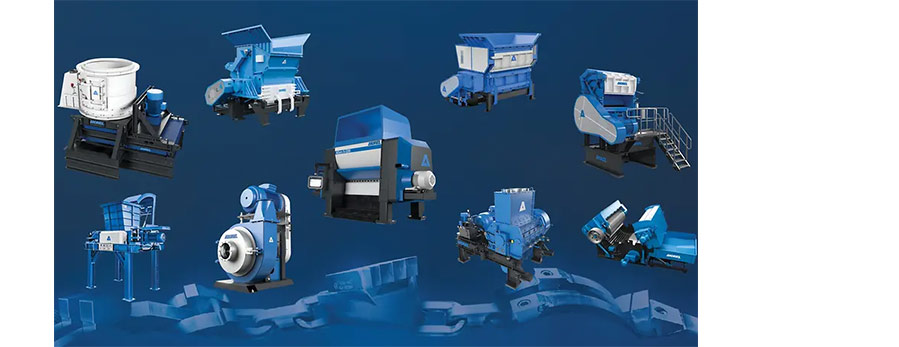
Different shredders of the ADuro product line from ANDRITZ © ANDRITZ
Renewcell has successfully produced its first fiber material with the ADuro textile fiber preparation system from ANDRITZ at its new site in Sundsvall, Sweden. Renewcell applies the process to produce pure dissolving pulp from 100% textile waste. The product is finally transformed by Renewcell’s customers into new garments for the circular clothing industry. The plant in Sundsvall recently reached its Commercial Operation Date (COD) on October 31, 2022.
  • ANDRITZ technology contributes to circular fashion with key solutions for production of pulp made from 100% textile waste
  • ANDRITZ textile fiber preparation system lays the foundation for a pioneering recycling process developed by Renewcell


ANDRITZ installed a complete textile fiber preparation system based on shredding and separation technology. Shredders of the ADuro product line form the technological centerpiece of the system and shred used textiles in only one step, enabling a throughput of up to 60,000 tons of textile waste per year. In the subsequent separation stages, impurities such as buttons and zippers are removed from the shredded textiles.

Since 2016, Renewcell and ANDRITZ have been working together on the development of Renewcell’s textile recycling process at its test plant in Kristinehamn, Sweden, and now also on their first commercial textile recycling plant in Sundsvall.


Renewcell was founded in Stockholm, Sweden, in 2012 and specializes in recycling textiles with the vision of making fashion circular. Its recycling technology transforms used cotton and other cellulose fibers into a new raw material called Circulose® pulp. The pulp is used to produce high-quality biodegradable viscose or lyocell textile fibers for the fashion industry.

ANDRITZ focuses on sustainable and state-of-the-art recycling solutions for pre- and post-consumer textile waste usage and collaborates with internationally renowned partners. ANDRITZ has always been a pioneer in providing industrially and economically viable solutions that bring the circular economy to the world of textile fibers.

More News from Andritz Küsters GmbH

More News on Recycling / Circular Economy

#Recycling / Circular Economy

Reju secures €135 Million in Dutch NIKI Funding for industrial-scale textile-to-textile regeneration hub at Chemelot Industrial Park, the Netherlands

Reju™, the progressive textile-to-textile regeneration company, has been awarded €135 million in funding under the Netherlands’ Nationale Investeringsregeling Klimaatprojecten Industrie (NIKI) program. The funding will support Reju’s planned industrial-scale Regeneration Hub at Chemelot Industrial Park in Sittard-Geleen, covering both the investment phase and ongoing operations, and represents a critical milestone on the path toward final investment decision.

#Recycling / Circular Economy

eeden is now a Canopy partner

eeden is committed to enable circular textiles by developing recycling technologies that turn textile waste into valuable raw materials. But the commitment goes further – eeden advocates for supply chain solutions that uphold responsible environmental and ethical standards, protecting global ecosystems including Ancient and Endangered Forests.

#Recycling / Circular Economy

Infinited Fiber Company’s environmental permit for Kemi advances to statutory appeal phase

Infinited Fiber has reached an important regulatory milestone in Finland, as the environmental permit process for a potential facility in Kemi has progressed to the statutory appeal phase.

#Recycling / Circular Economy

Carbios confirms Longlaville plant in France following financing progress

Carbios has reaffirmed its plans to build its Longlaville plant in France within a project financing framework, targeting the start of production in the first half of 2028. The company also reports a solid cash position of around €60 million at the end of 2025 and has appointed Benoît Grenot as Deputy Chief Executive Officer to support the execution of its strategic projects.

Latest News

#Techtextil 2026

AI, Start-ups, Research: Techtextil and Texprocess bring together players in the textile industry

From start-ups to universities and research institutes: at Techtextil and Texprocess, the world’s leading innovation trade fairs in Frankfurt am Main, exhibitors present future-oriented concepts for the global textile industry. With the international Campus & Research area, a strong participation from start-ups and the latest AI applications for textile processing, both trade fairs showcase current developments in the textile industry. By bringing together innovation, research and application, they enable new partnerships across the textile value chain.

#Techtextil 2026

IVGT joint stand brings innovation and networking to Techtextil 2026

At Techtextil 2026 and the parallel Texprocess 2026, key transformation topics such as artificial intelligence, digitalisation, sustainability, recycling and the circular economy will be reflected across the show. Against this backdrop, the IVGT, together with 16 member companies, will present its joint stand in Hall 12.1 (Stand D62) as a platform for exchange and networking.

#Man-Made Fibers

Indorama Ventures supports Southeast Asia’s textile customers with reliable regional supply and global innovative portfolio

Indorama Ventures, one of the leading global polyester fiber and filament yarn suppliers globally, will participate in Indo Intertex 2026 in Jakarta this April, making its diverse global portfolio available to apparel, home textile, and hygiene customers across Southeast Asia.

#Raw Materials

New study shows low environmental impact by Cotton made in Africa Organic Cotton from Tanzania

Today, the Aid by Trade Foundation (AbTF) is announcing the results of a comprehensive life-cycle analysis (LCA) for cotton produced in Tanzania under the Cotton made in Africa Organic (CmiA Organic) standard. The study emphasises the small ecological footprint of CmiA Organic verified cotton. This can largely be traced back to the absence of synthetic pesticides, artificial fertilisers, and artificial irrigation. Consequently, CmiA Organic cotton can help the textile industry meet regulatory requirements as well as science-based targets. The results also show that the consequences of climate change threaten the livelihoods of these cotton farmers, even though the type of agriculture they practise barely contributes to climate change.

TOP