[pageLogInLogOut]

#Recycling / Circular Economy

Renewcell 1 reaches “Commercial Operations Date” in accordance with loan agreements

The Company was today informed that the Lenders' Technical Advisor has certified that Renewcell 1 has reached Commercial Operations Date (COD). The COD is a defined date in the loan agreements that represents the day the production line achieves functionality for commercial production.

As a result, the Company now has access to a recently signed Revolving Credit Facility for working capital funding of up to SEK 150 million. In addition, the Company will apply for the release of certain funds from blocked cash reserves.


This is an important operational milestone, and the Company is now close to commercial production and sales at Renewcell 1. Commercial production and sales are dependent on certain additional product quality parameters being fulfilled, which is expected in the near future.
More News from TEXDATA International

#ITM 2026

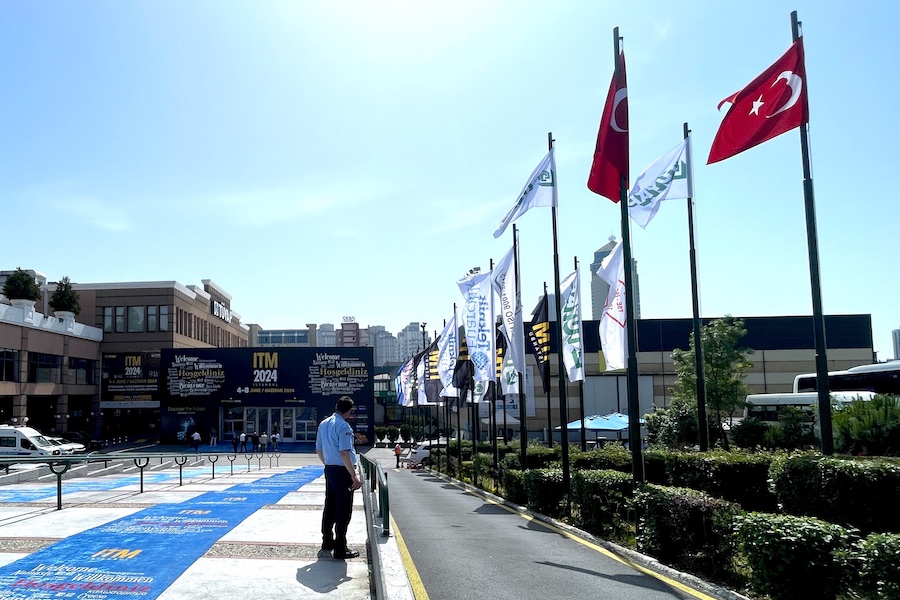
ITM 2026: The new geography of textile production

New production hubs are emerging across North Africa and Central Asia, while Türkiye is accelerating its transformation toward higher-value, technology-driven and more sustainable textile manufacturing.

#Research & Development

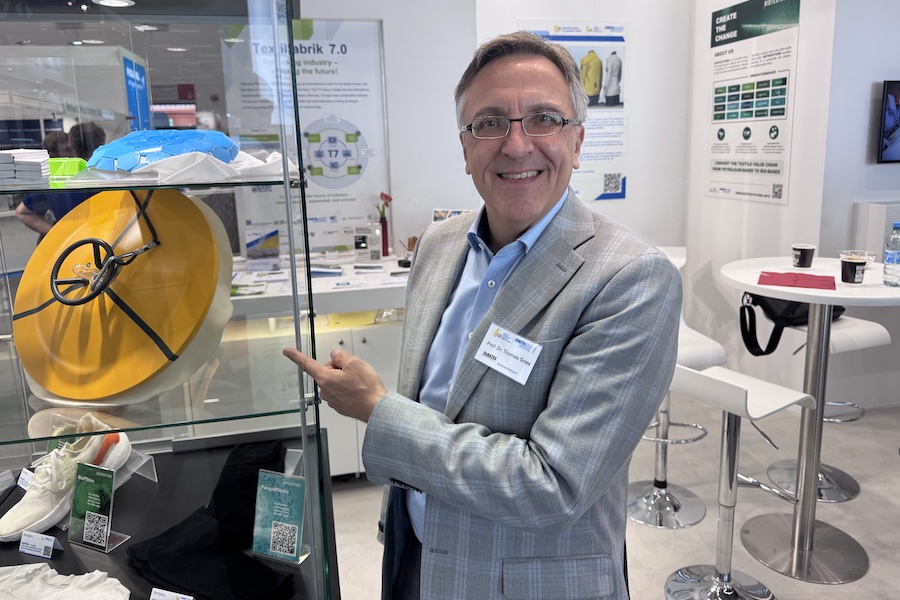
“Production is a product”

From technical textiles and AI-driven robotics to the limitations of textile circularity: Professor Dr Thomas Gries looks back on more than two decades of development at ITA Aachen. In the interview, he explains why production technology remains a decisive success factor, discusses international collaborations and innovation ecosystems, and shares his views on the transformation of production landscapes and the challenges facing an increasingly regulated industry.

#Knitting & Hosiery

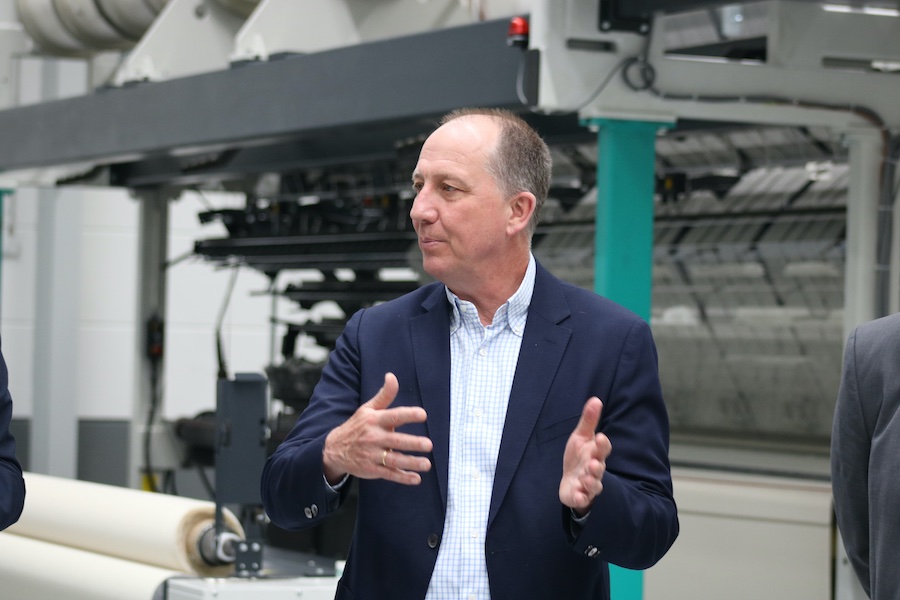
“We need to move away from the price trap and return to a value-driven mindset.”

With its new Textile Innovation Center, KARL MAYER is sending a strong signal for innovation, collaboration, and the future of textile applications. In this interview, Karl Josef Mayer discusses new opportunities in warp knitting, the processing of staple fibres, recycling, the changing role of machinery manufacturers, and why the textile industry must once again focus more strongly on the value of textiles. by Oliver Schmidt

#Associations

“Innovation, resilience and international experience remain the great strengths of the Swiss textile machinery industry”

Geopolitical uncertainty, growing competitive pressure from China, new free trade agreements and the shift towards a circular economy are currently reshaping the global textile industry. In this interview, Cornelia Buchwalder discusses the current mood within the Swiss textile machinery sector, the industry’s distinctive innovative strength, new market opportunities in India and Asia, and the technological trends that could shape the upcoming trade fair cycle leading up to ITMA 2027.

More News on Recycling / Circular Economy

#Recycling / Circular Economy

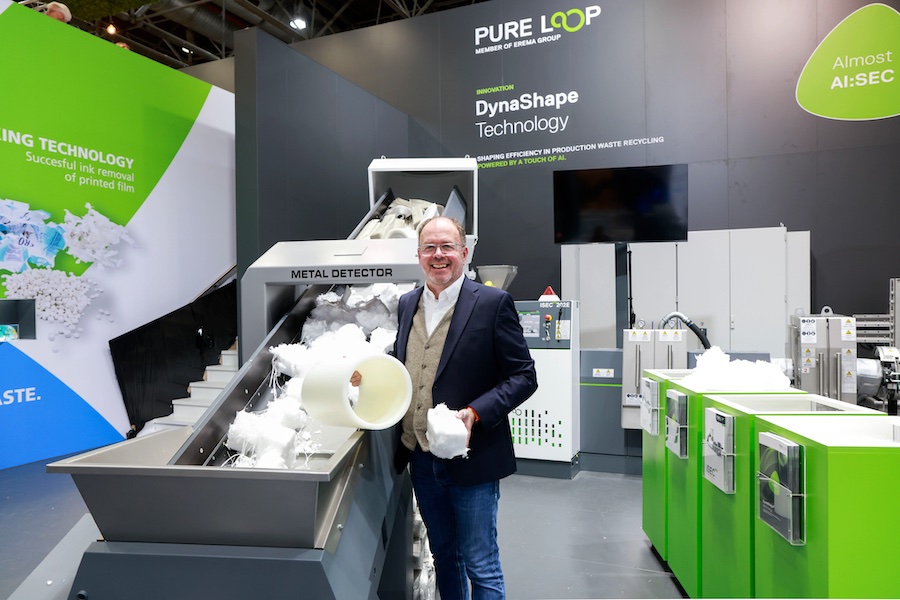
PURE LOOP's DynaShape® automation increases recycling productivity by up to ten percent

The intelligent automation solution for the ISEC evo recycling machine automatically adjusts operating parameters to changing input materials, improving throughput, melt quality and process stability while reducing operator workload.

#Recycling / Circular Economy

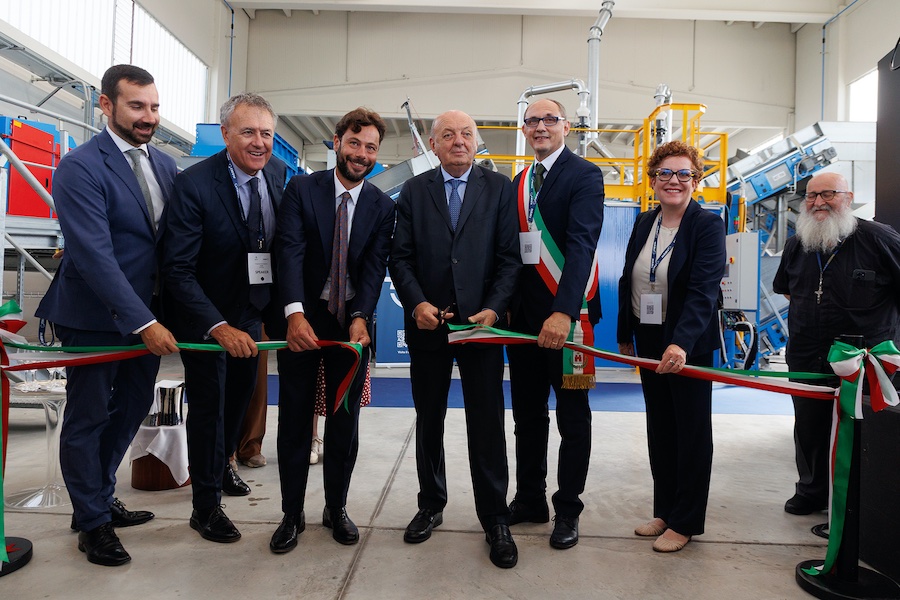
From textile waste to spinning-grade fiber: STADLER Group engineers integrated sorting solution for IGERS in Italy

As technology partner, STADLER worked alongside IGERS on its new plant in San Pietro Mosezzo, Novara, from the first process discussions to the final layout – integrating key treatment equipment into one system and supplying the fully automated sorting line. Together, the two companies have taken IGERS' patented textile recycling process from vision to industrial reality.

#Recycled Fibers

Toray develops Polyester-Nylon fiber containing at least 93% recycled material by mass

Toray Industries, Inc., announced today that it has developed a polyester-nylon fiber with at least 93% recycled content by mass, based on the total weight of the raw yarn. This percentage applies to the newly developed raw yarn and does not represent the recycled content of the finished fabric or garment.

#Recycling / Circular Economy

Canopy shifts focus towards recycling and traceability in updated Hot Button criteria

Environmental non-profit organisation Canopy has introduced revised criteria for its annual Hot Button Report, which evaluates producers of man-made cellulosic fibres (MMCFs), including viscose, lyocell and acetate. The updated framework places greater emphasis on scaling alternative fibre sources, improving supply chain traceability and supporting forest conservation, while maintaining responsible sourcing as a central requirement.

Latest News

TOP