[pageLogInLogOut]

#Recycling / Circular Economy

Berry builds recycling ecosystem to provide nonwovens customers with recycled content
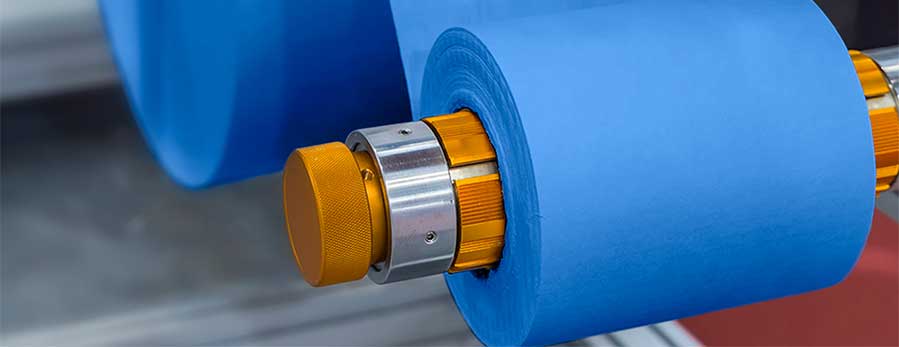
© 2022 Berry Global Group
Berry Global Group, Inc. (NYSE: BERY) announces the formation of a closed-loop recycling ecosystem to supply post-industrial recycled materials into the manufacturing of its Endura™ spunbond and meltblown nonwovens product line. Berry Global leverages its sustainability leadership, providing nonwovens customers with outlet for pre-consumer recycled plastic waste.

Products under the Endura product line are recognized under the SCS Recycled Content Certification, which measures the percentage of recycled content for the purpose of making an accurate claim in the marketplace, allowing customers the ability to include the SCS logo on-pack.

In an effort to reduce waste, Berry began the manufacturing of Endura products through recycling the Company’s post-industrial waste from its operations. The Company has added to its Endura product line through the additions of Endura Scrubby and Endura Meltblown.

Endura nonwovens provide 90% recycled content

Berry introduced the closed-loop recycling ecosystem earlier this year with manufacturing spanning six of its existing European locations. Through the ecosystem, Berry supplies customers with nonwoven materials, receives post-industrial waste from the conversion processes of its customers, and lastly incorporates the recycled content into Berry’s Endura nonwovens line. Within the Endura line, Berry offers spunbond products containing up to 90% recycled content for use in applications such as disinfectant wipes, home and bedding, roofing, and carpet tiles.

“Customers look to Berry for help in reaching their sustainability goals. Through our size and scale, we have the unique ability to invest and commercialize innovative, sustainable solutions to increase recycled content, reduce emissions, and promote circularity,” said Achim Schalk, EVP/GM Health, Hygiene, and Specialties EMEIA for Berry Global.


Closed-loop recycling reduces CO2eq emissions

Through the introduction of the Endura collection and recycling scheme for spunbound materials, Berry aims to increase the availability of post-industrial recycled materials, reducing dependence on virgin polymers. Increasing the circularity of its nonwovens products, Berry further increases its access to valuable recycled plastic. The use of post-industrial materials results in a 70% reduction of CO2eq emissions1 during the manufacturing process, per kilogram versus virgin materials. This reduction in CO2eq emissions directly impacts Berry’s Science Based Target to reduce absolute scope 1+2 emissions 25% from 2019.

Within the Endura ecosystem, Berry collaborates with customers to collect and repelletize nonwovens waste from customer operations. In turn, the material collected reenters the product stream in the form of new nonwovens materials for customers.

1This calculation has not been externally reviewed for compliance with ISO 14040/44 Standard and Guideline. Material GHG savings are estimated based solely on resin production according to “Cradle to Gate LCI of nine plastic resins and four PU precursors” Franklin and Associates.



More News from Berry Global Inc.

More News on Recycling / Circular Economy

#Research & Development

ALADIN paves the way for circular and demand-driven textile production in Europe

Textile production can be organized sustainably by utilizing short supply chains and preventing overproduction. This can already be achieved today by intelligently connecting and efficiently utilizing existing infrastructure. At the same time, production becomes circular when innovative technologies and materials are used that enable high-quality recycling. The ALADIN research project, launched in May 2026 and co-funded with five million euros under the EU Horizon Europe program, is creating the conditions for this.

#Recycling / Circular Economy

Ence and ShareTex begin initial testing of the ATENEA innovation project to promote textile recycling in Spain

Ence and ShareTex are making progress on the Atenea R&D project, which aims to develop a complete value chain for textile recycling in Spain. Specifically, the goal of the ATENEA project—which is funded by the Center for Technological Development and Innovation (CDTI)—is to connect all the necessary stages for the recovery of textile waste, from collection and management, through recycling and transformation into new raw materials, to their incorporation into new textile products.

#Recycling / Circular Economy

DePoly Inaugurates its Showcase Plant in Monthey Switzerland

What if used plastic bottles, PET packaging material and polyester textiles could become raw materials just as high performing as virgin resources? That is the ambition of DePoly, a circular materials company based in Sion, Switzerland which inaugurated its Showcase Plant in Monthey on July 6th & 7th. The first depolymerization facility of its kind and scale in Switzerland, this industrial Showcase Plant represents a major milestone in the company's growth and its journey toward commercialization.

#Recycling / Circular Economy

Commission clarifies rules on plastic bottles recycling

The European Commission today adopted new rules on recycling of single-use plastic beverage bottles made primarily of polyethylene terephthalate (PET bottles). These rules establish, for the first time, a methodology to calculate, verify and report chemically recycled content. This is part of the Commission’s December 2025 plastics package.

Latest News

#Nonwovens

Katharina Obergruber appointed to the Management Board of Sandler AG

The Supervisory Board of Sandler AG has appointed Katharina Obergruber to the company’s Management Board. Effective September 1, 2026, the Board will consist of Philipp Ebbinghaus (CEO), Dr. Ulrich Hornfeck (currently CCO, future COO), and Katharina Obergruber (CCO). Katharina Obergruber, currently Chief Sales Officer Hygiene and member of the Management Team of Sandler AG, will assume responsibility for all sales activities as Chief Commercial Officer. She will assume this role from Dr. Ulrich Hornfeck, who will focus primarily on production and supply chain topics.

#Sustainability

Global Standards establishes new non-profit foundation to strengthen governance

Global Standards gGmbH, the nonprofit organisation behind the globally recognised Global Organic Textile Standard (GOTS), announced a new governance structure designed to support its long-term mission and reinforce organisational autonomy of its Voluntary Sustainability Standards and programmes.

#Textile chemistry

DyStar releases FY2025 sustainability report, marking a new milestone towards its 2030 targets

DyStar, a leading specialty chemicals company with more than a century of expertise in product development and innovation, today announced the release of its FY2025 Sustainability Report, marking a significant milestone in its sustainability journey and reinforcing its commitment to long-term value creation.

#Research & Development

TERIS reaches milestone: Fraunhofer consortium develops new standards for tire analysis

In the “TERIS” project, the Fraunhofer institutes ICT, IGD, and IWM—led by the Fraunhofer Institute for Structural Durability and System Reliability LBF—have reached a decisive milestone. For the first time, the teams aim to generate, analyse, and predict tire wear in the laboratory in a standardized and practical manner. As part of this milestone, results are now available on reference abrasion, particle analysis, tribological models, AI-based surface analysis, a test bench concept, and methods for accelerated aging and VOC detection. The tire industry, testing services, and environmental agencies will in future benefit from reliable, rapid laboratory procedures for emissions assessment.

TOP


