[pageLogInLogOut]

#Recycling / Circular Economy

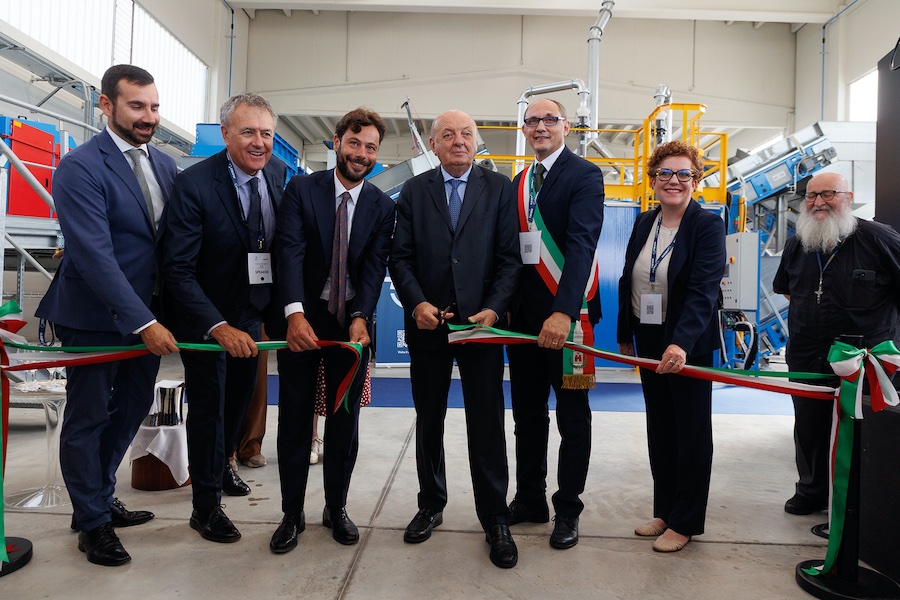
Paimio circular economy plant for end-of-life textiles opened on a high note of celebration on 2 November 2021

© 2021 Rester
The first plant in northern Europe to open end-of-life textiles on a large scale to turn them into recycled fibre is now ready to begin operating. Business is roaring with the establishment of partnerships for both incoming and outgoing secondary fibre.

At its plant situated in Southwest Finland, Rester Ltd accepts the end-of-life textiles of companies and the by-products of manufacturing and then opens them mechanically back into fibre. The material accepted is of the highest quality, so it can be used to manufacture yarn, various non-woven materials, insulation, acoustic panels, filter fabrics and composites.

Lounais-Suomen Jätehuolto Oy operates under the same roof and is in charge of processing the end-of-life textiles of households into recycled fibre. As a whole, the plant is based on cooperation whereby the end-of-life textiles of both the companies and the households can be utilised effectively.

A continuous search is on for new fibre applications. Rester aims to build an internationally significant solution model for the textiles of companies.


“With pressing environmental issues and tightened EU regulation, producers are interested more and more in switching over to the extensive use of recycled materials,” explains Outi Luukko, CEO at Rester. “Through active cooperation with our partners, we can immediately influence the materials in terms of their degree of circular economy. It is rewarding to be involved in taking material that was previously classified as waste and reusing it as quality raw material. We prepared this process for years; it’s great to get the work actually started!”




More News from TEXDATA International

#ITM 2026

ITM 2026: The new geography of textile production

New production hubs are emerging across North Africa and Central Asia, while Türkiye is accelerating its transformation toward higher-value, technology-driven and more sustainable textile manufacturing.

#Research & Development

“Production is a product”

From technical textiles and AI-driven robotics to the limitations of textile circularity: Professor Dr Thomas Gries looks back on more than two decades of development at ITA Aachen. In the interview, he explains why production technology remains a decisive success factor, discusses international collaborations and innovation ecosystems, and shares his views on the transformation of production landscapes and the challenges facing an increasingly regulated industry.

#Knitting & Hosiery

“We need to move away from the price trap and return to a value-driven mindset.”

With its new Textile Innovation Center, KARL MAYER is sending a strong signal for innovation, collaboration, and the future of textile applications. In this interview, Karl Josef Mayer discusses new opportunities in warp knitting, the processing of staple fibres, recycling, the changing role of machinery manufacturers, and why the textile industry must once again focus more strongly on the value of textiles. by Oliver Schmidt

#Associations

“Innovation, resilience and international experience remain the great strengths of the Swiss textile machinery industry”

Geopolitical uncertainty, growing competitive pressure from China, new free trade agreements and the shift towards a circular economy are currently reshaping the global textile industry. In this interview, Cornelia Buchwalder discusses the current mood within the Swiss textile machinery sector, the industry’s distinctive innovative strength, new market opportunities in India and Asia, and the technological trends that could shape the upcoming trade fair cycle leading up to ITMA 2027.

More News on Recycling / Circular Economy

#Research & Development

Geotextiles made from recycled materials: GREEN leads the way into the industry

For the industry, recycled materials are creating new opportunities in geotextile production. In the GREEN project, the Fraunhofer Cluster of Excellence Circular Plastics Economy CCPE demonstrates that recycled polypro-pylene (PP), polyethylene terephthalate (PET), and high-density polyeth-ylene (HDPE) can be processed into nonwovens, fibers, and membranes that meet industrial requirements. This creates opportunities for use in existing production lines and new value chains in the geotextile market.

#Recycling / Circular Economy

ReHubs elects new Board of Directors to lead the next phase of ReHubs’ strategy to recycle 2.7 million tonnes of textile waste annually by 2035

ReHubs has elected its new Board of Directors, marking an important milestone as the industry alliance continues to accelerate the industrial scale-up of textile-to-textile recycling across Europe. The election took place during the ReHubs Annual Event in Brussels on June 23rd, held alongside the Textile Recycling Expo and Future Fabrics Expo. The newly elected Board combines expertise from across the textile value chain, reflecting ReHubs' collaborative approach to solving the industry’s textile waste crises.

#Recycling / Circular Economy

Reju opens its first R&D Center in the U.S. in Conshohocken, Pennsylvania

Reju, the company specializing in textile regeneration, today announced the opening of a Research and Development (R&D) Center in Conshohocken, Pennsylvania, the company's first proprietary research center in North America. Located within Technip Energies' existing Advanced Materials and Catalysts research center, the lab will allow Reju to accelerate the rollout of its recycling technologies and develop its next-generation circular solutions.

#Recycling / Circular Economy

Textiles Recycling Expo 2026 builds on successful debut with record attendance, global participation and expanded industry collaboration

The second edition of Textiles Recycling Expo concluded on 24–25 June at Brussels Expo, reinforcing its position as Europe's leading exhibition and conference dedicated exclusively to textile recycling and circularity.

Latest News

#Spinning

Ibrahim Fibres and Trützschler: A strong partnership enters its next phase with the TC 30Si

For more than two decades, Ibrahim Fibres and Trützschler have grown side by side, driven by a shared ambition to continuously improve spinning performance, strengthen technology leadership and set new benchmarks in the textile industry. Today, Ibrahim Fibres is a leading yarn and polyester staple fiber manufacturer in Pakistan. The company operates the largest number of Trützschler cards in the country, with more than 200 machines running across its mills in Faisalabad, and plays an important role in one of Asia’s largest textile industries.

#Digital Printing

USColorworks expands digital platform with Kornit Atlas MATRIX and Atlas MAX PLUS solutions

Kornit Digital Ltd. (NASDAQ: KRNT), a global pioneer in sustainable, on-demand digital fashion and textile production, today announced that USColorworks, a North Carolina-based apparel decoration and fulfillment company specializing in custom and on-demand printing for retail and promotional markets, has expanded its Kornit digital production platform with the addition of Atlas MATRIX and Atlas MAX PLUS systems to deliver high-quality, on-demand apparel across cotton, blended fabrics and polyester.

#Functional Fabrics

CovationBio introduces two new bio-based innovations at Functional Fabric Fair New York

Covation Biomaterials LLC (“CovationBio®”) is showcasing its two new bio-based innovations, Xatryx® and Sorona® elasterell-p fiber, at this year’s Functional Fabric Fair in New York City, July 7–9, 2026. Attendees can visit CovationBio at Booth #404 to explore this next generation of bio-based performance materials.

#Nonwoven machines

A Penteadora starts up ANDRITZ textile recycling and needlepunch nonwoven lines in Portugal

A Penteadora SA has successfully started up a complete mechanical textile recycling line and a needlepunch nonwoven line supplied by ANDRITZ at its production site in Unhais da Serra, Portugal. This investment enables A Penteadora to expand its industrial capabilities and develop a new generation of solutions based on pre- and post-consumer recycled textiles. The input materials originate from its own production waste and other textile waste streams. Both lines are fully operational, and the first products are expected to reach the market in July.

TOP