[pageLogInLogOut]

#Recycling / Circular Economy

Sateri continues investment and collaboration with Infinited Fiber Company to scale next-generation textile fibre technology

Sateri, the world’s largest viscose producer and a member of the RGE group of companies, continues its collaboration with Infinited Fiber Company, a textile fibre technology group based out of Finland, and participated in the company’s latest EUR30 million funding round completed on 30 June 2021. In addition to existing investors like Sateri, Infinited Fiber Company has attracted new investors including adidas and BESTSELLER.

Allen Zhang, President of Sateri, commented, “We started our collaboration in 2019 as a significant investor in the previous funding round. Sateri is excited to continue our collaboration with Infinited Fiber Company as part of our Sateri Vision 2030 commitment towards closed-loop, circular and climate-positive cellulosic fibres. This financing round marks a major milestone for both companies as we seek to scale up next-generation fibre solutions.”

Petri Alava, Infinited Fiber Company’s co-founder and CEO, added “We are really happy to welcome our new investors, and grateful for the continued support from our existing investors. We see significant promise in our technology for major textile fibre producers, and we look forward to the continued collaboration with Sateri.”

This securement of new funding follows Infinited Fiber Company’s April announcement of plans to build a flagship factory in Finland in response to the strong growth in demand from global fashion and textile brands for its regenerated textile fibre InfinnaTM. The factory, which will use household textile waste as raw material, is expected to be operational in 2024 and to have an annual production capacity of 30,000 metric tons. 


The new funding enables Infinited Fiber Company to carry out the work needed to prepare for the flagship factory investment and to increase production at its pilot facilities in the years leading to 2024. The engineering progress supported by the additional funds also accelerates Infinited Fiber Company’s ongoing collaboration and potential technology licensing with Sateri. 

Sateri strategically contributes to RGE’s commitment and strategic business direction. Sateri has developed and produced a diverse range of circular and sustainable products?including Lyocell and FINEXTM, which is made from recycled textile waste. The in-house R&D efforts and the investment in Infinited Fiber Company are part of RGE’s $200 million investment commitment to advance next-generation textile fibre innovation and technology.
More News from TEXDATA International

#ITM 2026

ITM 2026: The new geography of textile production

New production hubs are emerging across North Africa and Central Asia, while Türkiye is accelerating its transformation toward higher-value, technology-driven and more sustainable textile manufacturing.

#Research & Development

“Production is a product”

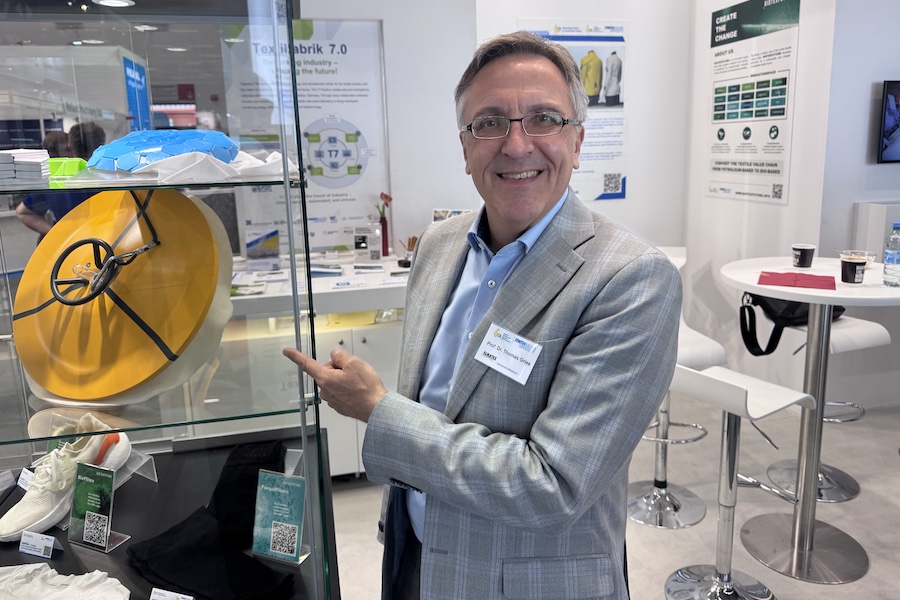
From technical textiles and AI-driven robotics to the limitations of textile circularity: Professor Dr Thomas Gries looks back on more than two decades of development at ITA Aachen. In the interview, he explains why production technology remains a decisive success factor, discusses international collaborations and innovation ecosystems, and shares his views on the transformation of production landscapes and the challenges facing an increasingly regulated industry.

#Knitting & Hosiery

“We need to move away from the price trap and return to a value-driven mindset.”

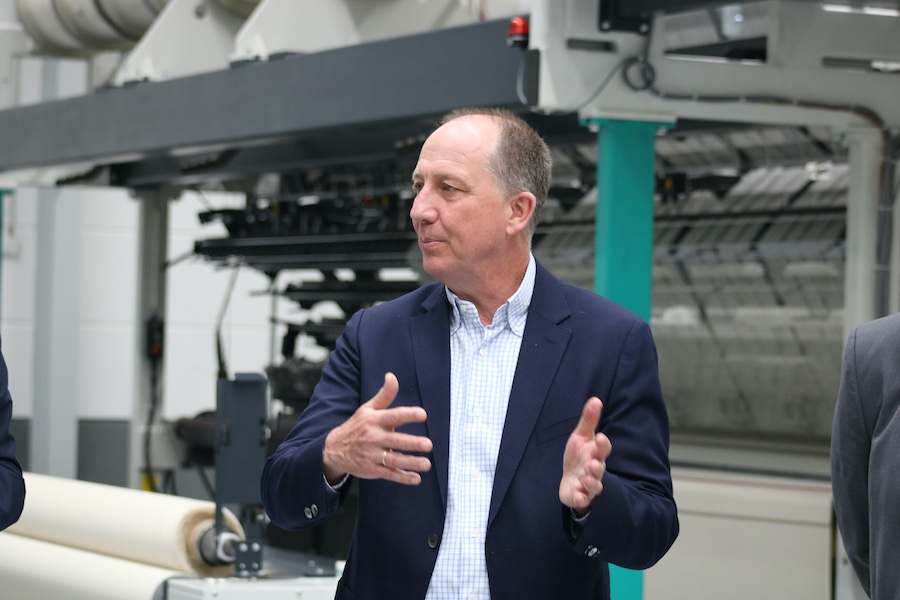
With its new Textile Innovation Center, KARL MAYER is sending a strong signal for innovation, collaboration, and the future of textile applications. In this interview, Karl Josef Mayer discusses new opportunities in warp knitting, the processing of staple fibres, recycling, the changing role of machinery manufacturers, and why the textile industry must once again focus more strongly on the value of textiles. by Oliver Schmidt

#Associations

“Innovation, resilience and international experience remain the great strengths of the Swiss textile machinery industry”

Geopolitical uncertainty, growing competitive pressure from China, new free trade agreements and the shift towards a circular economy are currently reshaping the global textile industry. In this interview, Cornelia Buchwalder discusses the current mood within the Swiss textile machinery sector, the industry’s distinctive innovative strength, new market opportunities in India and Asia, and the technological trends that could shape the upcoming trade fair cycle leading up to ITMA 2027.

More News on Recycling / Circular Economy

#Recycling / Circular Economy

New skills for a circular textile economy

Based on the results of a comprehensive analysis, the Erasmus+ project Skills4Circularity is developing three practical training modules covering recycling technologies, eco-design for the circular economy and sustainable manufacturing. The content of the first module, Recycling Technologies, has now been developed and validated together with industry representatives. The module provides participants with knowledge of regulatory requirements, material sorting and the preparation of textile waste for recycling.

#Recycling / Circular Economy

RE&UP establishes Fiber Club consortium to scale Next-Gen material sourcing

Originally developed as an umbrella framework by innovation platform Fashion for Good, the RE&UP Fiber Club aims to accelerate the commercial adoption of circular Next-Gen materials across the global fashion ecosystem.

#Recycling / Circular Economy

HKRITA signs MoU with Jeanologia and Looptworks to establish the Green Machine Circular Textile Ecosystem

The Hong Kong Research Institute of Textiles and Apparel (HKRITA) yesterday officially signed a landmark Memorandum of Understanding (MoU) with two key global partners, Jeanologia and Looptworks, to establish the Green Machine Circular Textile Ecosystem – a first-of-its-kind collaboration to accelerate the large-scale recycling of blended textiles.

#Spinning

Object Carpet tests production of rPET BCF yarn on Neumag BCF line

In a joint project with Object Carpet GmbH, Denkendorf; the Institute for Textile Technology (ITA), Augsburg; and Next Generation Recyclingmaschinen GmbH (NGR), Feldkirchen, Austria, Barmag investigated the processing of recycled polyester for BCF yarn. The goal was to evaluate the fundamental suitability of 100% recycled carpet material for reuse in carpet yarn production to create a closed-loop system in carpet manufacturing. To date, commercial rPET BCF processes have been based solely on rPET from bottle pellets.

Latest News

#Composites

JEC Forum Southeast Asia 2026 highlights Taiwan as a strategic hub for the global composites industry

The third edition of JEC Forum organized in Southeast Asia brought together 350+ participants from 22 countries for three active days of high-level Business Meetings, conferences, and networking, emphasizing Southeast Asia’s growing role in the global composites market. Held for the first time in Taipei from 23 to 24 June 2026, following the successful first editions in Bangkok, JEC Forum Southeast Asia 2026 confirmed its position as the region’s leading business platform dedicated to the composites industry.

#Nonwovens

EDANA announces five new board members following 2026 Annual General Meeting

The EDANA Board of Governors is elected or re-elected at the Annual General Meeting by the member companies. The Governors are senior executives (business leaders) from member companies, based in different countries and representing different sectors of the nonwovens industry. The Board has central responsibility for guiding EDANA's overall strategy and approving its policies and priorities. It meets three times a year.

#Nonwoven machines

DiloGroup - Complete nonwoven needling line for hygiene materials in the United States

DiloGroup has received an order for a complete needling line designed for the production of hygiene materials in the United States. This project further strengthens our position in the American hygiene sector and reflects the continued demand for reliable, high-performance nonwoven equipment.

#Natural Fibers

Cotton made in Africa partners receive top marks in independent verifications

Cotton made in Africa® (CmiA) and CmiA Organic are two internationally recognised standards that aim to promote sustainable development in the African cotton sector south of the Sahara. To ensure the standards’ credibility among brands, retailers, and consumers, independent verifiers evaluate compliance on the ground. The verification results for 2025, now published in the Aggregated Verification & Implementation Report, were very strong: The verifiers awarded consistently very good remarks regarding management, people, prosperity, and the environment.

TOP