[pageLogInLogOut]

#Recycling / Circular Economy

SABIC-BASF Forum highlights joint efforts to transition toward a circular economy for plastics

Senior experts from SABIC and BASF, two of the world’s leading chemical companies, discussed how the Kingdom of Saudi Arabia can transition toward a circular economy for plastics during the first SABIC-BASF Circular Economy Forum held recently.

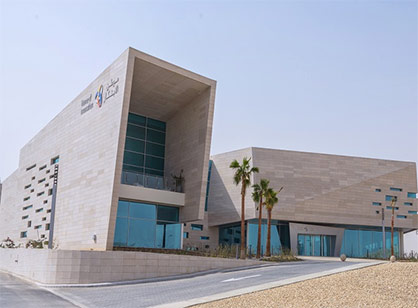
This invitation-only event virtually took place from SABIC’s Home of Innovation in Riyadh, which BASF recently joined as a partner.

Both companies have been working on complementary solutions to help address the challenges around end-of-life plastics, including advanced recycling which turns mixed waste plastic into virgin polymers. 

The Forum provided the parties with an opportunity to exchange learning and jointly agree on driving circular economy solutions that close the loop and would see post-consumer plastic waste collected, recycled and used to make new products.

Key topics of discussion included ways to increase the recycling rates to increase the supply of recycled plastic and further drive the demand for recycling facilities.

During the Forum, SABIC experts highlighted the company’s innovative TRUCIRCLE™ solutions, which encompass its circular products and services including certified circular polymers from the advanced recycling of used and mixed plastic, certified bio-based renewable polymers, certified renewable polycarbonate (PC), and mechanically recycled polymers.

SABIC and Plastic Energy are constructing the first commercial unit in Geleen, The Netherlands, to produce SABIC’s flagship certified circular polymers, part of the TRUCIRCLE™ portfolio, which are made from the upcycling of mixed and used plastic.

“TRUCIRCLE™ has been introduced as a way to collectively showcase our circular innovations and help manufacturers reduce plastic waste through the adoption of a range of sustainable material solutions. It forms part of our circular economy business and is aligned with the UN Sustainable Development Goal of Responsible Consumption and Production,” said Mark Vester, SABIC’ Global Leader Circular Economy.

BASF experts highlighted BASF’s ChemCycling™ project, a key pillar of its circular economy strategy, which develops a pyrolysis technology that turns plastic waste into a secondary raw material called pyrolysis oil. BASF also highlighted how its plastic additives facilitate mechanical recycling of plastics.


“Forging a path to a circular economy requires collaboration,” said Dr. Udo Huenger, Vice President Middle East & Egypt, BASF. “There is an increasing pressure regarding recycling targets and recyclability on the one hand and a strong commitment of our customers towards increasing the share of recycled materials in their offerings on the other hand. Solving these challenges requires innovation and joint efforts from industry and value chain partners.” 
© 2021 Sabic
© 2021 Sabic


He added: “This Forum allowed BASF and SABIC to explore ways in which we can cooperate and accelerate technology development that will divert plastics from going to landfills or end up in the environment.”

Dr. Abdulwahab Al-Sadoun, Secretary-General of the Gulf Petrochemical and Chemical Association (GPCA) talked about closing the gaps in the circular economy and reduced polymer-based pollution.

Dr. Abdullah AlSebaei, Chief Executive Officer at National Center for Waste Management, discussed the Kingdom’s waste management objectives aligned with Saudi Vision 2030.

A select number of SABIC and BASF value chain partners also attended the Forum.


More News from SABIC

More News on Recycling / Circular Economy

#Recycling / Circular Economy

Efficient recycling of textile PET

At the upcoming Plastics Recycling Show Europe in Amsterdam on May 5–6, BB Engineering will present its portfolio of PET recycling technologies. The German machinery manufacturer will once again focus on textile recycling and melt filtration.

#Recycled Fibers

Circulose and CTA announce collaboration to enable lyocell fibers using CIRCULOSE® pulp

Circulose has announced an agreement with China Textile Academy Green Fibre (CTA) to offer lyocell fibers produced using CIRCULOSE® pulp. Producing lyocell from recycled pulp at commercial scale is an important step in making textile-to-textile recycled materials available across a wider range of textile applications.

#Recycling / Circular Economy

Solving the Feedstock Gap: Unlocking Post-consumer Feedstocks for Textile-to-Textile Recycling in Europe

Fashion for Good launches Project FAE (Feedstock Activation Europe) to develop the sorting and pre-processing infrastructure needed to channel non-rewearable post-consumer textiles into textile-to-textile (T2T) recycling at scale. The project is a practical response to one of the most pressing problems in textile circularity: making post-consumer waste a viable, commercially competitive raw material for recyclers.

#Techtextil 2026

BASF at Techtextil 2026: Helping to shape the future of the textile industry with tangible solutions

At the leading international trade fair for technical textiles and nonwovens from April 21 to 24, 2026 at the Messe Frankfurt, BASF will present numerous solutions and new projects in the textile sector to customers and partners at booth B 68 in hall 11.0. The focus is on product innovations and future-oriented technologies.

Latest News

#Associations

BTMA backs global growth while investing in future UK leaders

As one of a number of new initiatives launched this year, the British Textile Machinery Association (BTMA) is launching the UK-India Textile Machinery Coalition. The UK-India Free Trade Agreement, signed in July 2025, has implications that extend across sourcing, competitiveness and long-term trade dynamics, believes BTMA CEO Jason Kent.

#Raw Materials

China projected to increase cotton production, yields, and imports in 2026/27

World cotton production in the 2026/27 season is projected at 25.9 million tonnes, exceeding global consumption of 25.2 million tonnes, according to the May 2026 issue of Cotton This Month. That means both production and consumption are expected to remain close to current season levels, while global cotton trade is projected to decline by 2.7% to approximately 9.6-9.7 million tonnes.

#Raw Materials

ICAC launches Carbon Credits Initiative to deliver new income streams to cotton farmers

The International Cotton Advisory Committee (ICAC) has announced a new initiative designed to unlock additional income streams for cotton farmers through participation in carbon credit markets, linking sustainable production practices directly to financial returns.

#Sustainability

Number of GOTS-certified facilities grow 15% globally as demand for credible sustainability standards continues to strengthen

Global Organic Textile Standard (GOTS) certification continued to grow in 2025, with nearly 18,000 certified facilities worldwide, despite ongoing geopolitical uncertainty and rapidly evolving regulatory requirements across global textile supply chains.

TOP