[pageLogInLogOut]

#Recycling / Circular Economy

Two champions of post-consumer textile recycling joining forces
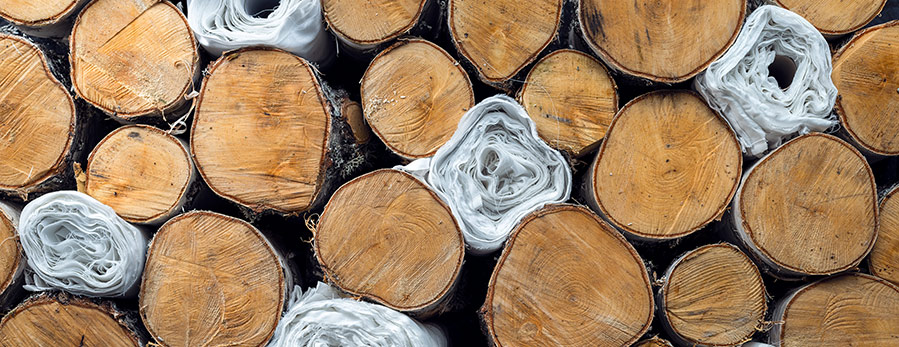
© 2021 Lenzing
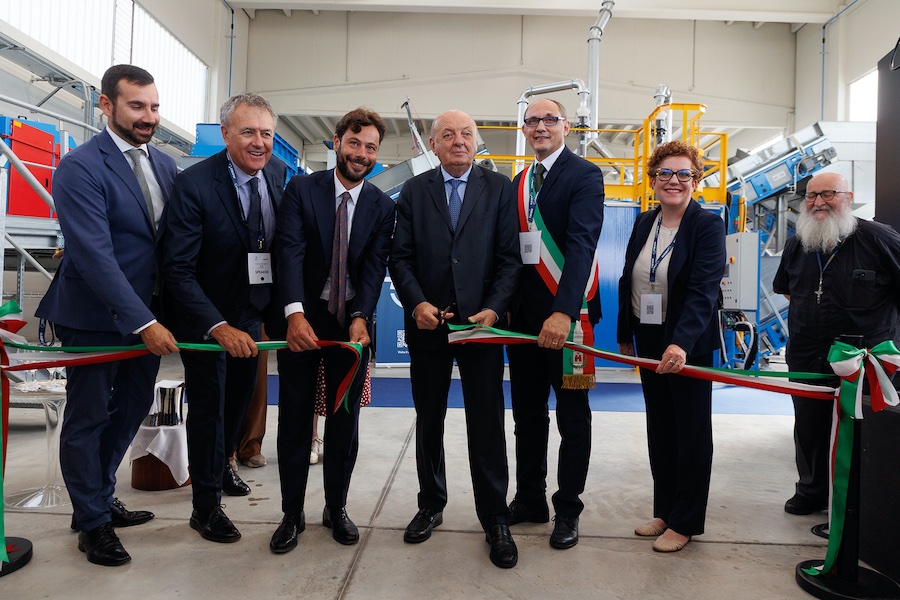
Lenzing, a leading global supplier of wood-based specialty fibers, and Södra, a world-class producer of pulp, signed a cooperation agreement today, June 02, 2021, with the clear objective of making a decisive contribution to addressing the enormous textile waste challenges of the industry and the society.

The cooperation involves the transfer of knowledge between the two companies, which have been proactively driving the circular economy issue for many years, and a joint process development followed by a capacity expansion for pulp from post-consumer waste. The goal is to process 25,000 tons of textile waste per year by 2025.

Together, Lenzing and Södra take a giant leap further towards closing the loop from fiber to fiber in fashion.

The fashion industry is one of the major polluting industries in the world. Millions of tons of textile waste are created each and every year, most of it ends up in landfills. In the spirit of the circular economy transition, both Lenzing and Södra have independently addressed the issue and developed appropriate solution options so far. Both companies are experts in their respective fields with many years of large-scale industrial experience.

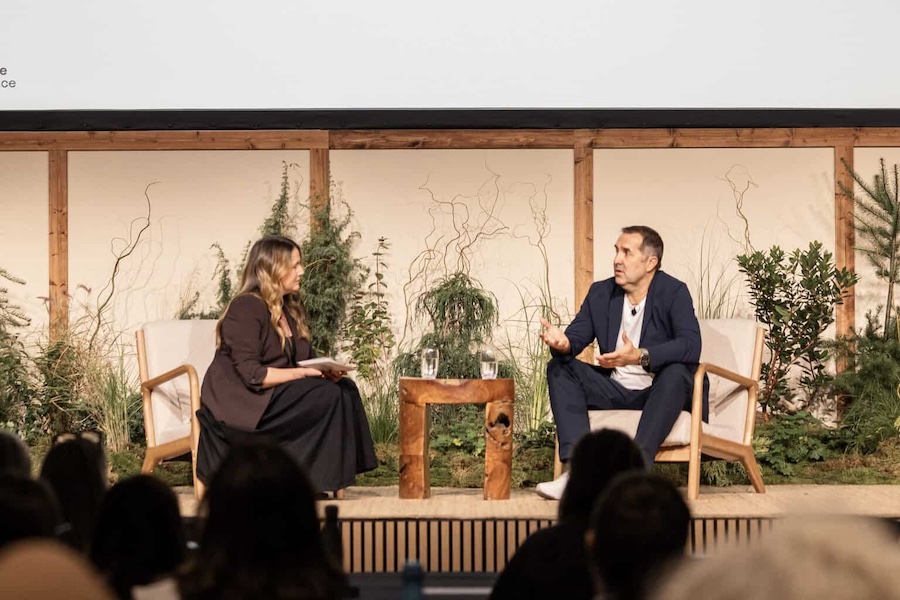
Lotta Lyrå © 2021 Lenzing


Together, they give textile recycling a huge boost by developing technologies further towards a broader, industrial-scale use of post-consumer cellulosic waste. The jointly developed pulp OnceMore® will subsequently also be used as a raw material for the production of Lenzing’s TENCEL™ x REFIBRA™ branded specialty fibers.

“The cooperation with Södra is a major milestone towards achieving our ambitious climate and sustainability goals. We are proud to be able to go this way with a competent partner. One company alone cannot solve the pressing issue of textile waste. It is proactive partnerships like this that enable us to move forward and bring about real systemic change”, says Christian Skilich, Member of the Managing Board of Lenzing.

“With OnceMore® pulp, Södra has created a globally unique solution to base textile on a recycled source. By joining forces with Lenzing, we now taking the next step on our journey and will bring world-class recycling to the textile value chain. Through a new investment, we will also ten-fold our production capacity of OnceMore® pulp during 2022 and have a higher level of recycled textile content. These are important steps towards our long-term target to create a circular textile industry”, says Lotta Lyrå, President and CEO of Södra.

“In this turn around decade for our planet, making forest-based fabrics from recycled textiles is critical to protect biodiversity, alleviate pressure on forests and address the growing climate crisis. Canopy is excited to see these two major producers join forces to bring vital Next Generation Solutions to the fashion industry. We look forward to seeing greater commercial volumes come to market”, says Nicole Rycroft, Canopy’s Founder and Executive Director.


Two companies with bold visions and large-scale solutions for the reuse of waste

In line with its circular economy vision, “We give waste a new life. Every day”, Lenzing drives the industry towards a fully-fledged circular economy by striving to give waste a new life in all aspects of its core business and by co-developing circular solutions with potential partners in and outside the current value chain. Lenzing has extensive knowledge in developing cutting-edge innovations in recycling such as its REFIBRA™ and Eco Cycle technologies. Besides virgin dissolving wood pulp, these technologies allow the processing of a substantial proportion of recycled materials based on pre-consumer cottons scraps and post-consumer garments.

Christian Skilich © 2021 Andi Bruckner


OnceMore® by Södra is the world’s first process for industrial-scale recycling of textile waste of blended fibers, and it’s the forest who makes that possible. The process combines wood cellulose with textile waste to create a pure, high-quality dissolving pulp which can be used to produce new clothing and other textile products. During 2022, a new investment will ten-fold the production capacity of OnceMore® pulp and reach a higher level of recycled textile content. The goal for 2025 is to process 25,000 tons of textile and offer a OnceMore® pulp based on our wood material and 50 percent recycled textile material.

More News from Lenzing

#Man-Made Fibers

Lenzing AG to become majority owner of TreeToTextile AB and accelerates industrialization of new fibers

The Lenzing Group is taking another strategic milestone by acquiring a controlling majority in the Swedish innovation company TreeToTextile AB. This step strengthens Lenzing’s position as a leading provider of sustainable, wood‑based specialty fibers and expands its innovation pipeline with a highly scalable, patent‑protected technology platform. The transaction is executed through the issuance of new shares.

#Man-Made Fibers

Fourth CDP Triple “A” Rating reinforces Lenzing’s leadership in sustainability

Lenzing AG has once again been recognized by the global nonprofit organization CDP for its transparent reporting performance in the areas of climate change, forests, and water security. This places Lenzing among only 23 companies worldwide that made it on the “Corporate A List” across all three categories in 2025 – out of more than 22,000 companies that disclosed their environmental data. For Lenzing, this marks the fourth time the company has achieved this prestigious triple‑“A” rating.

#Man-Made Fibers

Lenzing AG announces new leadership and establishment of Executive Committee

Lenzing AG announced that Rohit Aggarwal, Managing Board Member and Chief Executive Officer of Lenzing AG, has informed the Supervisory Board of his decision to resign from his position due to personal reasons, effective 31 January 2026. To support a smooth transition, Mr. Aggarwal will remain with Lenzing AG as an advisor to the company until end of September 2026. The Supervisory Board expresses its appreciation for Mr. Aggarwal’s leadership and contributions during his tenure.

#Man-Made Fibers

Lenzing invests EUR 15 mn to strengthen position in the hygiene market

The Lenzing AG is investing approximately EUR 15 mn to expand its production capacity for premium viscose fibers at its site in Lenzing, Austria. This strategic investment is part of the recently announced investment program of EUR 100 mn in total to secure the long-term competitiveness of Lenzing’s Austrian production sites. The capacity expansion reinforces the company’s commitment to providing sustainable solutions to the global hygiene market. It also strengthens the company's role as a trusted provider of high-quality fibers for feminine care applications.

More News on Recycling / Circular Economy

#Europe

New EU rules to stop the destruction of unsold clothes and shoes

The European Commission today (Feb 9) adopted new measures under the Ecodesign for Sustainable Products Regulation (ESPR) to prevent the destruction of unsold apparel, clothing, accessories and footwear.

#Recycling / Circular Economy

Sahil Kaushik appointed CEO of Infinited Fiber as the company advances a phased path to commercial scale

Infinited Fiber has appointed Sahil Kaushik as Chief Executive Officer. Kaushik has served as Acting CEO alongside his role as Chief Operating Officer and will continue to oversee operations until a new COO is appointed.

#Recycling / Circular Economy

trinamiX with new management

BASF is examining strategic options for its subsidiary trinamiX GmbH. trinamiX specializes in biometric imaging and mobile material analysis. These activities are not part of BASF’s core business, on which the company is focusing as part of the implementation of its new strategy.

#Recycling / Circular Economy

Reju announces site selection for first U.S. industrial sized facility regeneration hub in Rochester, New York

Reju, the textile-to-textile regeneration company, today announced it has selected the site for its first U.S.-based industrial facility marking a significant milestone in its efforts to scale globally. This future Regeneration Hub will be in Rochester, New York, reinforcing Reju’s commitment to the adoption of circular textile system across key regions worldwide.

Latest News

#Sustainability

Ying McGuire becomes new CEO of Cascale

Cascale today announced the appointment of Ying McGuire as Chief Executive Officer, effective June 1, 2026.

#Technical Textiles

Sustainable, lightweight, and sound absorbing: Polyester-based front trunk solution for BEVs

As car manufacturers look to further reduce their carbon footprint, Autoneum has developed an innovative front trunk solution for battery electric vehicles (BEVs), made entirely from polyester-based textile. The Ultra-Silent Frunk offers significant weight reduction, improved acoustic and thermal insulation, and uses up to 70 percent recycled material, supporting sustainable and efficient vehicle design. Autoneum, global technology leader in acoustic and thermal management for vehicles, has already received orders for the new frunk from three major OEMs in Asia and Europe to be built in three BEV models. Series production for two BEVs has been underway in China and Germany since last year.

#Raw Materials

Modern testing methods for raw cotton

The 38th International Cotton Conference Bremen will take place from 25 to 27 March 2026 at the Bremen Parliament. This conference has traditionally stood for in-depth expertise and international exchange. The program will focus on technical innovations, market trends, and regulatory frameworks across the entire value chain – from agriculture to the circular economy. With high-profile speakers, the conference is regarded as the key meeting point for the global cotton industry. Today’s focus: Cotton quality and testing methods.

#Spinning

Rieter responds to higher raw material prices

Global political and economic developments have been leading to rising raw material and energy costs for some time. The textile machinery industry is also affected by this trend. Rieter machines and components consist to a large extent of steel, copper, aluminum and electronics. These materials in particular have seen higher demand and higher prices in recent months.

TOP