[pageLogInLogOut]

#Recycling / Circular Economy

Closing the loop for polyurethane mattresses
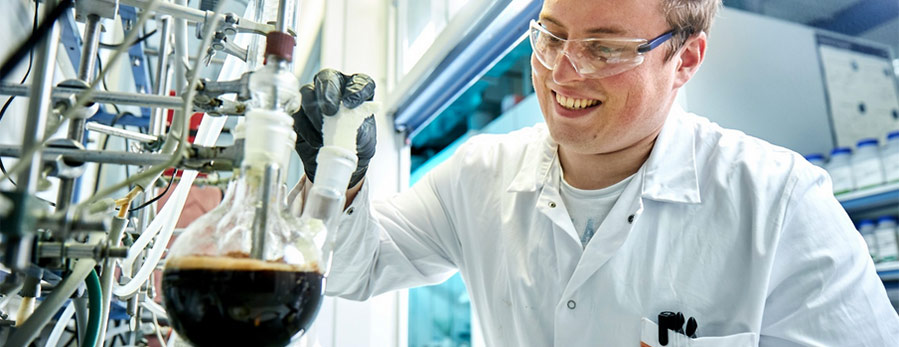
Covestro researcher Sebastian Scherf during a laboratory experiment on the chemical recycling of polyurethane mattress foam. © Covestro
Covestro has developed an innovative process for the chemical recycling of polyurethane (PU) flexible foam from used mattresses. It builds on its participation in the PUReSmart project, which is coordinated by Recticel company.
  • Innovative process for recovering both core raw materials
  • New pilot plant for chemical recycling put into operation
  • Trailblazer for industrial recycling
  • Co-shaping the circular economy in cooperation with value chain

On average, mattresses contain 15 to 20 kilograms of foam, which results in a large amount of waste at the end of their useful life. The foam is primarily made of two important raw materials. While other chemical recycling approaches mainly focus on processing one of them, the Covestro process now enables the recovery of both raw materials.

Covestro has also recently started operating a pilot plant for flexible foam recycling at its Leverkusen site to confirm the positive laboratory results achieved to date. The first phase is to focus on recycling one of the raw materials, before the recovery of the second component is also to be piloted from summer this year. Covestro´s goal here is to industrialize chemical recycling processes for used flexible foams and ultimately to remarket both recovered raw materials.

Closing material loops

"The development of this innovative recycling technology and the investment in the pilot plant are further milestones in realizing our vision of fully aligning Covestro to the circular economy," says CEO Dr. Markus Steilemann. "In doing so, we want to replace fossil resources in production, steadily further reduce the carbon footprint of our materials and create new solutions for dealing with plastic waste. Chemical recycling is particularly promising for this, and must be developed further and used more intensively overall. Above all, it should finally be put on an equal legal basis with other recycling methods."


In cooperation with the companies Recticel and Redwave – a division of Wolfgang Binder GmbH – and as part of the PUReSmart research project, Covestro has also developed an intelligent sorting solution for separating the different PU foams from post-consumer mattresses. The software uses algorithms to correctly identify the different foam types, which facilitates an effective recycling process. This development is another element of Covestro’s digitalization strategy, combined with the new opportunities it entails for the chemicals and plastics industry.

Co-creation of a circular ecosystem

"Based on our competencies and experiences, we also want to take part in shaping the emerging value creation cycle," says Daniel Meyer, Global Head of the Polyurethanes segment at Covestro. "To accomplish this, we rely on international cooperation with partners and also develop innovative business models. The aim is to generate new sustainable business opportunities with our customers, other partners and for ourselves."

The project is an important step forward in taking the development of the circular economy at Covestro to entirely new heights. The increased use of used materials further contributes to solving the societal challenge of sustainable disposal of such waste and to achieving the European Union´s goals for the circular economy and for climate and environmental protection.


More News from Covestro AG

#Textile chemistry

Covestro and Heraeus Precious Metals collaborate to enable safer, more sustainable antimicrobial textile coatings

Laboratory tests reveal that AGXX antimicrobial surface technology from Heraeus Precious Metals is fully compatible with Impranil® PU dispersions which are part of the waterborne INSQIN® textile coating technology from Covestro, paving the way for more sustainable antimicrobial textile coatings. This discovery comes at a key moment for the textile coatings industry. As the sharing economy continues to grow, more people are coming into regular contact with high-use surfaces, creating ideal conditions for bacteria, viruses, and other microorganisms to thrive.

#Textile chemistry

Covestro celebrates decade of innovation and sustainable growth

Covestro celebrates its 10-year anniversary today. Since its carve-out from Bayer in 2015, the company has developed into a global leader in high-performance polymer materials and a pioneer in circular economy solutions. With a strong focus on innovation and sustainability, Covestro’s materials are now embedded in countless applications worldwide – from mobility and construction to electronics, healthcare, and consumer goods.

#Textile chemistry

Covestro extends contract with CTO Dr. Thorsten Dreier ahead of schedule until 2031

Dr. Thorsten Dreier will remain Chief Technology Officer of Covestro for a further five years. The Supervisory Board has extended his contract, which runs until June 2026, ahead of schedule from July 1, 2026 to June 30, 2031.

#Textile chemistry

Suiting up Team Sonnenwagen with more sustainable sportswear created through a three-way partnership

Team Sonnenwagen Aachen, a solar racing collective from RWTH Aachen and FH Aachen, Germany, is on a mission to advance sustainable mobility solutions and become world champions. This August, the student team will participate in the 2025 Bridgestone World Solar Challenge, a biannual 3,000-kilometer race across the Australian outback. During the five-day event, 50 student teams from around the world will compete with solar vehicles that they must design, assemble, and drive themselves.

More News on Recycling / Circular Economy

#Recycling / Circular Economy

Reju announces site selection for first U.S. industrial sized facility regeneration hub in Rochester, New York

Reju, the textile-to-textile regeneration company, today announced it has selected the site for its first U.S.-based industrial facility marking a significant milestone in its efforts to scale globally. This future Regeneration Hub will be in Rochester, New York, reinforcing Reju’s commitment to the adoption of circular textile system across key regions worldwide.

#Business

Canopy introduces a first-of-its-kind $2 billion USD investment blueprint to decarbonize global materials supply chains

Today, the global, solutions-driven not-for-profit Canopy joined partners at Davos to introduce a new finance model designed to accelerate the growth of low-carbon materials and transform the paper, packaging, and textile supply chains. The event was anchored by a keynote speech from Sri A Revanth Reddy, Hon’ble Chief Minister of Telangana, with India set to host the first iteration of the new investment blueprint.

#Recycled_Fibers

Borealis invests EUR 49 million in Burghausen, Germany to accelerate design for circularity

Borealis announces a EUR 49 million strategic investment to scale up production of Borstar® Nextension polypropylene (PP) at its manufacturing site in Burghausen, Germany. This will expand commercial production of next-generation single-site polypropylene (ssPP) grades that deliver enhanced purity, processability, and performance - supporting customers in key sectors including packaging, healthcare, mobility, and fibers, to meet evolving market and regulatory demands.

#Recycling / Circular Economy

From local actions to industrial innovations: SOLSTICE shares mid-project results

Since its launch in May 2024, the SOLSTICE project is accelerating the transition from linear models to circular regional ecosystems in the textile industry, focusing on four key territories: Grenoble-Alpes Métropole (France), Berlin (Germany), Prato (Italy), and Catalonia (Spain). By mid-project, SOLSTICE has already revealed both regional disparities and promising solutions to strengthen textile repair, reuse, and recycling infrastructure.

Latest News

#Fabrics

MUNICH FABRIC START: Between Attitude and Sensuality

The future begins where we reimagine it. After seasons of restraint, Spring.Summer 27 marks a conscious counter-trend: optimism, sensuality, and creative freedom are replacing pragmatism and neutrality. Physical presence and individuality are regaining importance – as a response to uncertainty, exhaustion, and algorithmic predictability. The overarching theme of PLEASURE stands for fashion as an emotional space, as an expression of attitude and cultural reflection. Colours, surfaces, and materials become vehicles for self-confidence and joie de vivre.

#Denim

organIQ seek: smart alternative to potassium permanganate

CHT Group announces new technical findings within its organIQ seek platform that significantly advance the transition toward permanganate-free denim bleaching. Through extensive industrial testing and application research, CHT confirms that organIQ seek can now be used with remarkable effectiveness as a substitute for potassium permanganate in spray bleach, while remaining aligned with sustainability expectations and cost realities in the European market. At the COLOMBIATEX in Medellín as well as at the Exintex in Puebla and the Kingpins Show in Amsterdam the CHT Group will present organIQ seek as an alternative to potassium permanganate.

#Functional Fabrics

PERFORMANCE DAYS: Focus topic shifts to the beginning of the value chain

Following the last Focus Topic in October 2025, which placed Textile-to-Textile Recycling at its core, PERFORMANCE DAYS continues to drive the conversation around circularity – this time with an expanded and more upstream perspective. The upcoming Focus Topic, “Textile to Textile: The Role of Collectors and Sorters,” presented during the spring edition on March 18–19, will spotlight one of the most essential yet often overlooked components of a functioning circular textile system: the efficient collection and sorting of post-consumer textiles.

#Knitting & Hosiery

Proven performance, optimised costs – the new RE 6 EL

Nowadays textile companies increasingly need to produce small production runs and respond to market changes with instantaneous pattern changes in order to operate profitably – meaning they require machines that offer maximum flexibility, reliability and cost efficiency. KARL MAYER understands the challenges of the market and is launching its new RE 6 EL. The Raschel machine offers the core strengths of the classic RSE 6 EL and essentially the same performance parameters, but has been further cost-optimised largely due to local production advantages. This makes the newcomer an efficiency champion in production, especially when it comes to frequent pattern changes.

TOP