[pageLogInLogOut]

#Recycling / Circular Economy

Gama Recycle goes even greener with Oerlikon Neumag
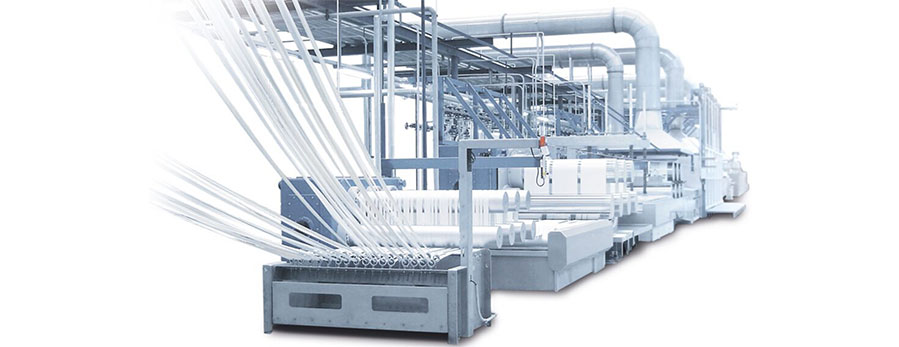
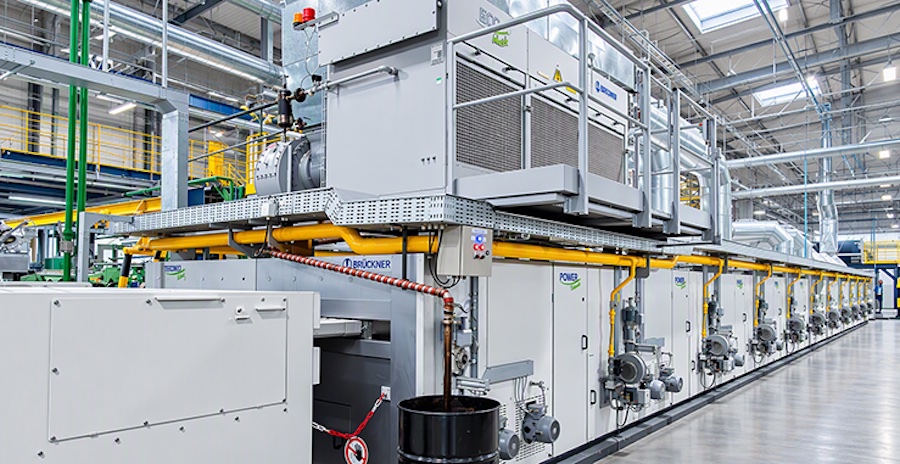
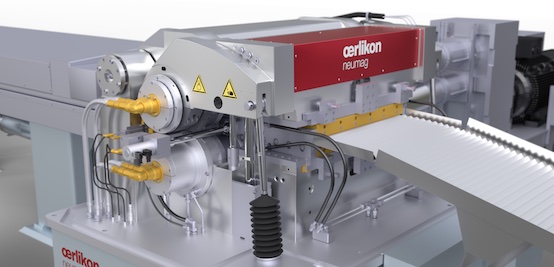
With a staple fiber plant from Oerlikon Neumag, Gama is able to control the whole production process in a very efficient way. (c) 2020 Oerlikon
Business growth and environmentalism rarely go hand in hand. For some, the two ideas are diametrically opposed, forcing companies to take an either or approach. One of the global recycling pioneers Gama Recycle, however, has spent the last two decades spinning other people’s waste material into a new kind of gold – regenerated yarns and fibers. We had the opportunity to discuss with Zafer Kaplan, founder of Gama Recycle, the current state-of-the-art in recycling and catch a glimpse of how the company is planning to ramp up production with an upcoming stable fiber plant from Oerlikon Neumag.

Staple fiber plant is set to help a sustainable leader take global recycling to the next level

As one of the largest producers of regenerated yarn and fibers, you both recycle textiles and use R-PET bottle flakes in production. How did this develop, and why did you commit yourself to recycling?

We have been in business since 1997. From the very beginning, we produced recycled items. We gained a reputation for recycling textiles, as well as some plastics, so five years ago we even changed our name to Gama Recycle. To be honest, it was both environmentally and financially relevant at the time. There was a huge amount of plastic and textiles waiting to be reused. One of the most complicated aspects, though, was actually collecting all the materials.

What special considerations are required to produce regenerated yarns and fibers?

In the beginning, producing regenerated fibers and yarns was not a high priority for most people. Most countries and companies were not particularly sensitive to environmental issues. A lot of the cutting waste from the garment or textile industry was simply thrown away as trash or sent to be incinerated. It was not valuable for them to actually take care of these leftover materials.

As a result, we developed some ideas to turn these ‘unusable’ materials into regenerated fiber and yarn for several industrial use cases. We already have 18 patents for recycled products, machines, and equipment, with 10 more currently under review. Today, most garment manufacturers have started to sort and sell their leftover cutting materials, instead of simply throwing them into the garbage.

This is a huge improvement, because there were also only a few machine manufacturers on the market when we started recycling textiles, and most of the time we had to convert or modify our machines to make it suitable for recycling processes. Today, a lot of companies are focusing on recycling machines, and this has helped encourage a lot of growth in the whole industry as well.

What do you recycle, and which polymers are these materials made of?

We recycle pre-consumer cutting or industrial waste as well as postconsumer garments, PET bottles, PET trays, and other PET-based packaging materials or consumer products. We also have several patents for recycling previously used garments into recycled cotton and polyester fibers.

In what condition do you purchase your raw materials, and which steps of the process do you handle internally?

Sourcing is the most crucial and complicated part of our work. We purchase waste (our raw materials) from all over the world. We have several standards for raw materials, but unfortunately sometimes this does not match up with the specification of what you actually buy.


Zafer Kaplan, founder of Gama Recycle, has been establishing sustainable processes for more than twenty years (c) 2020 Oerlikon


You will also use a staple fiber plant from Oerlikon Neumag in your production. What makes this plant technology so interesting for your process?

Recycled fibers have huge market potential. End-users are looking for environmentally friendly products, but they won’t compromise on the quality of the products they buy. This is why we prefer to use the Neumag fiber line. We are able to control the whole process in a very efficient way, with a consistently high quality of fiber as well as less production waste.

The preparation of recycling materials is a bit more complex. It seems that producing yarn and fiber from recycled materials is really profitable compared to virgin material. Or was your decision motivated more by idealism?

Yes, it is more profitable in most of cases – but also riskier and more complicated as well. You need a lot of know-how and experience, good machinery and equipment; otherwise, it will be a huge loss. While we do run a business, we are of course proud to do our part for sustainability and the environment by extending natural resources for future generations.

For example, we have developed a new patented fiber called CUPROCEL that is made of rPET polymer. Its touch, drape, stretch, recovery, etc., is not comparable to any other synthetic fiber. It is almost like cellulosic fibers such as modal or lyocell. We sell it as a fabric which is created with recycling processes. We even offer to buy cutting waste from our customers, as well as post-consumer garments. That is how we take sustainability into consideration. We believe this will help other people to follow suit.

What are your goals for the next three to five years? And what role does the Oerlikon Neumag plant play in your overall approach?

We will work up to a total of 300 tons of PET flake capacity per day, which will allow us, on a daily basis, to make 200 tons of recycled polyester fibers and 100 tons of PET chips for filament yarn and bottle-to- bottle (food-grade) applications. This is a great opportunity to have the Neumag line. With its impressive technology and capability, we will be able to achieve our goals more easily.

More News from Oerlikon Textile GmbH & Co. KG

#Nonwovens / Technical Textiles

Crimper repair workshop begins operations

Since the beginning of the year, Oerlikon Textile Inc. has been offering a crimper repair service, making it the company's first location worldwide to do so. The workshop in Charlotte specializes primarily in Fleissner and Neumag crimpers.

#Spinning

Oerlikon Manmade Fibers Solutions hosted successful Technology Day 2025 in India

Oerlikon Manmade Fibers Solutions recently hosted its highly anticipated Innovation and Technology Day at the Deltin Hotel in Daman by end of January 2025. The event attracted over 300 participants, including industry experts, partners, and stakeholders, who gathered to explore the latest advancements and trends in the manmade fibers industry in India.

#Spinning

Industrial yarn producer sees growth potential in tire cord sector

The Chinese Junma Group has expanded its HMLS capacities by 20 positions, hence becoming one of the largest tire cord manufacturers in China. At present, the company has 64 positions of HMLS systems, all of which are from Oerlikon Barmag.

#Spinning

Oerlikon reports third quarter 2024 results, highlights strong execution in a challenging market landscape

In the third quarter of 2024, Oerlikon reported a stable operational Group EBITDA margin, despite challenging market conditions, thanks to a focus on pricing, cost management, and efficiency across both divisions. Group order intake saw a 4% year-over-year decline at constant FX, attributed to temporary market softness in Surface Solutions, while orders in Polymer Processing Solutions showed signs of stabilization.

More News on Recycling / Circular Economy

#Recycled_Fibers

Recycling mixed-fibre garments becomes a reality: RadiciGroup, The LYCRA Company and Triumph take circular fashion a step forward

The process, which is both economically and environmentally sustainable, has enabled the production of an underwear set made from 100% recycled nylon and LYCRA® fibre in a closed-loop system.

#Research & Development

How innovations drive BASF’s success

“Innovation has always been part of BASF’s DNA. Especially in these volatile times, it is crucial to leverage our innovative strength to develop competitive solutions that differentiate us as a company in our markets and give us a competitive edge,” said Dr. Stephan Kothrade, Member of the Board of Executive Directors of BASF and Chief Technology Officer, at the company’s Research Press Briefing held today. To achieve this, BASF implemented its “Winning Ways” strategy about a year ago with the clear goal of becoming the preferred chemical company to enable its customers’ green transformation.

#Recycling / Circular Economy

Textiles Recycling Expo announces collaboration with Future Fabrics Expo for 2026

The Textiles Recycling Expo has entered a major new collaboration with the Future Fabrics Expo which means that both events will run alongside each other at the Brussels Expo, Belgium on 24–25 June 2026. This co-location marks a significant step forward for the textile and fashion industries, bringing together two influential and complementary events under one roof.

Latest News

#Research & Development

More safety and comfort for protective clothing thanks to auxetic fabrics

When everyday materials are pulled, they stretch or elongate in the direction of the pull and become narrower in cross-section. We can also observe this property in two-dimensional textiles. Auxetic structures behave differently here. They have the striking property of not changing under tensile stress or even increasing their width or thickness. These properties are advantageous, for example, in protective textiles or textile filter media. The DITF are researching auxetic fabrics for various applications.

#Spinning

First PA66 spinning plant with EvoQuench successfully commissioned

With the successful commissioning of a multi-digit PA66 spinning line for microfiber yarns, Chinese textile company Shandong Nanshan Fashion Technology Co., Ltd. has added yarn production to its textile value chain.

#Knitting & Hosiery

SHIMA SEIKI returns to ShanghaiTex

Leading flat knitting solutions provider SHIMA SEIKI MFG., LTD. of Wakayama, Japan, together with its Hong Kong and Chinese market subsidiary SHIMA SEIKI (HONG KONG) LTD., will exhibit at the ShanghaiTex 2025 exhibition (Booth No.: Hall N3, Booth A20) held in Shanghai, China this month. This marks the return of SHIMA SEIKI to ShanghaiTex after a 14-year hiatus, its last exhibit at the show having been in 2011.

#Research & Development

Fraunhofer CCPE presents the “Monomaterial Design Set” – Innovative solutions for circular product design

Composite materials made from different types of plastic often extend the lifetime of products but make recycling more difficult in the circular economy. That is why Fraunhofer CCPE has developed the “Monomaterial Design Set”. This new approach helps to reduce the variety of plastics used in durable products and offers circular solutions for designers and product developers.

TOP