[pageLogInLogOut]

#Recycling / Circular Economy

Teijin Frontier’s new high-stretch SOLOTEX®ECO-hybrid fiber made with plant-derivedand recycled materials

Teijin Frontier Co., Ltd., the Teijin Group's fibers and products converting company, announced today its new SOLOTEX®ECO-Hybrid high-stretchside-by-side (S/S) conjugated fiber an eco-friendly plant-derived polymer with a chemically recycled polyester polymer, each featuring different heat-shrinkage characteristics to enable the formation of coiled crimpyarn.

SOLOTEX®ECO-Hybrid represents a  new  line in Teijin  Frontier’s polytrimethylene terephthalate (PTT) fiber SOLOTEX®family. SOLOTEX®ECO-Hybrid filament yarn and textile will be introduced as a featured product for 2020 autumn/winter fashion apparel, offering many possibilities for enhanced sportwear, uniforms and more. Annual sales of SOLOTEX®ECO-Hybridare expected to grow from JPY 500 million in 2020 to JPY 1.5 billion in 2022 (filament yarn equivalent).

Key Features of SOLOTEX®ECO-Hybrid

Polymers

Extra stretchability achieved with newtechnology for conjugating PTTpolymer and polyethylene  terephthalate  (PET) polymer made  with chemically recycled raw material, which are then processed to create a crimp structure.

Filament production

Crimp   structure is equivalent   to that   of petroleum-derived   raw materials.Dyeability achieved with optimizedyarn-making conditions.

SOLOTEX®ECO-Hybridcrimp structure (c) 2020 Teijin
SOLOTEX®ECO-Hybridcross section (c) 2020 Teijin


SOLOTEX®ECO-Hybrid has  the  same  features  asconventional S/S  conjugated  fibermade with petroleum-derived raw materials.

Eco-friendly

PTT  polymer is  partly  made  with plant-derived  raw  materials  and PET polymer is made with chemical recycled raw materials such as used polyester fibers.

Versatile fineness

Wide  range  of  fineness,  from 33-330 decitex, *and filament  yarn processing is possible.

Highly practical

Very stretchable and dyeable, equivalent to those of petroleum-derived materials, and soft texture.

*Thread thickness measured in grams per 10,000m

In  recent  years, demands have  been growing  for  materials  offering functionality  and comfort, such  as  stretch ability and  soft  textures.  Also, users  are  seeking eco-friendly fabrics made with recycled and plant-derived materials.

Teijin   Frontier’s   existing S/S   conjugated   fiber comprises   a   highly   stretchable SOLOTEX®PTT-fiber polymer  made  with  about  40%  plant-based  raw  materials  and PET  made  of  recycled  raw materials. The  newest  version, SOLOTEX®ECO-Hybrid, solvesthe  problem  of achieving a  consistent  crimp  structure in  an eco-friendly S/S conjugated fibermade with recycled PET.

More News from Teijin Aramid

#Yarn & Fiber

Teijin Aramid: Taiichi Machida to succeed Peter ter Horst as CEO

Peter ter Horst will step down as Chief Executive Officer at the end of 2025, after 19 years of dedicated service. Effective October 1, 2025, Taiichi Machida will take over as CEO.

#Yarn & Fiber

Teijin announces availability of DPP-compliant products aligned with Europe’s ESPR Environmental Regulation

Teijin Limited announced today that it has started rolling out initiatives to enable aramid fibers and carbon fibers to be accompanied by Digital Product Passport (DPP) technology, which enhances supply chain transparency by verifying the origins of materials and supporting sustainability claims. The company is using the supply chain traceability system from Netherlands-based Circularise B.V., in which Teijin has invested since November 2024, to develop DPPs for each product.

#Composites

Teijin Carbon showcases new eco-friendly Tenax Next™ R2S 513 6mm short carbon fiber at JEC World 2025

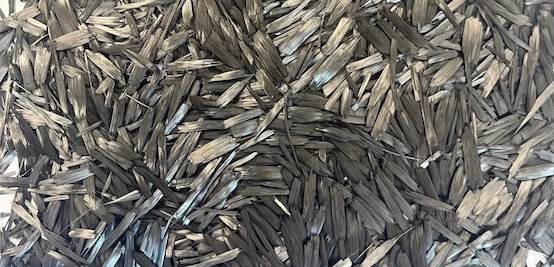
Teijin Carbon, a leading manufacturer of carbon fiber products, is presenting its latest development in sustainable materials at JEC World 2025 (hall 6, G22). New Tenax Next™ R2S 513 6mm is a short carbon fiber product in rice-shaped form for reinforcing thermoplastic compounds that not only offers exceptional performance characteristics but also reinforces the company’s commitment to environmental responsibility and circularity.

#Recycling / Circular Economy

Teijin to invest in Circularise B.V. and adopt its supply chain traceability platform to promote the Circular Economy

Teijin Limited announced today that it will invest in Circularise B.V., a company based in The Hague, Netherlands, which develops product traceability management systems using blockchain technology. Teijin will also implement Circularise’s software to improve visibility into its global supply chain. Circularise’s proprietary “Smart Questioning”(*) solution, which utilizes Zero-Knowledge Proof (ZKP) technology, provides both anonymity and transparency to ensure a highly reliable product traceability system.

More News on Recycling / Circular Economy

#Recycled Fibers

Recover and SUPIMA partner to develop recycled Pima cotton fibers and yarns

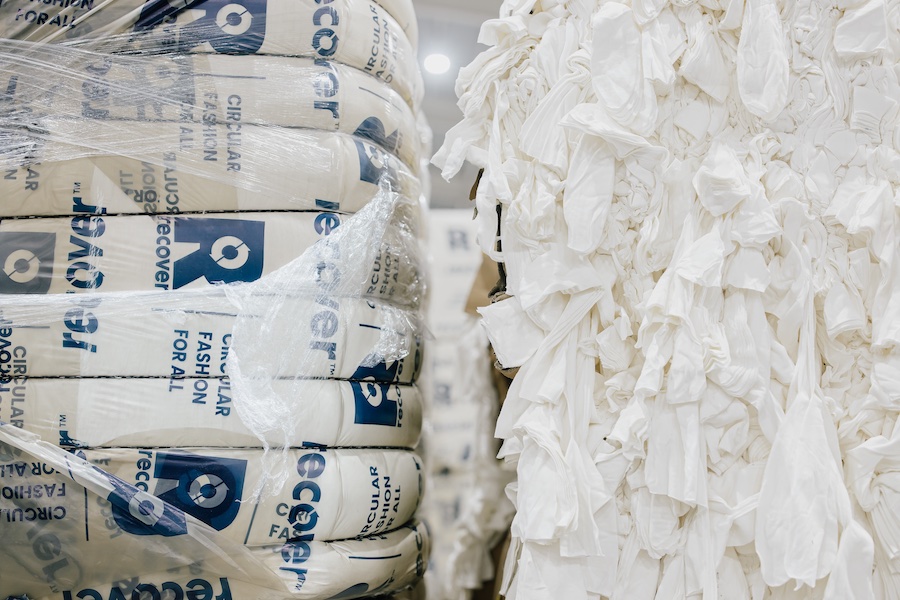
Recover and SUPIMA have partnered to turn waste from SUPIMA cotton production into a new line of recycled fibers and yarns. The collaboration will explore how recycled American-grown Pima cotton can be used in a wider range of yarns and garments for the premium market.

#Recycling / Circular Economy

ReSpin founder Åsa Strandberg receives Innovation Champion of the Year 2026 award

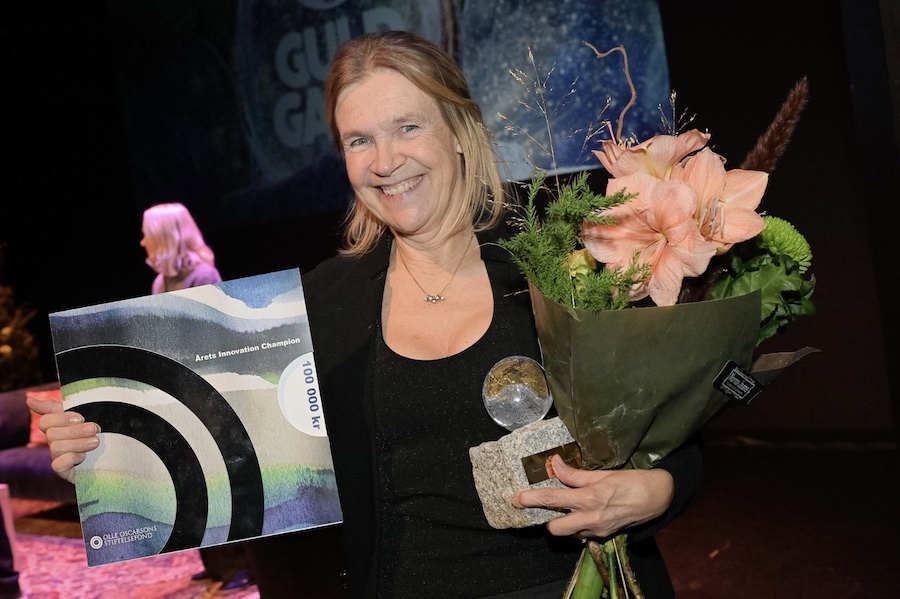
Åsa Strandberg, founder and CEO of Swedish textile recycling company ReSpin AB, has been named Innovation Champion of the Year 2026. The award recognises her development of RespinJenny, a patented technology designed to recycle textile waste into new, high-quality fibres without using water, chemicals or additional virgin raw materials. The distinction was presented by the Olle Oscarsson Foundation and Axera Inkubator at Guldgalan in Sweden.

#Recycling / Circular Economy

Circulose resumes recycling of discarded cotton textiles and appoints interim CEO

Circulose today announced its restart of commercial-scale production plant at Ortviken in Sundsvall, Sweden, marking a significant step in scaling next-generation materials for the global fashion industry. The Ortviken plant is the world’s first commercial-scale chemical textile recycling facility. Its restart demonstrates that the fashion industry is seeking ways to scale proven solutions that move beyond pilots and into commercial production.

#Recycled Fibers

Reju expands textile-to-textile recycling network with six international fabric manufacturers

Reju, a textile-to-textile regeneration company, is expanding its industrial network through collaborations with six fabric manufacturers in Europe and the Americas. The initiative aims to accelerate the integration of regenerated polyester into textile manufacturing and support the development of finished fabrics for commercial applications.

Latest News

#ITMA Asia + CITME 2026

KARL MAYER sets new speed benchmark with RD 7/2-6 MAX for high-performance spacer fabrics

During ITMA ASIA, KARL MAYER is launching a superlative machine for the production of spacer fabrics. The new RD 7/2-6 MAX is the fastest seven-bar double needle bar raschel machine on the market and is currently attracting a great deal of attention at the Product Show accompanying the trade fair at KARL MAYER in Changzhou.

#ITMA Asia Singapore 2029

CEMATEX and Chinese partners explore new forms of cooperation as ITMA ASIA returns to Singapore in 2029

CEMATEX and the Chinese Consortium have jointly announced the conclusion of the first phase of their 20-year collaboration as co-owners and co-organisers of ITMA ASIA + CITME in China. At the same time, CEMATEX has confirmed that ITMA ASIA will return to Singapore in October 2029 as part of a broader strategic realignment. Both parties have reaffirmed their commitment to continued industry cooperation, while pursuing their respective strategic directions.

#Spinning

Trützschler's T-CAN reduces labor requirements by over 60% at Chinese spinning mill

Across the textile industry, mills are looking for ways to reduce labor dependency while maintaining full control of their production processes. However, manual can transport between spinning preparation machines often remains labor-intensive and prone to human error. To address this challenge, Trützschler developed T-CAN. The automated can transport system connects carding and drawing processes as well as drawing passages, ensures reliable material flow and reduces the need for manual intervention.

#ITMA Asia + CITME 2026

VDMA: German textile machinery manufacturers see signs of recovery as China remains a key market

Strong German participation at ITMA ASIA + CITME 2026 underscores China's importance for the textile machinery industry, while business surveys point to improving prospects for 2027.

TOP