[pageLogInLogOut]

#Recycling / Circular Economy

Rieter and partners launch Recycling Powerhouse for industrial-scale textile recycling
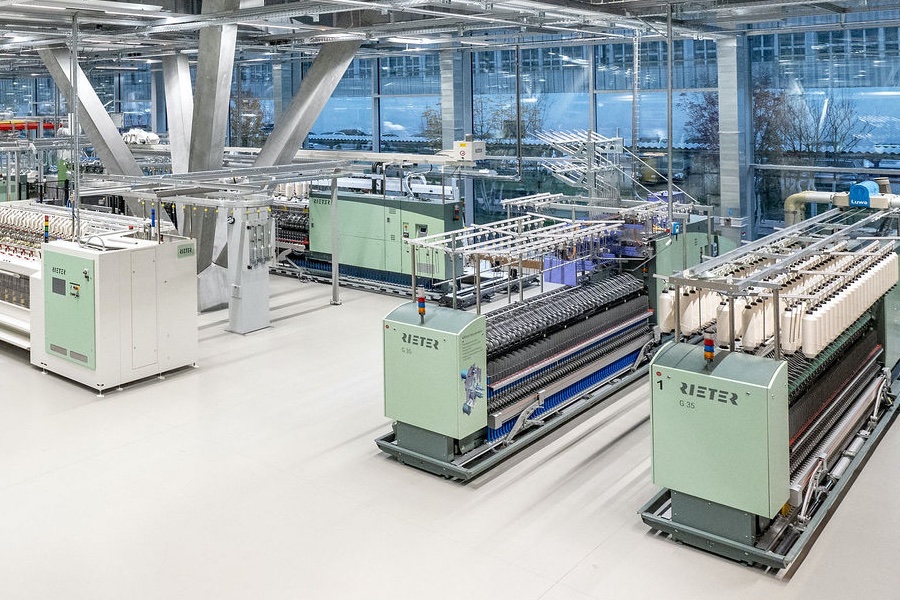
Recycling Powerhouse Ltd. was established in July 2026 to industrialize, standardize and scale textile recycling. Based in Switzerland, the venture will operate a franchise-driven business model that enables the production of high-quality, certified recycled yarns. The project is supported by the following partners: Rieter Group, the world’s leading system supplier for natural and man-made fibers, Säntis Textiles, a Swiss textile engineering company, and Valvan, a Belgian sorting technology company. The first blueprint franchise operation is scheduled to launch early 2027 in partnership with Suhail Industrial Holding Group in Qatar.

The global textile industry is undergoing a fundamental transformation. Rising volumes of textile waste, increasing regulatory pressure and growing demand for sustainable products are accelerating the need for scalable circular solutions. Textile-to-textile recycling is not new, yet less than 1% of used textiles are recycled back into new ones. This is primarily due to technological complexity, the availability of low-cost virgin materials and often fragmented, hard-to-verify recycling claims in the market. Over the coming years, Recycling Powerhouse intends to industrialize, standardize and scale textile recycling by establishing a global network of textile recycling plants capable of converting post- and pre-consumer textile waste into certified recycled yarns on an unprecedented industrial scale.

Recycling Powerhouse will act as a global integrator and franchisor across the textile recycling value chain, providing standardized recycling concepts, technologies, operating procedures, digital solutions, audit services and technical support to franchise partners worldwide. Franchise partners will gain access to Recycling Powerhouse’s proven recycling solutions, engineering know-how, training programs and operational support systems. Yarns produced by franchisees will be marketed under an established brand. Recycling Powerhouse will ensure quality through auditing, certification and full end-to-end traceability across the value chain.

As part of this venture, Rieter is contributing its tearing and spinning expertise for short-staple fibers. The tearing machine converts fabric clips into fibers preserving fiber quality far better than conventional technologies – a critical factor in enabling industrial-scale recycling and high-quality yarn production. The tearing machine complements Rieter’s end-to-end spinning systems technology.

Valvan, a global leader in sorting technology, contributes leading textile sorting equipment and know-how, including the automated and AI-based textile sorting machine Fibersort, as well as Trimclean, a system designed to prepare fabric clips for tearing.

The first recycling blueprint facility and franchise operation will launch in early 2027 in Qatar in cooperation with Suhail Industrial Holding Group. Suhail has firmly established itself as a leader in the recycling of metals, steel and plastic in the Middle East and other regions, and with this move is extending its operations into textile recycling. The facility will serve as a global reference model, demonstrating how industrial-scale textile recycling can become commercially viable while supporting circular economy goals. Suhail Industrial Holding Group is already planning additional plants worldwide, with the ambition to become a global leader in textile recycling.

Noel Norking, Managing Director of Recycling Powerhouse: “Our mission is to make textile recycling simple, scalable and accessible to investors, so they can turn the textile industry’s tectonic shifts into monumental opportunity while helping to solve the world’s growing textile waste problem.”

Thomas Oetterli, CEO of Rieter Group: “With Recycling Powerhouse Ltd., we are bringing our greatest strengths to one of the world’s most pressing issues: textile waste. By combining leading-edge spinning technology, decades of recycling expertise and advanced traceability solutions, the venture creates a strategic platform to unlock new growth opportunities across machinery sales, engineering services, recycling technologies and recycled yarn markets.”

Stefan Hutter, owner of Säntis Textiles: “Yarn manufacturing is fundamental to successful textile-to-textile recycling. We will bring together the full know-how of Rieter’s systems technology to create a powerful yarn brand with real potential to transform textile recycling.”

Frank Vandeputte, owner of the Valvan Group: “At the heart of any effective recycling system is the ability to separate pure fractions from waste streams. We are proud to bring our advanced and specialized sorting technology to the textile industry and help pave the way to solving the global challenge of textile waste.”

Sheikh Khalid Ahmed Mubarak Al Thani, Chairman of Suhail Industrial Holding Group in Qatar: “Recycling Powerhouse brings together deep textile expertise and cutting-edge engineering to help us realize our vision of a sustainable, competitive and resilient future where there is no textile waste.”

More News from Rieter Textile Systems

#Spinning

Rieter sees Barmag integration on track as orders and sales rise

The first half of 2026 was shaped by the successful completion of the largest acquisition in Rieter’s history. The Man-Made Fiber Division enables entry into the growth segment of man-made fibers and sustainably strengthens Rieter’s market position in the Asia region. The expanded Group is now the world’s leading system supplier for the processing of natural and man-made fibers. In the first half of the year, initial cost savings in material costs and operating expenses have already been realized. The targeted synergies are expected to amount to at least CHF 20 million by the end of the 2028 financial year. Due to the completion of the acquisition on February 2, 2026, the first half of the year for the Man-Made Fiber Division only amounts to five months.

#Spinning

"We will become a recycling powerhouse"

The textile industry is now in its fourth consecutive year of crisis, while automation, artificial intelligence and recycling are reshaping the rules of the game. In this interview, Rieter CEO Thomas Oetterli discusses the first signs of a market recovery, reflects on his first three years at the helm of the company, explains the integration of Barmag, outlines Rieter’s vision of the fully automated spinning mill and highlights the strategic importance of recycling. In doing so, he explains why the new Rieter Group aims to play a leading role in transforming the textile value chain into a circular economy.

#ITM 2026

Rieter at ITM 2026: Spinning Redefined with Automation and Intelligence

Spinning mills need solutions that deliver stability, efficiency and future-proof performance. Rieter has put together a powerful portfolio for ITM 2026 in Istanbul, Türkiye. These innovations give customers the tools to enhance cost efficiency, improve responsiveness and actively develop their competitive edge. Step-by-step, Rieter is moving closer to its Vision 2027 – the fully automated spinning mill. With each new technology, Rieter enables spinning mills worldwide to operate with greater precision and reliability, ensuring they remain at the forefront of an increasingly demanding global market.

#Spinning

Rieter Annual General Meeting 2026: Shareholders approve all board proposals

At the Annual General Meeting of Rieter Holding Ltd. held on April 16, 2026, 342 shareholders representing 64.0% of the share capital approved all motions proposed by the Board of Directors. The shareholders adopted the Annual Report as well as the Financial Statements and Consolidated Financial Statements for 2025. They also granted discharge to the members of the Board of Directors and the Group Executive Committee for their activities in the reporting year. In an advisory vote, the 2025 Report on Non-Financial Matters was also approved.

More News on Recycling / Circular Economy

#Recycling / Circular Economy

Managed workwear services are providing a blueprint for the circular textile economy

Managed workwear service providers are demonstrating how commercial success and circularity can go hand in hand by extending garment lifespans through repair, laundering, reuse and recycling, according to “Managed workwear services—a circular textile economy ahead of the game”, a new 14‑page report from the global business information company Textiles Intelligence.

#Recycling / Circular Economy

Eco-design as the foundation of circular textiles

Based on the results of an extensive European analysis, the Erasmus+ project Skills4Circularity is currently developing three practice-based training modules covering recycling technologies, eco-design for the circular economy and sustainable manufacturing. This was preceded by a comprehensive company survey and a joint analysis conducted by the project partners under the leadership of IVGT. The results show that the greatest challenges lie not so much in a lack of technology as in skills gaps.

#Recycled Fibers

Usha Yarns secures growth equity investment from Fullerton Carbon Action Fund

Usha Yarns Limited (“Usha Yarns”), a producer of high-quality recycled yarns with advanced, well established production processes, announced a growth equity investment from the Fullerton Carbon Action Fund (“Fullerton”), a private equity strategy managed by Fullerton Fund Management that backs established mid-market companies across Emerging Asia to accelerate decarbonisation.

#Recycling / Circular Economy

German 'ZOLL' turns end-of-life uniforms into valuable raw materials

Together with CWS Workwear, the German Customs Administration is extending the life cycle of service uniforms through reuse, recycling and material recovery, demonstrating how circular economy principles can be successfully implemented in the public sector while delivering significant savings.

Latest News

#Functional Fabrics

PERFORMANCE DAYS announces new focus topic & forums for October 2026

With its upcoming October 13–14, 2026 edition, PERFORMANCE DAYS is placing the spotlight on one of the textile industry’s most important transformations: “Bio-Based Materials – From Fiber to Fabric”, a two-part Focus Topic exploring the future of bio-based innovation across the textile value chain. Part 1, presented in October 2026, will focus on fibers and next-generation material developments, while Part 2 at the March 2027 edition will shift the perspective toward dyeing, finishing, additives, and processing technologies.

#Nonwoven machines

MENANG rapidly resumes production with new ANDRITZ airlay line after major fire

MENANG, a Malaysian manufacturer of nonwoven automotive components, has resumed production after a major fire severely damaged its airlay line in mid-March 2026. A new airlay line supplied by ANDRITZ enabled production to restart within only four months.

#Exhibitions & Events

Febratex 2026 to be the largest edition of the leading textile trade fair in the Americas with 10 exhibition halls

Febratex 2026 will be the largest edition in the history of the leading textile trade fair in the Americas. Dedicated to the textile and apparel manufacturing industries, the event will take place from August 18–21, 2026, in Blumenau, Santa Catarina, Brazil, with a strong focus on technology, sustainability, and business generation.

#Raw Materials

Cotton Brazil Dialogues field trip brings international stakeholders closer to Brazil’s cotton production chain

How do you build trust across the global textile value chain? By opening the farm gates. This is the principle behind the Cotton Brazil Dialogues. At the end of July, the programme welcomed its first group of international participants for a five-day immersion into Brazilian cotton production, combining field visits with technical workshops to showcase the quality, sustainability, innovation and traceability behind one of the world’s leading cotton origins.

TOP