[pageLogInLogOut]

#Raw Materials

Better Cotton joins industry leaders and experts to drive impact on the Sustainable Apparel Coalition Board of Directors

Last month, Lena Staafgard, COO of Better Cotton was elected to sit as a Director on the Sustainable Apparel Coalition Board (SAC) representing the Affiliate Category of the SAC Membership. The SAC is a global, multi-stakeholder non-profit alliance for the fashion industry. In this position, Lena will work closely with the SAC Leadership Team and other members of the board to drive impact through sustainable production across the global footwear, apparel and textile value chains, including reducing environmental impact and promoting social justice.

I am very excited to be elected as a member of the Sustainable Apparel Coalition Board of Directors, where I will join leaders and experts from brands, retailers, manufacturers, NGOs, government, academia, and more in guiding the direction of the organisation for exponential impact. As a member of the Board, I will be joining a diverse set of stakeholders to drive systemic change across the consumer goods industry. I am proud to join my peers and fellow sustainability champions as we join together to help the SAC achieve their vision of an industry that gives more than it takes — to the planet and its people.

Lena Staafgard, COO, Better Cotton

Last month, Lena Staafgard, COO of Better Cotton was elected to sit as a Director on the Sustainable Apparel Coalition Board (SAC) representing the Affiliate Category of the SAC Membership. The SAC is a global, multi-stakeholder non-profit alliance for the fashion industry. In this position, Lena will work closely with the SAC Leadership Team and other members of the board to drive impact through sustainable production across the global footwear, apparel and textile value chains, including reducing environmental impact and promoting social justice.

As Better Cotton work towards our 2030 Strategy, collaboration across the sector and our membership will continue to be essential in deepening impact and delivering our ambitions to improve lives and livelihoods in rural communities, and transform the cotton sector – for good.


The SAC has been a Better Cotton Associate Member since 2019. Through ongoing collaboration and knowledge sharing, we work together to reach cotton farming communities with more sustainable farming practices.
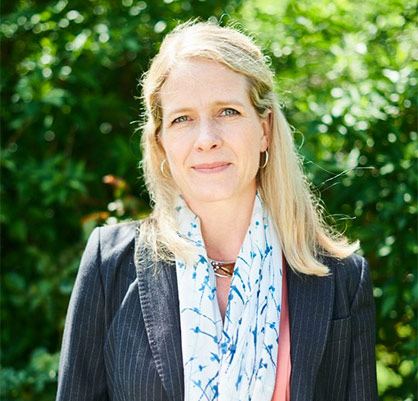
Lena Staafgard, COO, Better Cotton © 2021 Better Cotton


Better Cotton is also a SAC Affiliate Member, joining over 250 leading brands, retailers, suppliers, service providers, trade associations, non-profits, NGOs and academic institutions in the SAC Membership.

Learn more at the SAC website.

https://apparelcoalition.org/


More News from TEXDATA International

#ITM 2026

ITM 2026: The new geography of textile production

New production hubs are emerging across North Africa and Central Asia, while Türkiye is accelerating its transformation toward higher-value, technology-driven and more sustainable textile manufacturing.

#Research & Development

“Production is a product”

From technical textiles and AI-driven robotics to the limitations of textile circularity: Professor Dr Thomas Gries looks back on more than two decades of development at ITA Aachen. In the interview, he explains why production technology remains a decisive success factor, discusses international collaborations and innovation ecosystems, and shares his views on the transformation of production landscapes and the challenges facing an increasingly regulated industry.

#Knitting & Hosiery

“We need to move away from the price trap and return to a value-driven mindset.”

With its new Textile Innovation Center, KARL MAYER is sending a strong signal for innovation, collaboration, and the future of textile applications. In this interview, Karl Josef Mayer discusses new opportunities in warp knitting, the processing of staple fibres, recycling, the changing role of machinery manufacturers, and why the textile industry must once again focus more strongly on the value of textiles. by Oliver Schmidt

#Associations

“Innovation, resilience and international experience remain the great strengths of the Swiss textile machinery industry”

Geopolitical uncertainty, growing competitive pressure from China, new free trade agreements and the shift towards a circular economy are currently reshaping the global textile industry. In this interview, Cornelia Buchwalder discusses the current mood within the Swiss textile machinery sector, the industry’s distinctive innovative strength, new market opportunities in India and Asia, and the technological trends that could shape the upcoming trade fair cycle leading up to ITMA 2027.

More News on Raw Materials

#Recycling / Circular Economy

Indorama Ventures advances circularity tthrough PETValue Philippines' “Zero Waste to Landfill Partnership” with Republic Cement

Indorama Ventures Public Company Limited, a global sustainable chemical company, is advancing the circular economy through a new Zero Waste to Landfill initiative at its recycling site PETValue Philippines, further demonstrating how collaboration across industries can maximize resource efficiency and reduce waste.

#Natural Fibers

2026 ICAC report projects World cotton trade to reach 10.3 million tonnes by 2028/29

The International Cotton Advisory Committee has released the 2026 World Cotton Trade Report, which provides analysis of global cotton trade patterns, key trading relationships, import and export trends, and the geopolitical and policy developments shaping cotton trade flows.

#Natural Fibers

Better Cotton Initiative multistakeholder event in US unpacks regenerative agriculture potential

The Better Cotton Initiative (BCI), in collaboration with Texas-based partner, Quarterway Cotton Growers, will expand upon its annual US field event to relay the vast potential of regenerative agriculture through an immersive experience of tours and demonstrations.

#Sustainability

The first widely accessible Life Cycle Assessment study for cashmere production published by Textile Exchange.

Crucial new data to better understand, measure, and address the impacts of cashmere production has been made available to the fashion, textile, and apparel industry through a new Life Cycle Assessment (LCA) published by Textile Exchange.

Latest News

#Man-Made Fibers

Ministry of Industry Delegation visits NatureWorks’ second global manufacturing site at Nakhon Sawan Biocomplex

NatureWorks Asia Pacific Limited welcomed a high-level delegation led by Mr. Varawut Silpa-archa, Minister of Industry, to its manufacturing site at the Nakhon Sawan Biocomplex (NBC). The visit follows the successful inauguration of the site on April 29, 2026, and highlights the role of public-private collaboration in advancing Thailand’s sustainable industrial development and bioeconomy ambitions.

#Associations

IVGT membership: expertise that pays off

For energy-intensive textile companies, government compensation mechanisms are an important economic factor. The IVGT successfully supports its member companies in applying for state aid and thereby regularly contributes to significant financial relief.

#Research & Development

Networking Day 2026: Industry stakeholders unite around textile recycling

In 2026, the Industry Research Group (IRG) Polymer Recycling once again brought together some of the key stakeholders in textile recycling for its annual Networking Day. This year, the event took place at EREMA’s premises in Ansfelden, Austria. It brought together key players from across the textile recycling value chain for a day of structured exchange and in-depth discussions.

#Knitting & Hosiery

The new RDJ 7/3 defines the design footprint of modern athletic shoes

Stylish, functional, and efficient to produce – spacer fabrics are the all-arounders among textile materials. These versatile fabrics are particularly in demand in the sports and casual footwear sector, as they combine comfort, breathability, and design freedom. At the same time, this industry is trend-driven, dynamic, and price-sensitive like few others. Innovations are therefore a decisive factor for success. With the RDJ 7/3, KARL MAYER offers a solution specifically tailored to these requirements. The particular strength of the new double raschel machine: its exceptional flexibility, thanks to its three jacquard bars.

TOP