[pageLogInLogOut]

#Raw Materials

Which cotton merchants and mills are sourcing the largest volumes of ‘better cotton’?

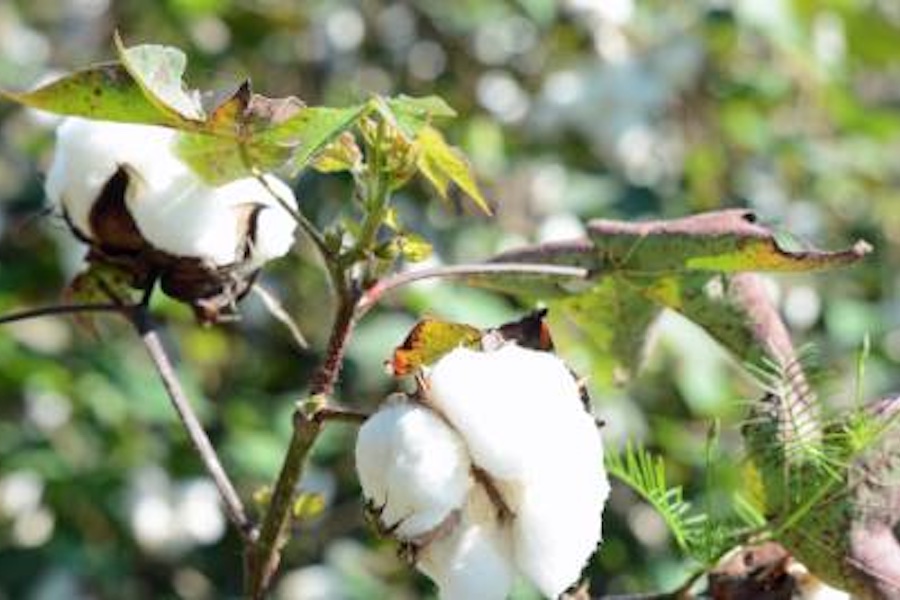
As demand for Better Cotton – cotton grown by licensed BCI Farmers in line with the Better Cotton Principles and Criteria – increases, more and more organisations throughout the cotton supply chain are joining the Better Cotton Initiative (BCI) and supporting increased uptake of Better Cotton*. Earlier in the year, we announced the BCI Retailer and Brand Members that sourced the largest volumes of cotton as Better Cotton in 2018. Now we are launching the Cotton Merchants and Mills Leaderboard.

The Merchants and Mills Leaderboard highlights the top 20 cotton merchants and top 50 mills, based on volumes of cotton sourced as Better Cotton. Access the 2018 Better Cotton Leaderboard.

Cotton merchants and mills are supporting the transformation of the cotton sector by joining BCI and sourcing increased volumes of Better Cotton for BCI Retailer and Brand Members – forming a critical link between Better Cotton supply and demand.

“Market demand for more sustainable cotton has dramatically increased over the years. It began with a few retailers sourcing more sustainable cotton in limited quantities for small collections. Over time, retailers have grown their collections and implemented overarching sustainable sourcing targets which has increased the volumes of more sustainable cotton sourced, including Better Cotton. We see this demand increasing further over the next 5 to 10 years.” – Osman Ustundag, Cotton Purchasing Manager at Kipa? Holding, a BCI Member since 2011.

Increased sourcing of Better Cotton generates essential funding for farmer training and support. This is in turn driving more sustainable practices in cotton production, making it better for the people who produce it and the environment it grows in.

BCI has a goal to train five million cotton farmers on more sustainable practices by 2020. Find out more in the BCI 2018 Annual Report:

http://stories.bettercotton.com/2018-AnnualReport/index.html

“With the creation of BCI in 2009, a holistic and pragmatic approach for farmers to embed sustainable farming practices was launched. Better Cotton addressed the gap that existed between retailers’ sustainable sourcing targets and market supply of more sustainably produced cotton. Using innovative models such as mass-balance during sourcing, the market now has access to a large and growing supply base to procure from.” – Amit Shah, CEO and Founding Director at Spectrum International, a BCI Member since 2013. Amit Shah also holds the position of Treasurer on the BCI Council.

Find out which merchants and mills sourced the largest volumes of cotton as Better Cotton in the 2018 Better Cotton Leaderboard.

https://bettercotton.org/better-cotton-leaderboard-2018/

More News from TEXDATA International

#ITM 2026

ITM 2026: The new geography of textile production

New production hubs are emerging across North Africa and Central Asia, while Türkiye is accelerating its transformation toward higher-value, technology-driven and more sustainable textile manufacturing.

#Research & Development

“Production is a product”

From technical textiles and AI-driven robotics to the limitations of textile circularity: Professor Dr Thomas Gries looks back on more than two decades of development at ITA Aachen. In the interview, he explains why production technology remains a decisive success factor, discusses international collaborations and innovation ecosystems, and shares his views on the transformation of production landscapes and the challenges facing an increasingly regulated industry.

#Knitting & Hosiery

“We need to move away from the price trap and return to a value-driven mindset.”

With its new Textile Innovation Center, KARL MAYER is sending a strong signal for innovation, collaboration, and the future of textile applications. In this interview, Karl Josef Mayer discusses new opportunities in warp knitting, the processing of staple fibres, recycling, the changing role of machinery manufacturers, and why the textile industry must once again focus more strongly on the value of textiles. by Oliver Schmidt

#Associations

“Innovation, resilience and international experience remain the great strengths of the Swiss textile machinery industry”

Geopolitical uncertainty, growing competitive pressure from China, new free trade agreements and the shift towards a circular economy are currently reshaping the global textile industry. In this interview, Cornelia Buchwalder discusses the current mood within the Swiss textile machinery sector, the industry’s distinctive innovative strength, new market opportunities in India and Asia, and the technological trends that could shape the upcoming trade fair cycle leading up to ITMA 2027.

More News on Raw Materials

#Raw Materials

CSITC adds ABRAPA as a round trial sample provider

Beginning with the Q2 2026 Round Trials, the ICAC's Committee on the Commercial Standardization of Instrument Testing of Cotton has expanded its sample provision framework by adding the Brazilian Cotton Growers Association (ABRAPA) as an official sample provider.

#Raw Materials

Dr N Vigneshwaran is named 2026 ICAC Researcher of the Year

The International Cotton Advisory Committee (ICAC) is pleased to announce the selection of Dr N Vigneshwaran, Principal Scientist and Head of the Chemical and Biochemical Processing Division at the ICAR–Central Institute for Research on Cotton Technology (ICAR-CIRCOT), Mumbai, India, as the ICAC Researcher of the Year 2026.

#Raw Materials

Global Cotton area and production are projected to decline in the 2026/27 Season

The June 2026 issue of Cotton This Month projects a modest contraction in global cotton area, production, and trade during the 2026/27 season, reflecting weaker demand sentiment, rising production costs, and shifting environmental factors across major producing nations.

#Raw Materials

New U.S. cotton study uses real-world grower data to reveal where fiber impacts occur

Cotton Incorporated has released a critically reviewed life cycle assessment (LCA) of U.S. cotton fiber production that examines how cotton’s environmental impacts are measured and where meaningful improvements can be made across the value chain. The new data, grounded in real‑world grower inputs, measures what drives U.S. cotton’s environmental footprint from field to gin.

Latest News

#ITM 2026

The future of textiles, the power of trade, and the summit of technology come together at ITM 2026

ITM 2026 International Textile Machinery Exhibition, one of the most prestigious organizations in the textile technologies sector, opens its doors to visitors between June 9-13. Expected to break records in terms of both exhibitor and visitor numbers, as well as the technological vision it presents, ITM 2026 will transform into a global trade hub with machine sales, and new business collaborations.

#Nonwoven machines

ATCO Hygienics, Uzbekistan, orders baby diaper production line from ANDRITZ

International technology group ANDRITZ has received an order from ATCO Hygienics to supply a new baby diaper production line for its plant in Tashkent, Uzbekistan. The order is included in ANDRITZ’s order intake for the first quarter of 2026. Commissioning of the production line is scheduled for the end of 2026.

#Weaving

Itema manufactures the first Projectile Weaving Machines “Made in Italy” at its Colzate Headquarters.

Itema proudly announces an important industrial milestone: in early May, the first Itema projectile weaving machines manufactured in Italy were successfully produced at the Group’s headquarters in Colzate.

#Spinning

Nico Pedretti appointed as Managing Director Graf Group

As of June 1, 2026, Nico Pedretti has assumed the role of Managing Director Graf Group. With more than 20 years of international industrial experience and extensive expertise in Operations, Supply Chain Management, Finance and Controlling, he brings a broad range of leadership and business experience to support Graf’s continued success.

TOP