[pageLogInLogOut]

#Other suppliers

Software Automation has launched a new fully automated workline for footwear

The US machine vision and robotics startup Software Automation, based in Atlanta, has announced the newest SEWBOT® workline is available for global pre-order. The Digital Footwear Upper Workline expands the patented SEWBOT® Pick-Place-Sew™ automation for fully-automated shoe uppers.

In 2017, the SoftWear Automation team went to Waalwijk, Netherlands to speak on the future of footwear. Waalwijk is a small Dutch town with more than 400 related footwear businesses including a tannery. It used to be the global epicenter for footwear given its proximity to the world's largest port, dense forests and endless cows. 

"Today, retail is almost all that's left there", noted the company. "It's a familiar story in manufacturing where jobs go to the lowest wage providers. However, the story continues to evolve as supply side pressures mount; the industry doubles its efforts to focus on country sourcing strategies and places the customer experience on the back burner. With the launch of our Digital Footwear Workline we aim to put the "future of WOW" (put customer experience first) in a local supply chain on par with country sourcing. The "future of WOW" in apparel and footwear manufacturing is how we produce a sewn good on demand with great variety, speed, quality, and low cost; and delivered to the customer within 3 days."

To enable this future, SoftWear Automation is focusing on automation that can work without templates, without adhesives, and that is built with lean manufacturing at its core. The SEWBOT® workline for footwear uppers requires just one operator for four or more worklines, and is not subject to dye cutter imperfections, size, style or most material changes. Load in the vamps and overlays and sewn shoe uppers come out the other end.

"With 70% of labor in the sewing and construction of the upper and 18 months from forecast to delivery, our worklines automate the most labor intensive part of a shoe and provide the cost and flexibility to produce goods anywhere in the world on demand", the company says.

In October 2017, Pete Santora, Chief Commercial Officer at SoftWear Automation, told TexData in an exclusive interview the company has high demand for their worklines. 
More News from TEXDATA International

#Digital Printing

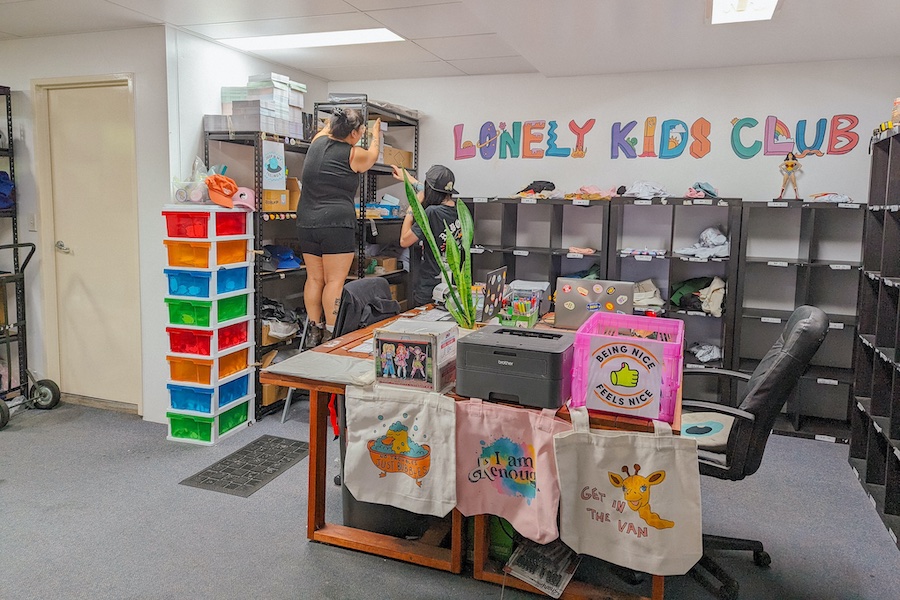
From a bedroom startup to 3,000 designs: How Lonely Kids Club built its business with DTG printing

Founded in Sydney in 2011, independent clothing label Lonely Kids Club has grown from a bedroom startup into a business offering around 3,000 graphic T-shirt designs. With its own production studio, direct-to-garment printing and a demand-driven manufacturing model, the company demonstrates how smaller apparel brands can combine creative independence with flexible production – while navigating the everyday challenges of quality control, workflow efficiency and sustainability.

#India ITME 2026

India’s textile industry: Current position, growth targets and industrial development

With ambitious export targets, major investments in manufacturing infrastructure and new international trade agreements, India is pursuing a comprehensive development strategy for its textile and apparel industry. An overview of the industry’s current position, government initiatives, progress achieved and challenges ahead.

#Weaving

“A complex design is only useful if the machine can reproduce it consistently”

Andreas Schnabel, Head of R&D for Technical Weaving Systems at Stäubli, discusses how 3D weaving can create textile reinforcements tailored to the loads within a composite component, where near-net-shape weaving can reduce processing steps and material waste, and what it takes to produce complex structures reliably and economically. He also explains how manufacturers can adapt Stäubli’s modular TF weaving platforms to new applications and how the company’s centre of excellence in Bayreuth supports the transition from research to industrial production.

#India ITME 2026

India ITME 2026: Textile technology meets India's investment ambitions

With ambitious growth targets, government incentive programmes and industrial development initiatives already underway, India is preparing for the next stage of its textile transformation. Against this backdrop, the 12th India ITME, taking place in Greater Noida from 4 to 9 December 2026, arrives at a particularly important moment for machinery manufacturers and textile producers alike.

More News on Other suppliers

Latest News

#Industry 4.0 / Digitalization

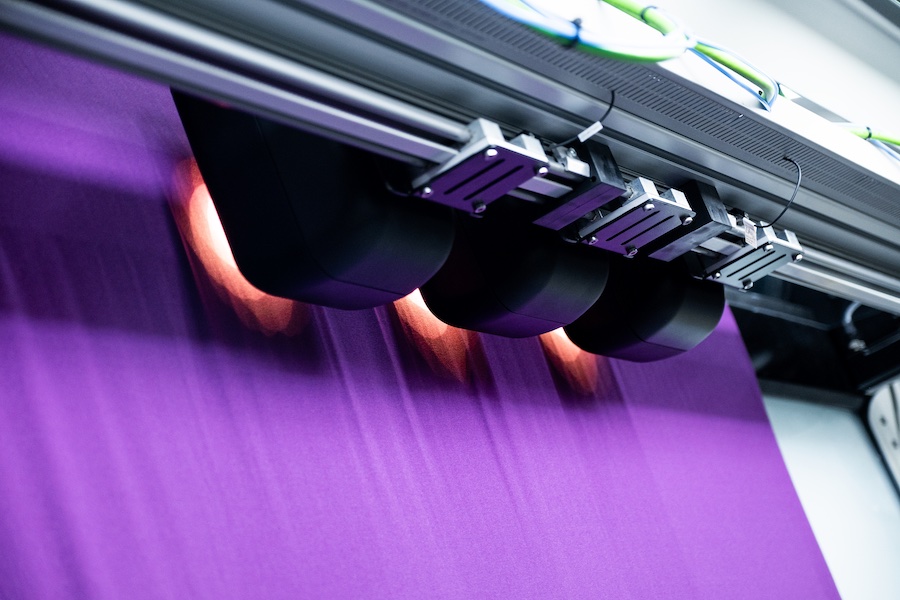
Smartex.ai names Tony Fadell chairman and previews new fabric inspection system

Smartex.ai has appointed Tony Fadell as chairman and will present its new fabric inspection hardware and software at SmartCollab Hong Kong on 27 November. Fadell co-designed Inspect, the hardware at the centre of the system, which Smartex developed with a supplier in H&M Group’s network.

#Recycled Fibers

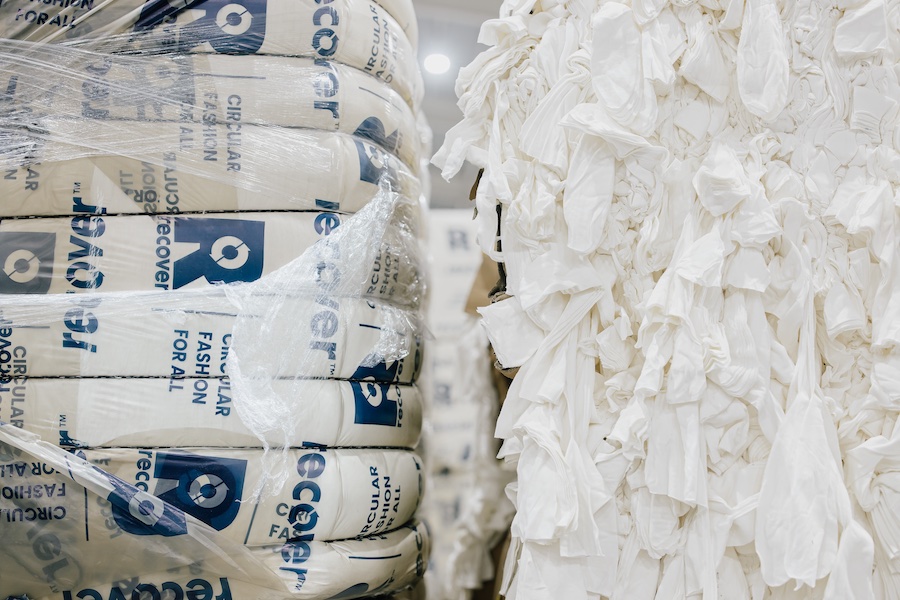
Recover and SUPIMA partner to develop recycled Pima cotton fibers and yarns

Recover and SUPIMA have partnered to turn waste from SUPIMA cotton production into a new line of recycled fibers and yarns. The collaboration will explore how recycled American-grown Pima cotton can be used in a wider range of yarns and garments for the premium market.

#Technical Textiles

Textile ETP sets out strategy to protect Europe’s technical textile capabilities

Textile ETP’s SmartX Innovation Hub has published a strategy to safeguard Europe’s ability to develop, test and manufacture advanced technical textiles for defence, personal protection and aerospace. The strategy calls for EU research funding that extends through qualification and initial industrial production, and for public procurement to give greater weight to quality and security of supply.

#Industry 4.0 / Digitalization

Coats Digital wins SaaS award for AI in apparel manufacturing

Coats Digital has been named Best Company in AI-Powered Fashion Technology at the 2026 Best in SaaS Awards. The company’s AI applications cover garment costing, the analysis of operational data and the use of computer vision to study how tasks are performed on the factory floor.

TOP