[pageLogInLogOut]
RETECH expert at drawing your fibers to perfection

#Man-Made Fibers

Lenzing AG: Stable revenue and improved EBITDA despite market headwinds
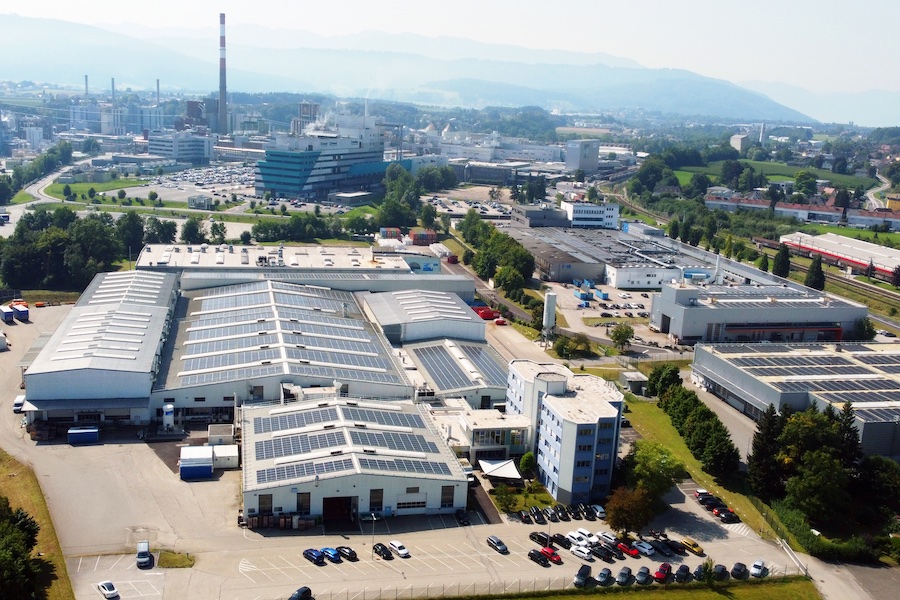
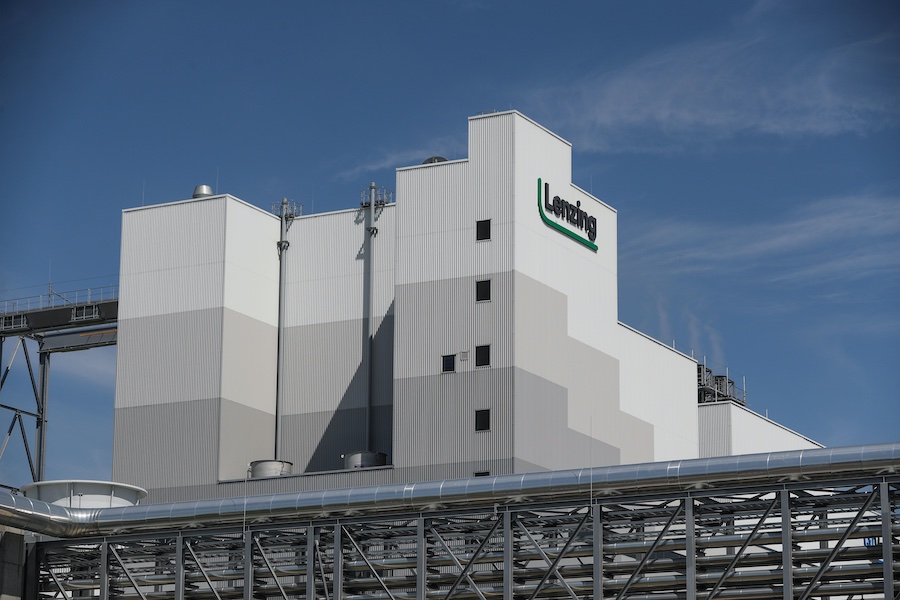
Aerial view Lenzing AG © 2025 Lenzing AG/Robert Pichler
In the first nine months of 2025, Lenzing AG recorded revenue growth and higher EBITDA, but a market-driven volatile third quarter. This performance reflects the effects of ongoing market volatility, tariffs and geopolitical uncertainties. Nevertheless, the medium to long-term outlook remains positive.

The revenue generated by Lenzing AG rose by 0.7 percent to EUR 1.97 bn (prior-year period: EUR 1.96 bn) in the first nine months. EBITDA grew by 29.1 percent to EUR 340.4 mn (prior-year period: EUR 263.7 mn), including effects from the sale of surplus emission allowances and the valuation of biological assets. The EBITDA margin improved to 17.3 percent (prior-year period: 13.5 percent). Earnings before interest and tax (EBIT) amounted to EUR 20.6 mn (prior-year period: EUR 38.3 mn), which corresponds to an EBIT margin of 1 percent (prior-year period: 2 percent). This result includes asset impairments of EUR 82.1 mn in Indonesia. Earnings before tax (EBT) amounted to EUR minus 98.7 mn (prior-year period: EUR minus 33.4 mn).

“We see these challenging times also as an opportunity. We are increasingly building on our strengths and are continuing to focus on what we excel at: strong brands, precise execution and bold innovation,” notes Rohit Aggarwal, CEO of Lenzing AG.

Strategic development

Lenzing AG pursues a holistically adapted strategy with a clear focus on value-generating growth. Key pillars of this strategy include enhancing operational efficiency, optimizing production sites, and targeting high-margin premium products such as TENCEL™, VEOCEL™, and LENZING™ ECOVERO™. Additional growth potential is expected particularly in the fields of hygiene, packaging, filtration, as well as medical and industrial applications.

To sustainably secure this growth and strengthen long-term competitiveness, the company has initiated a strategic review of its production site in Indonesia. The planned measures – including adjustments to administrative functions – are expected to generate additional annual savings of approximately EUR 45 mn by the end of 2027. For the current reporting year, the Management Board anticipates cost savings exceeding EUR 180 mn. Furthermore, the company is investing over EUR 100 mn in its sites in Lenzing and Heiligenkreuz and aims to achieve holistic energy optimization of more than 5 percent across all production locations. Strategic options for the site in Indonesia are being evaluated, including a potential sale.

The Supervisory Board also made personnel decisions during the reporting period: The Managing Board mandate of Christian Skilich, Chief Pulp & Chief Technology Officer, was extended until May 2029. Mathias Breuer, currently Senior Vice President and responsible for the performance program, will become CFO from January 1, 2026, and succeed Nico Reiner, who is due to step down from his position at the end of 2025.

Solid financial position in a difficult environment

Thanks to its strong focus on cash management, Lenzing succeeded in leaving no doubt about its adequate liquidity position during the reporting period. As of September 30, 2025, the company held liquidity cushion of EUR 993 mn. The capital structure was strengthened by a EUR 500 mn hybrid bond and a EUR 545 mn syndicated financing facility. Net financial debt was reduced by 8.5% to EUR 1.4 bn as of the reporting date. With total assets of EUR 4.80 bn, this corresponds to an adjusted equity ratio of 30.7% as of September 30, 2025.

Cash flow from operating activities amounted to EUR 284.6 mn (prior-year period: EUR 319.4 mn). Free cash flow was also positive at EUR 110.9 mn. (prior-year period: EUR 194.0 mn) Furthermore, unlevered free cash flow amounted to EUR 192.1 mn (prior-year period: EUR 228.6 mn).

Capital expenditure amounted to EUR 93.2 mn (prior-year period: EUR 93.3 mn).

Outlook

The global environment remains volatile. The International Monetary Fund (IMF) expects growth of 3.2 percent in 2025, but warns of trade conflicts and financial instability. Consumer sentiment is subdued, and higher tariff costs could further weigh on demand in 2026. Based on the business performance to date and the current market outlook, the Managing Board expects year-on-year growth in EBITDA in 2025. In addition, the Managing Board aims for EBITDA of around EUR 550 mn by 2027. The actual business performance may nevertheless diverge from current expectations depending on geopolitical and economic factors as well as the cyclical nature of the industry. Any assessment of economic development is therefore subject to forecasting risks.

The report on the third quarter of the year can be downloaded here:

https://www.lenzing.com/investors/reporting-and-capital-market-update/


More News from Lenzing

#Nonwovens

VEOCEL™ Lyocell production expands to Asia – Launching a new chapter for nonwovens in the region

VEOCEL™, Lenzing's flagship specialty nonwovens brand, expands production at its Thai plant in Prachinburi. This is the first-ever production of its nonwoven-grade lyocell fibers in Asia. Built in 2022 with a 100,000-ton annual production capacity, the facility - previously focused on fibers for textile applications - now can directly meet the demand for VEOCEL™’s biodegradable¹, wood-based lyocell fibers for nonwovens products. These fibers are an essential ingredient for high-quality nonwovens products, ranging from baby wipes to facial sheet masks and everyday personal hygiene items.

#Man-Made Fibers

Lenzing advances its transformation: Higher EBITDA, stronger free cash flow and more than EUR 200 million in cost savings

The business performance of the Lenzing Group in 2025 was affected particularly in the second half of the year by external factors such as international tariff measures, subdued demand and declining market prices. As a result, revenue decreased slightly by 2.3 percent to EUR 2.6 billion, primarily due to lower fiber sales volumes and lower prices for fibers and pulp, which were further negatively impacted by currency developments. Nevertheless, thanks to the comprehensive Performance Program, Lenzing was able to improve its operating performance and key financial indicators compared with the previous year.

#Man-Made Fibers

“Lead Transformation – Generate Impact”: Lenzing presents its 2025 Annual and Sustainability Report

The Lenzing Group has published its 2025 Annual and Sustainability Report, entitled LEAD TRANSFORMATION – GENERATE IMPACT. The report shows how Lenzing is actively shaping change in the industry and making a lasting impact: economically, ecologically, and socially. Lenzing is consistently focused on the future: with targeted investments in premiumization, excellence, innovation, and sustainability, the company is strengthening its position as a leading provider of sustainable, cellulose-based premium fibers. The combined report is available in digital format.

#Raw Materials

Lenzing Group positions bio‑based materials as a strategic asset for Europe’s economic security

The Lenzing Group, a leading supplier of regenerated cellulose fibers for the textile and nonwovens industries, hosted a high‑level roundtable in Brussels to discuss how bio‑based materials can strengthen Europe’s economic security and support the shift toward a fossil‑free future. Organized in cooperation with Euractiv, the event brought together representatives of the European Commission, the UK Mission to the EU, academia, civil society, and industry.

More News on Man-Made Fibers

#Research & Development

Fraunhofer IAP paves the way for "Green" carbon fibers

A new pilot plant in Guben is set to enable the production of bio-based carbon fibers. The plant is part of the Carbon Lab Factory Lausitz and will make an important contribution to the transformation of the Lausitz region—from a traditionally raw material- and basic industry-oriented region to a hub for innovative high-performance materials. The German federal government and the state of Brandenburg are providing the Fraunhofer Institute for Applied Polymer Research IAP with 53.3 million euros for this purpose.

#Raw Materials

Textile Exchange publishes cotton Life Cycle Assessment study to strengthen impact data

Textile Exchange has published the first in a series of seven Life Cycle Assessment (LCA) studies designed to improve the quality and robustness of environmental impact data for raw material production across the fashion, textile, and apparel industry. The first LCA study focuses on cotton and addresses critical data gaps and methodology variability through new high-quality data across key producing countries. The study includes organic, regenerative, recycled, and country averages for conventional cotton production systems, providing a clearer picture of the associated environmental impact.

#Raw Materials

Fashion for Good mobilises industry to adopt mass balance attribution and accelerate decarbonisation

Fashion for Good launches today the Mass Balance Demonstrator project, a collaborative industry initiative to implement and scale the mass balance attribution (MBA) chain-of-custody model for biomass-attributed PET in textile applications. The project represents a concrete step toward accelerating brand-driven decarbonisation across the apparel value chain.

#Techtextil 2026

Gebr. Otto highlights versatility at Techtextil with regional supply chains, yarn innovations and new hygiene segment

At this year’s Techtextil, Gebr. Otto places its versatility at the center of its presentation. In addition to spinning, twisting and dyeing – traditionally focused on fine cotton – textile processors will also find a competent development partner for technical specialty solutions. The Dietenheim-based spinning mill has now built up a decade of experience in the production of technical yarns, particularly from aramids. A new hygiene segment has also been established, where yarns for medical and hygiene products are currently being produced. In the future, this department could also develop textile products for the food sector. Gebr. Otto will once again be present at the BW-i joint stand, booth D81, hall 12.1. What is wound onto the spool is determined by the customer: Gebr. Otto develops according to specific customer requirements and transforms its own ideas into yarn innovations.

Latest News

#Composites

KARL MAYER strengthens partnerships in the composites industry at JEC World 2026

KARL MAYER further strengthened its role as a reliable and competent partner to the composites industry at JEC World 2026. The global market leader in textile machinery manufacturing used the trade show to meet key customers, establish numerous new contacts, and engage in in-depth technical discussions.

#Recycling / Circular Economy

ABB and Syre partner to explore technologies for industrial-scale textile recycling

ABB has signed a Memorandum of Understanding (MoU) with Swedish textile impact company Syre to jointly explore technologies to support the development of Syre’s first textile-to-textile recycling plant in Vietnam. The agreement establishes a framework for collaboration to investigate how ABB’s automation, electrification and digital technologies could contribute to safe, efficient and scalable operations. It will also explore how these capabilities could further optimize process and quality control performance as Syre advances its ambition to produce circular polyester at industrial scale.

#Techtextil 2026

From Nature Performance to Circular Economy: Techtextil 2026 focuses on the future market for technical textiles

Alternative materials and recycling technologies are one of the most important future segments and drivers of innovation in technical textiles. Sustainability goals and regulatory requirements increase their relevance, while advances in performance and economic viability enhance their market competitiveness. Taking place from 21 to 24 April 2026, Techtextil reflects this key industry trend with a growing number of specialised exhibitors. With the new “Nature Performance” label, the leading global trade fair bundles relevant market offerings and facilitates access to new solutions – from natural fibres and yarns to bio-based materials and circular approaches.

#Research & Development

Textile cascade filter for removing microplastics from wastewater

Microplastics are now found almost everywhere, even in remote regions of Antarctica. They enter the human body through the food chain. Studies indicate that microplastics may have negative effects on the human health.

TOP