[pageLogInLogOut]

#Man-Made Fibers

Indorama Ventures in Lisbon to help unlock systemic change in the textile industry

Indorama Ventures Public Company Limited, a global sustainable chemical company, joins leading brand owners, technology players, weavers, knitters, and alike at the Textile Exchange Conference in Lisbon on October 13-17. Under the conference theme of Shifting Landscapes, Vipin Kumar, Chief Commercial Officer for Indorama Ventures’ Fibers Business, will join the debate on how to unlock opportunities for systems transformation.
Vipin Kumar © 2025  Indorama Ventures
Vipin Kumar © 2025 Indorama Ventures


For Indorama Ventures, systemic change is a decisive topic. Across all its business segments including Fibers, the company targets 16% of its externally sourced feedstock to be bio-based by 2030. Additionally, 23% of the company’s PET feedstock is targeted to come from recycled post-consumer PET bales by 2030. Accordingly, Vipin Kumar says: “It is highly important for us to be at the forefront of technological, material innovation, and regulatory discussions. The Textile Exchange network and annual conference is an opportunity for us to connect with like-minded value chain partners who all share the same ambition to drive circularity in the textile industry.”

Vipin Kumar will be in Lisbon together with Claire Mattelet, Indorama Ventures’ Global Fibers Sustainability Program Head, technology experts from Indorama Ventures’ Investment Holding, the company’s technical fibers as well as advocacy experts.

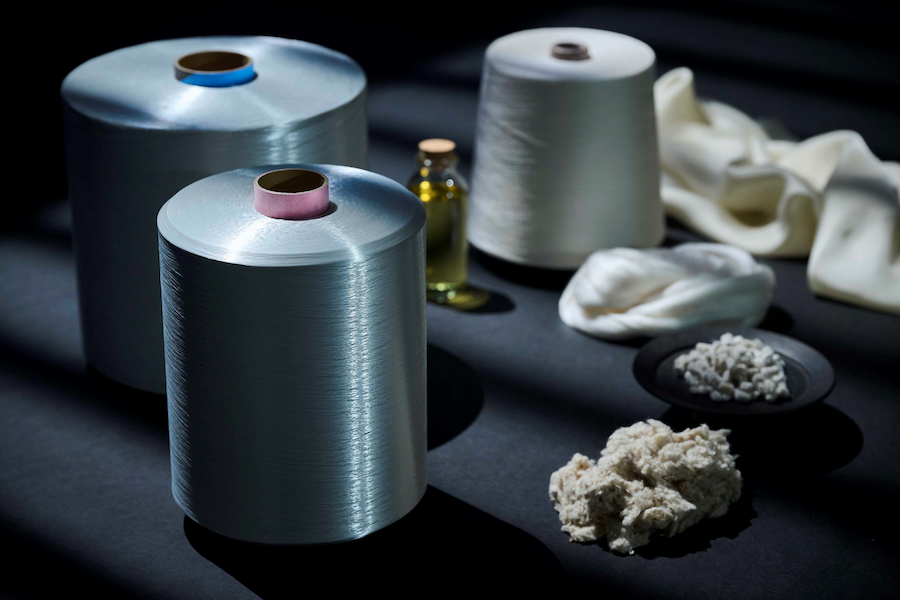
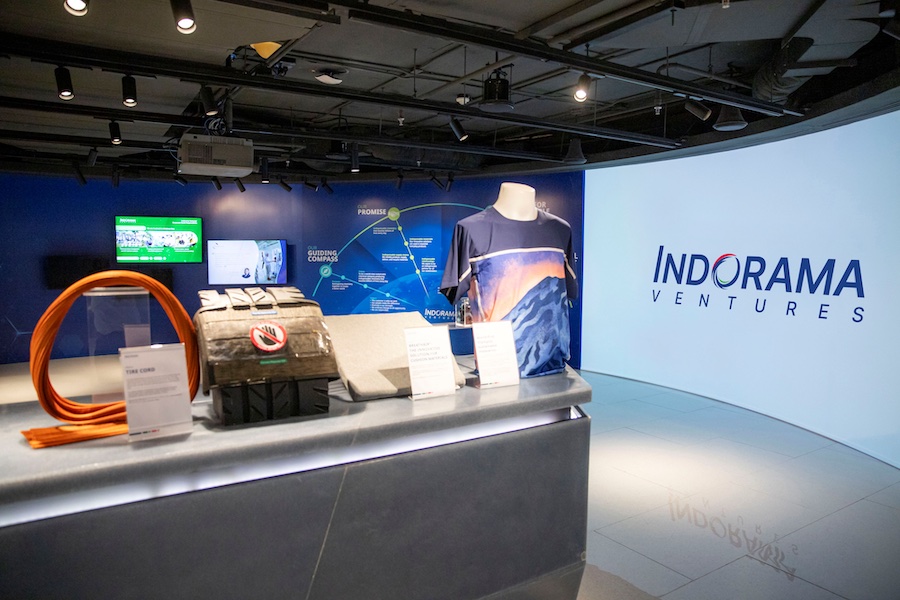
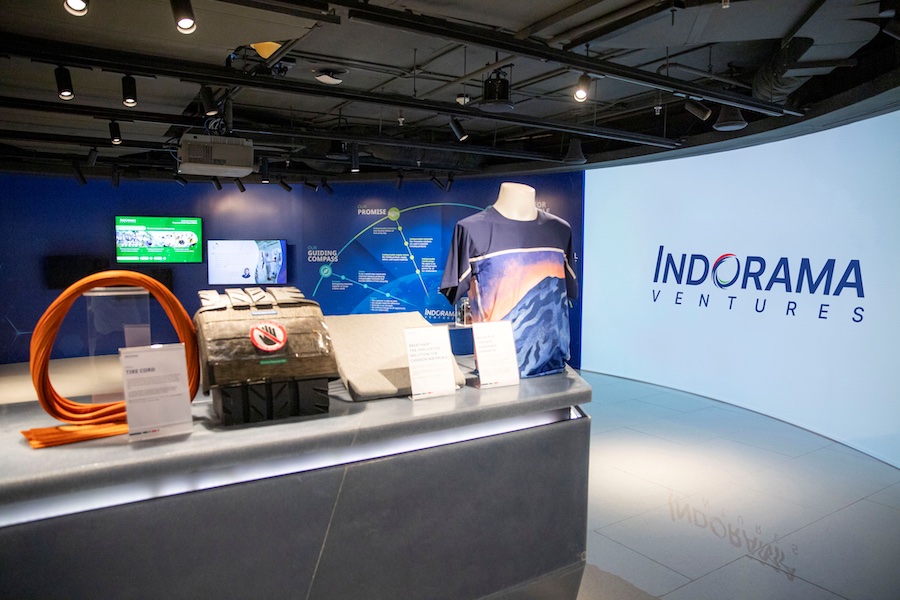
In addition to conversations with brand owners, customers and other partners, the company also showcases its fibers and yarns portfolio called dejaTM. The goal of all solutions in this product family is to actively drive decarbonization efforts in the global textile industry and to ensure readiness for supporting the upcoming European Ecodesign for Sustainable Products Regulation (ESPR).

Three key dejaTM products are on display, addressing main sustainability challenges:

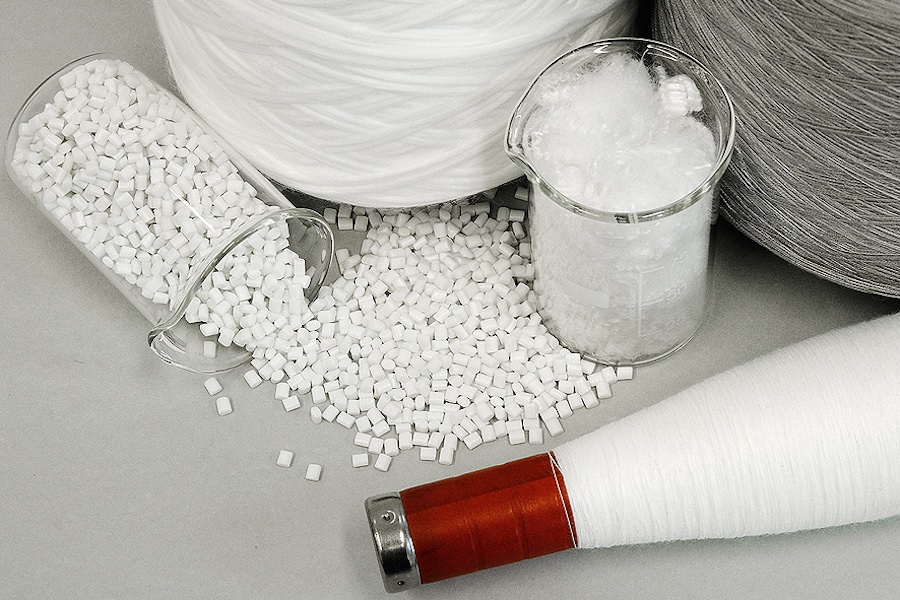
1. On-demand solutions for textile circularity, providing deja PET fibers and filament yarns made solely from enhanced recycled textile waste that was being discarded. Products available on customers’ request are fibers and filament yarns for lifestyle applications, such as apparel and home textiles. High-tenacity yarns and cords for technical applications like tires, airbags, and seat belts are available, too. Customers interested to drive circularity and reduce greenhouse gas emissions, while keeping performance equal to standard solutions, are encouraged to request more information at enquiry.fibers[at]indorama.net.

2. deja Bio: Solutions to help customers reduce their carbon footprint. Thanks to its fully integrated, in-house PET supply chain, Indorama Ventures can deliver high-performing deja PET yarns out of Europe and Asia that have a substantially reduced carbon footprint. All of them comply with the accounting methodology of the ‘Together for Sustainability’ industry initiative.

Indorama Ventures takes a mass balance approach to increase the use of renewable sources, benefitting from eleven ISCC+ (International Sustainability and Carbon Certification) certified sites across its entire business, including PTA, PET chips, fibers, and technical fabrics. The mass balance approach is a chain-of-custody method that allows manufacturers to mix sustainable and conventional inputs like renewable and fossil-based materials in a shared production system, while still allocating the environmental benefits of the sustainable inputs to a portion of the output.

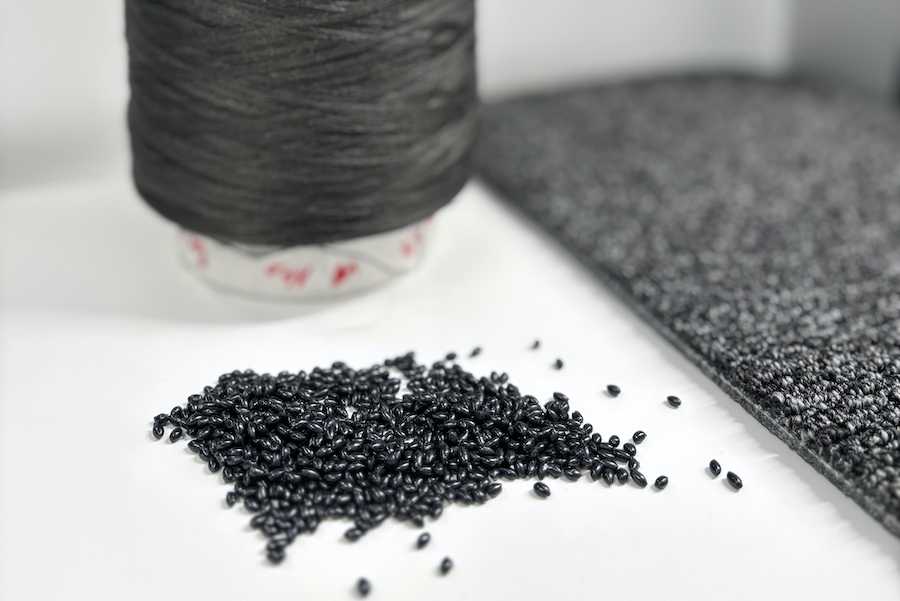
High-tenacity yarns and tire cord fabrics available in the bio-based deja portfolio allow for a progressive bio-content introduction into customers’ products. Customers can benefit from avoiding or simplifying qualification procedures and receive the same performance as from fossil solutions. Further, these products can be given new life through mechanical or enhanced recycling.

3. deja Enhanced: Products that give hard-to-recycle packaging and textile waste new life. In close collaboration with like-minded partners along the value chain, Indorama Ventures is also looking at ways to convert hard-to-recycle packaging into fibers and yarns through enhanced recycling. In future, these products may also be supplied with flexible proportions of reprocessed textile feedstock to accommodate customers’ circular targets.

Taking a leading role and collaborating along the entire value chain to drive sustainable practices in the man-made fibers industry is at the core of Indorama Ventures’ commitment to shaping the future of textiles.
More News from Indorama Ventures

#Techtextil 2026

Lower CO2, stronger bonds: Indorama Ventures enables customers’ performance at Techtextil

At Techtextil 2026 in Frankfurt am Main, Indorama Ventures presents its latest material innovations aimed at supporting customers in achieving both performance and sustainability targets. The company highlights solutions based on recycled and bio-based raw materials as well as advanced binder fibers, addressing current market demands for lower CO₂ emissions, improved efficiency, and reliable supply.

#Man-Made Fibers

Indorama Ventures supports Southeast Asia’s textile customers with reliable regional supply and global innovative portfolio

Indorama Ventures, one of the leading global polyester fiber and filament yarn suppliers globally, will participate in Indo Intertex 2026 in Jakarta this April, making its diverse global portfolio available to apparel, home textile, and hygiene customers across Southeast Asia.

#Man-Made Fibers

Decarbonizing tire reinforcement: Indorama Ventures presents path to lower-carbon PET solutions at Tire Technology Conference

At the Tire Technology Conference on March 3-5 in Hannover, Germany, Indorama Ventures’ Global R&D Lead for sustainable filament yarns, Thomas Buss, will present the company’s path to lower-carbon PET products for tire reinforcement.

#Recycled Fibers

Circular progress: Trevira® CS Eco fabrics can now be made using textile-recycled, permanently flame-retardant fibers and yarns

Indorama Ventures, a global sustainable chemical company, takes an important next step toward making textiles more circular for homes and public spaces. To support fabric makers in creating a more sustainable version of the well-known flame-retardant Trevira CS fabric, the company now offers Trevira® flame-retardant fibers and filament yarns that contain 50% recycled textile material. First customers were introduced to the new offering during Heimtextil trade show mid-January in Frankfurt, Germany.

More News on Man-Made Fibers

#Research & Development

Elastic yarns to become more recyclable and environmentally friendly in future

On 29 April 2026, ITA student Tobias Dickmeiß was awarded a sponsorship prize by the Wilhelm Lorch-Stiftung for his innovative approach, to replacing conventional elastane with elastic yarns made from thermoplastic copolyester elastomers (TPC). Thanks to their thermoplastic nature and compatibility with typical polyesters used in the textile industry, elastic TPC yarns offer improved recyclability. Furthermore, the use of the melt-spinning process in yarn production eliminates the need for solvents that are harmful to the environment and human health.

#Texprocess 2026

AMANN reviews successful Texprocess 2026 and highlights innovations for circularity and performance

AMANN Group has drawn a positive conclusion following four successful days at Texprocess 2026 in Frankfurt. The company highlighted the many inspiring discussions, valuable exchanges, and new connections established with partners, customers, and industry experts during the event.

#Raw Materials

ECCO introduces first shoe featuring innovative protein-based fibre

ECCO, in partnership with Spinnova, announces the launch of the limited edition ECCO BIOM® 720, a first-of-its-kind shoe utilising an often overlooked leather by-product, transformed into a protein-based fibre. The fibres are produced using patented technology that advances material innovation while reducing waste and supporting full resource use across the leather and textile industry.

#Man-Made Fibers

The LYCRA Company strengthens sustainability leadership, appoints Alistair Williamson as VP of Product Sustainability

The LYCRA Company has appointed longtime executive Alistair Williamson as vice president of product sustainability, reaffirming its commitment to developing sustainable solutions for apparel and personal care products. In this role, he will guide the company’s next chapter of sustainability strategy and oversee all initiatives aimed at reducing environmental impact across products, operations, and innovation platforms.

Latest News

#INDEX 2026

“We clearly see that reliability, flexibility, service and total cost of ownership are becoming increasingly important again.”

The nonwovens industry continues to face a challenging market environment. Nevertheless, AUTEFA Solutions reports successful projects, new line sales and growing demand for energy-efficient and flexible solutions. In this interview, André Imhof of AUTEFA Solutions talks about competitiveness against Chinese suppliers, new service and recycling concepts, the growing importance of application development and the opportunities created by countercyclical investments.

#INDEX 2026

“Needle punching technology is more universal and sustainable than ever!”

Needle punching technology was long regarded as a rather traditional and comparatively slow technology within the nonwovens industry. In this interview, Johann Philipp Dilo explains why needle punching is more relevant than ever today – ranging from energy efficiency and resource conservation to hygiene applications, new machine concepts and design-oriented nonwoven solutions.

#Research & Development

Textile climate control system in workwear – exhibition at the 2026 SME Innovation Day!

Conventional protective workwear often reaches its limits during strenuous physical activity. In particular, the transport of sweat and excess body heat poses a problem. The German Institutes of Textile and Fiber Research (DITF) conducted research on flow-optimized, air-conducting textile structures that enable targeted climate control directly on the body. These structures can be integrated straight into protective work garments. The textile climate control system supports the body’s natural thermoregulation. This contributes to improved workplace safety and comfort.

#Nonwovens

PET spunbond from China – EDANA welcomes imposition of provisional anti-dumping measures

On 13 May 2026, after eight months of investigation, the European Commission imposed provisional anti-dumping duties of 45.6-50.0% on imports of PET spunbond from China. EDANA welcomes this expression of the Commission’s clear determination to protect EU industries from the unfair trade practices of Chinese producers.

TOP