[pageLogInLogOut]
CONNECTED BY NARROW FABRICS.

#Weaving

Mahlo's Patcontrol PCS-20

For large-area carpets, patterns have to match exactly (c) 2020 AdobeStock Erica Dal Bello
Large, artistic graphics, timeless glen check or exact pinstripes – the choice of patterns for textiles knows no limits. More and more sophisticated materials are being used to this end, varying greatly in density or elasticity. This presents an increasing challenge for textile manufacturers to produce straight weft and straightened patterns. Here, the alignment according to the design often plays a greater role than the weft insertion. The German company Mahlo GmbH + Co KG solves this problem with its improved Patcontrol PCS-20 system for pattern recognition and warp control.

To ensure that customers receive the quality they want in patterned goods, textile manufacturers must adhere to the tightest tolerances in terms of parameters such as pattern repeat or pattern distortion. After all, nobody would accept distorted patterns in carpets, textile printing, woven goods and knitwear.

The Patcontrol PCS straightens bow and skew distortions in technical textiles just as reliably as in terry cloth, e.g. towels, printed clothing fabrics or flocked articles. Even goods that cannot be detected with conventional scanning systems, such as lace and rustle curtains or mesh fabrics used for example in sports shoes, do not pose a problem for pattern recognition. For years Mahlo has been providing reliable support for textile manufacturers with the Patcontrol PCS. The new version PCS-20 now facili- tates the production process even more.Some novelties will be introduced with the next generation of the pattern control system.

Trend diagram repeat measurement (c) 2020 Mahlo


Camera and lighting technology further developed

The system uses camera technology to detect the position of the pattern and automat- ically and continuously determines the pattern repeat, measures the product width, and – together with a straightener – straightens the product distortion based on the print pattern.

New long-life LED lighting generates the maximum brightness on the market, thereby extending the scanning range for darker goods. Improved cameras allow brightness control by gain and exposure time. With the Generation 20 system, more than two cameras can also be connected per measuring point. This allows a higher resolution and an even more accurate result to be achieved. A Gigabit connection allows the transmission of large amounts of data. Using a mounting aid, the exact camera adjust- ment can be done easily and quickly. A compact interface box at the measuring point integrates the Patcontrol PCS-20 even more easily into the existing plant.

As with all current Mahlo systems, pattern recognition is also integrated into the mSmart digitisation concept. Users, machines and processes are networked with each other and meet all the requirements of Industry 4.0.


Area of application

- Straightening of curtain and lace fabric as well as repeat measurement and control of the feed roller

- Straightening of woven and tufted carpets before a coating process n Straightening of terry cloth (e.g. towels)

- Fine straightening of printed goods

- Report detection and sorting

- Continuous width measurement

- Logging of repeat and warp on carpets

- Residual distortion straightening of carpets at the stenter frame outlet n Special evaluations and measurements on technical textiles


Advantages of the new generationPatcontrol PCS-20 New camera technology

- Higher resolution – more than 2 cameras per measuring point possible n Gigabit connection

- Brightness control

- Easy camera adjustment

- CMOS technology New LED lighting

- Larger scanning range through maximum brightness on the market n Longer service life

Easy integration through compact interface box Current Windows 10 operating system

The Patcontrol PCS-20 ensures the textile manufacturer complete monitoring and log- ging of the actual product quality. The new generation of Patcontrol thus makes an important contribution to increasing quality, efficiency and profit. Its use brings compa- nies even closer to 100% 'Right First Time'.

More News from Mahlo GmbH + Co. KG

#Advertorial

New Gravimax MMX-R X-ray sensor platform opens up new application fields

The demands placed on quality control in web-based production processes are increasing: materials are becoming more complex, basis weights are varying more widely, and at the same time, pressure is growing to make processes more efficient and transparent. Precise measurement data across the entire web width has therefore become a key factor in ensuring stable production processes. With its new Gravimax MMX-R sensor platform, Mahlo introduces a radiometric measurement solution designed to set new standards in determining basis weight and material composition. The platform combines advanced X-ray technology with newly developed signal processing, enabling measurement tasks that previously often required multiple sensor technologies.

#Dyeing, Drying, Finishing

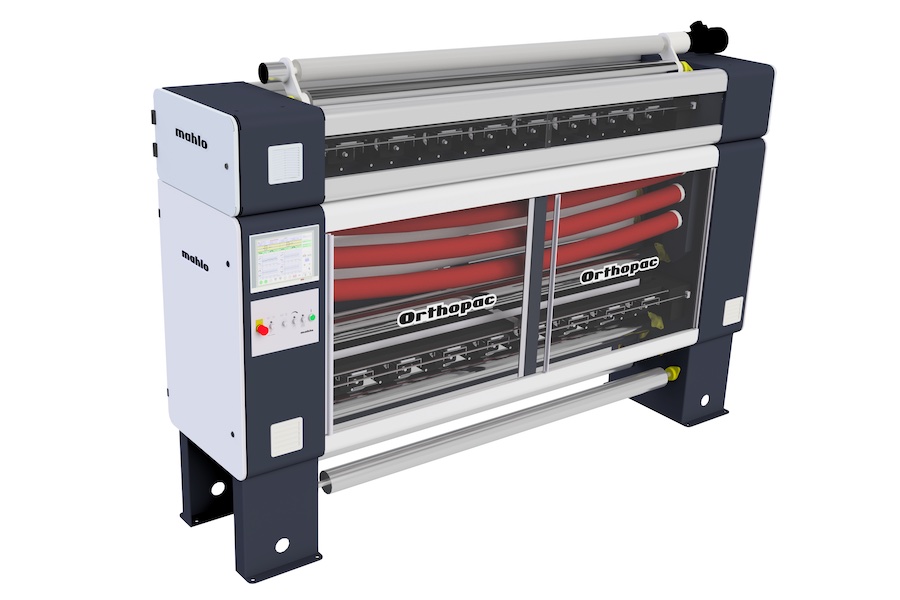
Orthopac RVMC-20 plus: German Engineering for Smarter Weft Straightening

In times of rising cost pressure and growing quality demands, textile producers worldwide are searching for solutions that combine precision, efficiency, and sustainability. With its latest innovation, the Orthopac RVMC-20 plus, Mahlo once again demonstrates the strength of German engineering: improving proven technology to meet today’s challenges.

#Dyeing, Drying, Finishing

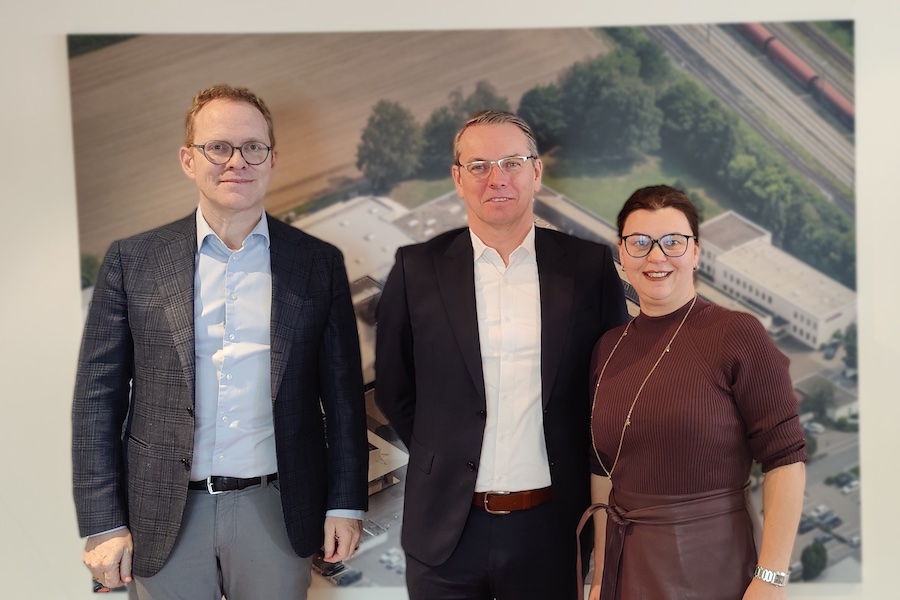
Stefan Moll becomes new CEO of the machinery manufacturer

Starting January 1, 2026, Stefan Moll will take over the management of Mahlo GmbH + Co. KG, the world’s leading provider of measurement and control technology for web-shaped materials. With this move, Mahlo is focusing on the long-term safeguarding of its market position and technological leadership. The current CEO, Rainer Mestermann, will leave the company after 14 years as part of a planned succession arrangement.

#Dyeing, Drying, Finishing

Knitex Industries Ltd. (Mondol Group) invests in advanced Mahlo technology

Bangladesh’s Knittex Industries Ltd. is known for its commitment to top-quality knitwear and responsible produc-tion. To further enhance fabric quality, the company has invested in a Mahlo Orthopac RVMC-15 weft straightener. Installed by Tootal Quality Resources, the system ensures perfect fabric alignment and supports Knittex’s goal of continuous improvement.

More News on Weaving

#Techtextil 2026

Groz-Beckert showcases cross-segment innovations for technical textiles in Frankfurt

From April 21 to 24, 2026, Groz-Beckert will present its latest innovations and solutions across the product areas of knitting, weaving, nonwovens and sewing at Techtextil 2026 in Frankfurt (Hall 12, Booth B90).

#Techtextil 2026

Crealet to showcase electronic warp feeding solutions at techtextil 2026

Crealet AG will present its latest developments in electronic warp yarn feeding at Techtextil 2026 in Frankfurt. The company will exhibit at the Swiss Pavilion (Hall 12.0, Booth B01), organised by Swiss Textile Machinery.

#Techtextil 2026

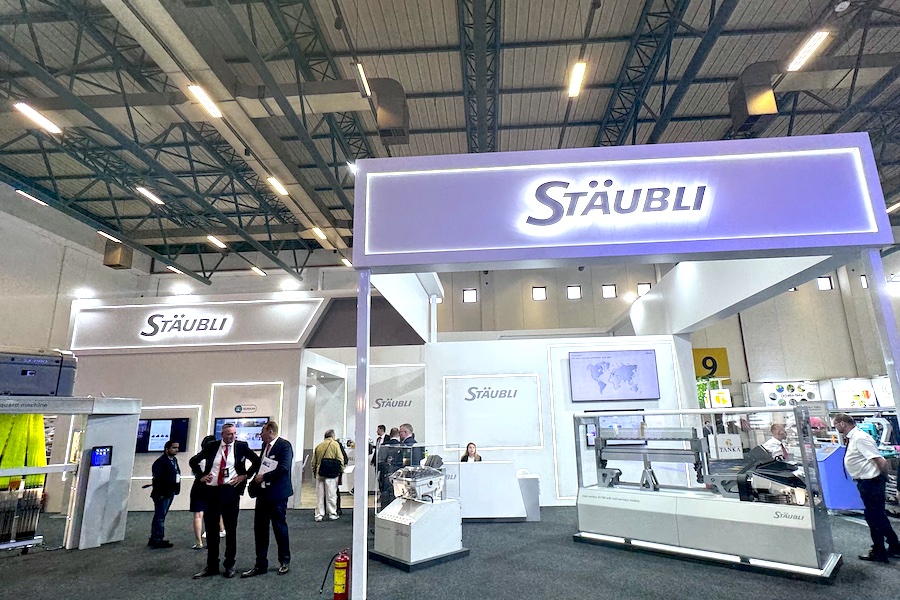
From preparation to 3D weaving: Stäubli’s solutions at Techtextil 2026

Stäubli, a global leader in high performance weaving technologies, is pleased to announce its participation at Techtextil 2026 in Frankfurt, Germany, the leading international trade fair for technical textiles and nonwovens. As technical textiles continue their rapid expansion across demanding markets such as defense, mobility, aerospace, construction, energy… Stäubli will showcase innovative solutions designed to empower mills to produce the next generation of advanced fabrics. Stäubli will exhibit its trend-setting technologies at the Swiss Pavilion Booth B01.6 in Hall 12.0.

#Weaving

Itema America acquires Palmetto Loom Reed, strengthening local manufacturing and service in the U.S.

Itema America, the U.S. subsidiary of Italy-based Itema Group, has acquired – through an Assets Purchase Agreement – Palmetto Loom Reed, a Greenville, South Carolina-based manufacturer of weaving reeds and one of the last remaining domestic producers of these precision components in the United States.

Latest News

#Techtextil 2026

AI, Start-ups, Research: Techtextil and Texprocess bring together players in the textile industry

From start-ups to universities and research institutes: at Techtextil and Texprocess, the world’s leading innovation trade fairs in Frankfurt am Main, exhibitors present future-oriented concepts for the global textile industry. With the international Campus & Research area, a strong participation from start-ups and the latest AI applications for textile processing, both trade fairs showcase current developments in the textile industry. By bringing together innovation, research and application, they enable new partnerships across the textile value chain.

#Techtextil 2026

IVGT joint stand brings innovation and networking to Techtextil 2026

At Techtextil 2026 and the parallel Texprocess 2026, key transformation topics such as artificial intelligence, digitalisation, sustainability, recycling and the circular economy will be reflected across the show. Against this backdrop, the IVGT, together with 16 member companies, will present its joint stand in Hall 12.1 (Stand D62) as a platform for exchange and networking.

#Man-Made Fibers

Indorama Ventures supports Southeast Asia’s textile customers with reliable regional supply and global innovative portfolio

Indorama Ventures, one of the leading global polyester fiber and filament yarn suppliers globally, will participate in Indo Intertex 2026 in Jakarta this April, making its diverse global portfolio available to apparel, home textile, and hygiene customers across Southeast Asia.

#Raw Materials

New study shows low environmental impact by Cotton made in Africa Organic Cotton from Tanzania

Today, the Aid by Trade Foundation (AbTF) is announcing the results of a comprehensive life-cycle analysis (LCA) for cotton produced in Tanzania under the Cotton made in Africa Organic (CmiA Organic) standard. The study emphasises the small ecological footprint of CmiA Organic verified cotton. This can largely be traced back to the absence of synthetic pesticides, artificial fertilisers, and artificial irrigation. Consequently, CmiA Organic cotton can help the textile industry meet regulatory requirements as well as science-based targets. The results also show that the consequences of climate change threaten the livelihoods of these cotton farmers, even though the type of agriculture they practise barely contributes to climate change.

TOP