[pageLogInLogOut]

#Sustainability

Inditex and UNI Global Union renew their global agreement
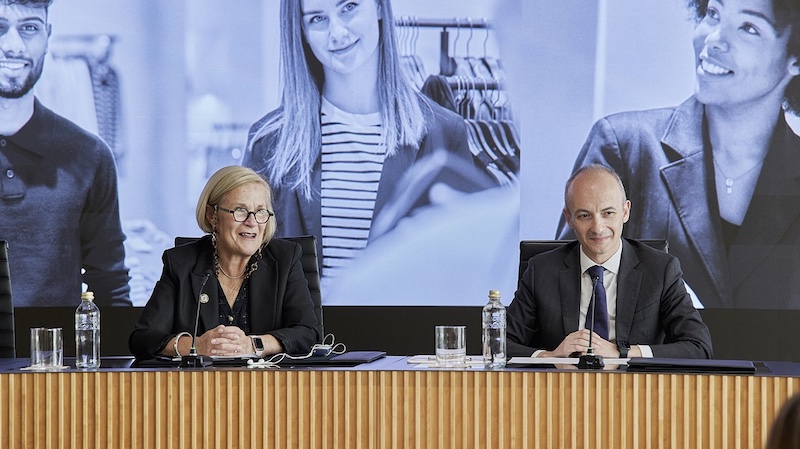
Inditex and UNI Global Union, a federation of 20 million service workers, including retail workers, from more than 150 countries, renewed the Framework Agreement originally entered into by the two organisations in 2009 to foster best labour practices.
© 2024 INDITEX
© 2024 INDITEX


This new framework agreement reinforces the firm’s endorsement of the labour principles enshrined in the internationally recognised conventions and delves deeper into newer challenges such as the inclusion and retention of people with functional diversity. 

Both parties will also work together to combat sexual harassment and gender violence in the workplace, prioritising worker awareness to ensure victims know how to proceed in the event of possible breaches of their fundamental rights. Together, they will also reinforce appropriate channels for notifying incidents in a confidential manner and procedures for guaranteeing adequate investigations and foster the implementation of precautionary, corrective and/or disciplinary measures. 

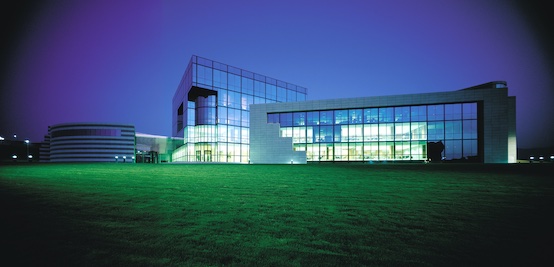
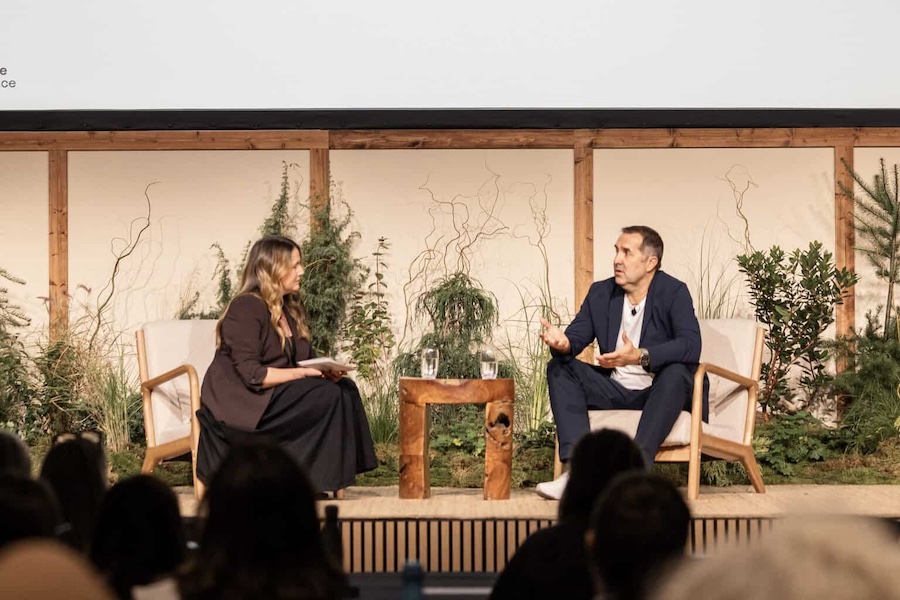
During the signing event organised at the company's headquarters in Arteixo (Coruña), Inditex’s CEO, Óscar García Maceiras, and the general secretary of UNI Global Union, Christy Hoffman, revisited the key milestones that have marked the collaboration between the Group and global union and outlined the challenges being tackled by the new agreement in an attempt to stay in touch with the ever-changing global economic and social reality after 15 years of fruitful work together. 

Óscar García Maceiras said how “the commitment to the more than 160,000 people who populate our company and our efforts to have a positive impact on our communities are strategic priorities for Inditex”, going on to underline that, “constantly improving the opportunities to engage with the unions is key to continuing to make progress on the common goal of ensuring workers’ wellbeing”. 

Lastly, he stressed that “the inclusion of persons with disabilities is one of the key thrusts of our commitment to people”, to which end he recalled the commitment made by Inditex to the ILO in January 2023 to boost inclusion of such professionals into its network of stores, logistics facilities, warehouses and offices all around the world, an effort that will “translate into the addition of 1,500 new Group employees by February 2025”.

The general secretary of UNI Global Union, Christy Hoffman, said that “Our agreement is a much-needed response to pressing issues facing retail workers today including a post-pandemic spike in third-party violence as well as the effects of digitalization. We also see many countries in Europe adopting Human Rights and Due Diligance legislation, on to that end we are pleased Inditex recognizes exercises its responsibilities in this agreement and will now include franchised operations as a topic of discussion with UNI Global Union”.

The event was also attended by representatives from the main Spanish unions, including the general secretary of Servicios Comisiones Obreras, José María Martínez, and the general vice-secretary of FeSMC-UGT, Pedro Aller, as well as members of the European Works Council. According to the representative from Comisiones Obreras, “labour rights are the seeds of advanced democracies, understood as social states under the rule of law. Those rights are based on the freedom of association. Global labour agreements such as Inditex's signify a commitment, at the level of transnational enterprises, with democracy around the world”. The spokesperson for UGT said "This marks a new horizon for continuing to flesh out this agreement and the values it enshrines and to further dialogue that is constructive and collaborative. As has already been proven, this agreement is one of the instruments best suited to ensuring compliance with workers’ social, labour and economic rights".

More News from INDITEX

#Sustainability

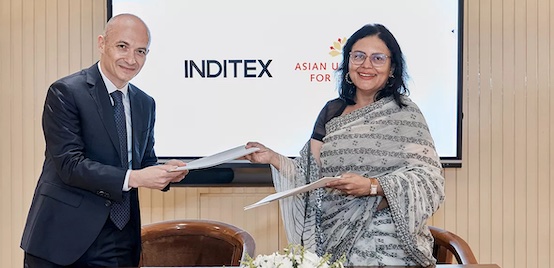
Inditex will fund the university education of 50 female textile industry workers in Bangladesh for five years

Inditex and the Asian University for Women have launched a new scholarship program to support the academic training of female textile factory workers in Bangladesh. Inditex will allocate €3.75 million to fund this initiative, enabling 50 women to access pre-university and university education over the next five years, providing them with new opportunities for personal and professional growth.

#Retail & Brands

INDITEX reports a very strong operating performance in its interim report for the first half of financial year 2024

In 1HY2024, Inditex continued with a very robust operating performance due to the creativity of the teams and the strong execution of the fully integrated store and online business model.

#Retail & Brands

Inditex reports strong Q1 2024 performance

Inditex's sales grew by 7.1% in Q1 2024, reaching €8.2 billion. Sales in constant currency rose by 10.6%. Gross profit increased by 7.3% to €4.9 billion, with a gross margin of 60.6%. Operating expenses increased by 6.4%, below the sales growth rate. EBITDA rose by 8% to €2.4 billion, while EBIT grew by 10.3% to €1.6 billion. Net income saw a 10.8% increase, reaching €1.3 billion.

#Retail & Brands

Inditex reports exceptional results for FY 2023

In 2023, Inditex continued with a very robust operating performance due to the creativity of the teams and the strong execution of the fully integrated business model.

More News on Sustainability

#Sustainability

Experts publish APAC policy priorities

Cascale today announced the publication of its APAC Policy Priorities Paper, developed by the Asia-Pacific (APAC) Policy Member Expert Team (MET) to identify key regional sustainability challenges and provide practical, aligned recommendations for policymakers and industry stakeholders across Asia-Pacific.

#Sustainability

GOTS version 8.0 released: advanced supply chain accountability, from fibre to finished product

Global Standard is pleased to announce the release of GOTS Version 8.0, the latest update to the world's leading processing standard for organic textiles. The updated Standard strengthens requirements for air emissions and waste management, as well as criteria for product safety. It introduces new provisions on circularity, microfibre management and updates in residue testing. Version 8.0 also elevates due diligence obligations and formalises governance requirements, including ESG disclosure, anti-corruption policies and conflict-of-interest safeguards, to support credible, responsible business conduct.

#Sustainability

The nova-Institute establishes new Renewable Feedstock Department to lay the groundwork for industrial defossilisation

The transition from fossil-based to renewable carbon – sourced from biomass, CO₂ utilisation and recycling – is the cornerstone of a climate-neutral chemical industry. The nova-Institute’s new department is dedicated to providing the essential data, analyses and strategic roadmaps required to secure a reliable future feedstock supply and make this transition a commercial and ecological reality.

#Sustainability

Textile Exchange unveils commitment-based pathway for members to accelerate responsible raw material production

Textile Exchange has unveiled further details about its new membership structure, designed to guide the fashion, textile, and apparel industry in a collective course of action toward preferred production systems for raw materials and fibers.

Latest News

#Textile chemistry

A flagship for chemical production: BASF inaugurates world-scale Verbund site in China

BASF today (March 26, 2026) celebrated the official inauguration of its newly built, world-scale Verbund site in Zhanjiang, Guangdong Province in southern China. Covering an area of around four square kilometers, it is more than a major BASF project in the chemical growth market of China. “Zhanjiang shows what the future of chemistry looks like: efficient, digital and sustainable by design. The site showcases a smart integrated Verbund structure on an industrial scale,” said Dr. Markus Kamieth, CEO of BASF, at the ceremony attended by representatives from government, customers, business partners and employees.

#Nonwovens

VEOCEL™ Lyocell production expands to Asia – Launching a new chapter for nonwovens in the region

VEOCEL™, Lenzing's flagship specialty nonwovens brand, expands production at its Thai plant in Prachinburi. This is the first-ever production of its nonwoven-grade lyocell fibers in Asia. Built in 2022 with a 100,000-ton annual production capacity, the facility - previously focused on fibers for textile applications - now can directly meet the demand for VEOCEL™’s biodegradable¹, wood-based lyocell fibers for nonwovens products. These fibers are an essential ingredient for high-quality nonwovens products, ranging from baby wipes to facial sheet masks and everyday personal hygiene items.

#Research & Development

Hof University develops sustainable textile coating for the fashion of tomorrow from mushrooms

Clothing is often treated as disposable: T-shirts for events, general merchandise, or short-term campaigns frequently end up in the trash after only a few uses. This is particularly problematic given that their production still largely relies on fossil-based materials. This is precisely where a new research project at Hof University of Applied Sciences comes in.

#Raw Materials

Fashion for Good mobilises industry to adopt mass balance attribution and accelerate decarbonisation

Fashion for Good launches today the Mass Balance Demonstrator project, a collaborative industry initiative to implement and scale the mass balance attribution (MBA) chain-of-custody model for biomass-attributed PET in textile applications. The project represents a concrete step toward accelerating brand-driven decarbonisation across the apparel value chain.

TOP