[pageLogInLogOut]

#ITMA Asia + CITME 2018

“PASSION FOR INNOVATION” continues at ITMA Asia 2018

Thies GmbH & CO. KG concentrates on sustainable product solutions and focuses on the development of innovative, intelligent and integrated concepts for yarn and fabric dyeing. Founded in 1892, the family company combines many years of commercial, product and application experience.

This time Thies Textilmaschinen will present the established and successful iCone yarn dyeing machine. This machine consolidates highest ecological standards with technological intelligence to achieve tremendous savings in water and electrical consumption. The 2018 version incorporates various new detail improvements, many of them developed in response to suggestions from customers and users.

The construction of the iCone is based upon the worldwide established eco-bloc series of Thies, but involves innovative new technologies. Its newly designed ‘pump bloc’ system allows dyeing with an ultra-short liquor ration. Depending on the carry-over of the material, liquor rations of 1:3,6 in partially flooded vessels are performable in practice. Improved rinsing functions allow the reduction of the after-treatment times. Moreover, the new flow converter design enables the adjustment of the flow reversal, namely from inside to outside and from outside to inside. 

iCone has been specifically developed to meet the requirements of stringent international and local environmental protection regulations with simultaneous consideration of its economic efficiency.

Visitors are most welcome to visit Thies – at ITMA ASIA, October 15.-19 in Hall H6 Stand E 18.
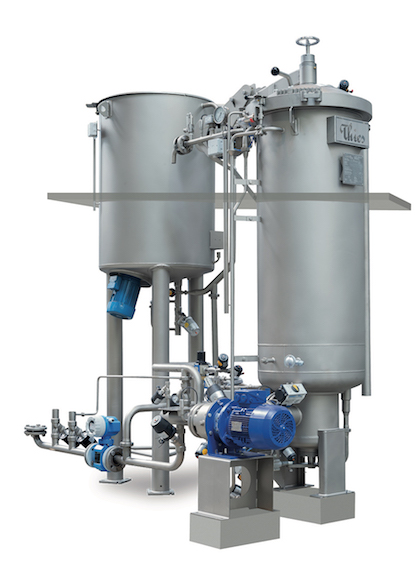

Thies iCone (c) 2018 Thies


More News from Thies GmbH & Co. KG

More News on ITMA Asia + CITME 2018

Latest News

#Techtextil 2026

AI, Start-ups, Research: Techtextil and Texprocess bring together players in the textile industry

From start-ups to universities and research institutes: at Techtextil and Texprocess, the world’s leading innovation trade fairs in Frankfurt am Main, exhibitors present future-oriented concepts for the global textile industry. With the international Campus & Research area, a strong participation from start-ups and the latest AI applications for textile processing, both trade fairs showcase current developments in the textile industry. By bringing together innovation, research and application, they enable new partnerships across the textile value chain.

#Techtextil 2026

IVGT joint stand brings innovation and networking to Techtextil 2026

At Techtextil 2026 and the parallel Texprocess 2026, key transformation topics such as artificial intelligence, digitalisation, sustainability, recycling and the circular economy will be reflected across the show. Against this backdrop, the IVGT, together with 16 member companies, will present its joint stand in Hall 12.1 (Stand D62) as a platform for exchange and networking.

#Man-Made Fibers

Indorama Ventures supports Southeast Asia’s textile customers with reliable regional supply and global innovative portfolio

Indorama Ventures, one of the leading global polyester fiber and filament yarn suppliers globally, will participate in Indo Intertex 2026 in Jakarta this April, making its diverse global portfolio available to apparel, home textile, and hygiene customers across Southeast Asia.

#Raw Materials

New study shows low environmental impact by Cotton made in Africa Organic Cotton from Tanzania

Today, the Aid by Trade Foundation (AbTF) is announcing the results of a comprehensive life-cycle analysis (LCA) for cotton produced in Tanzania under the Cotton made in Africa Organic (CmiA Organic) standard. The study emphasises the small ecological footprint of CmiA Organic verified cotton. This can largely be traced back to the absence of synthetic pesticides, artificial fertilisers, and artificial irrigation. Consequently, CmiA Organic cotton can help the textile industry meet regulatory requirements as well as science-based targets. The results also show that the consequences of climate change threaten the livelihoods of these cotton farmers, even though the type of agriculture they practise barely contributes to climate change.

TOP



