#INDEX 20
Trevira at Index 2021
Polyester fibre specialist Trevira GmbH from Bobingen is presenting in Geneva its comprehensive programme of products for the wide range of technologies and applications in the non-wovens sector. Besides new sustainable products and customized fresh developments, the focus is on further developing and optimising existing fibre types servicing this important segment.
Sustainable biobased and biodegradable solutions with the biopolymers PLA/PBS
As there is a growing demand for more environmentally friendly products and a necessity for new primary raw materials and solutions, Trevira develops sustainable solutions based on biopolymers like PLA (polylactic acid). This biopolymer is made from plant material and offers many possible applications. Furthermore, PLA is biodegradable under industrial compostable conditions. We are offering mono and bicomponent fibres in PLA. A new offering in biopolymer fibres is a siliconized PLA hollow fibre for use in fillings.
Due to the increased need for fibres with additional functionalities and to the use of fresh combinations of raw materials, capacities in bicomponent fibres have been expanded. Trevira has taken up the challenge and excels at offering bicomponent fibres incorporating not only polyester but also sustainable raw materials like PLA and PBS to develop high-performance fibres and end products in close cooperation with its partners. All our bicomponent fibres are antimony-free.
A new offering in the portfolio are bicomponent fibres based on PLA and PBS (polybutylene succinate). Both biopolymers offer an exceptional technological opportunity since they have outstanding properties in terms of environmental care and sustainability whilst rendering the required functions. Equally to PLA, PBS is recyclable and up to 100 % biodegradable under industrial conditions.

Sustainable biodegradable solutions with modified polyester fibres
Another approach to more sustainable products are modified virgin and recycled polyester fibres that become biodegradable through an additive solution. The additive is permanently and uniformly embedded in the matrix of the fibre, so it never washes off.
When the fibres go to landfills, they are exposed to moisture, oxygen, and microbes (bacteria). The additive provides little spots within the polymer that the bacteria can attach itself to, and it then starts breaking down the polymer chain. This is basically polymer degradation, which is the reverse process of making the polymer. These biodegradable fibres are available as mono and bicomponent fibres.
Pre- and post-consumer-recycled fibres
The recycling of precious raw materials and waste products is important for Trevira. Through recycling, we express our commitment to the environment. We have several different strategies to fulfil this commitment while ensuring we can continue to offer our customers products that need not fear comparison with products made from primary materials when it comes to quality and performance.
Pre-consumer-recycling: feedstock recycling of waste products
When polyester fibres are manufactured, the process inevitably results in some residual waste. But this residual waste is actually a precious resource that can be recycled for further use. To ensure that we work in a way that consumes the least possible resources, we aim to feed our residual waste back into the production process wherever possible. Our agglomeration plant in Bobingen takes a variety of residual waste from our manufacturing sites and those of our customers, and transforms it into serviceable raw materials. The agglomeration facility can process both standard fibres and those with special functionalities. The processed recyclates retain the same characteristics as the original products and are equally high-performing. They have been awarded GRS (Global Recycled Standard) certification.

Post-consumer-recycling: fibres from recycled PET bottles
The recycling of PET bottles is an important contribution to environmental sustainability. Trevira processes bottle flake regranulate into fibres. Our portfolio of fibres from recycled materials contains standard fibres but also fibres with flame retardant or low-pill functionalities. GRS certification has been obtained for these products. New investments are planned at our site Bobingen to expand capacities for recycled fibres
Optimized fibre types
In response to customer demand in terms of product functions and material properties, the comprehensive product range for airlaid applications is being continuously enhanced. This also applies to special fibres for the carding sector and shortcut types for the paper industry, where the focus is on improving dispersion. For this industry, we have a new micro short cut fibre in our portfolio: 0,6 dtex and 5 mm cut.
For both, the polyester and the PLA programme, Trevira has also developed modified fibres for the hygiene sector (e.g. for wet wipes), where these stand out due to their particularly soft handle.
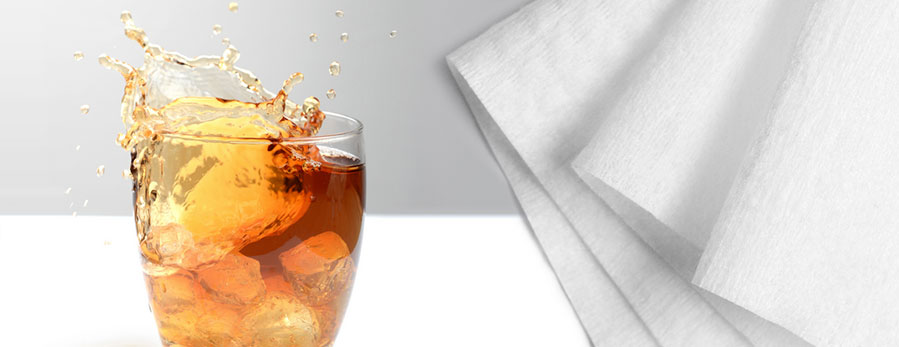
Emphasis is also being placed on finishes for fibres that must meet food industry standards, likewise on antimony-free polyester fibres, the aim here being to enhance product safety. Trevira has the ISEGA certificate for specific fibre types in applications with hot water filtration (coffee and tea filters) as well as packaging materials with food contact. As well as our bicomponent portfolio, all our standard (virgin) and flame retardant fibres are antimony-free.
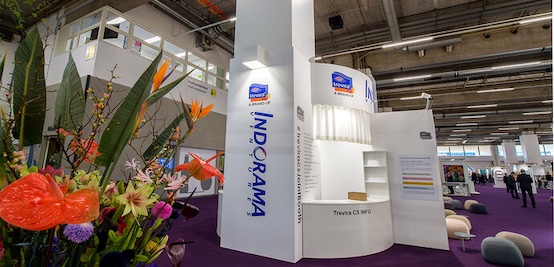
At Index 2021 Trevira will again participate in a joint presentation with sister companies from the Indorama Ventures parent group, a repeat of the procedure followed at the last events in 2014 and 2017.