#Exhibitions & Events
Attendance applications for ITM 2018 exhibition are continuing at full speed
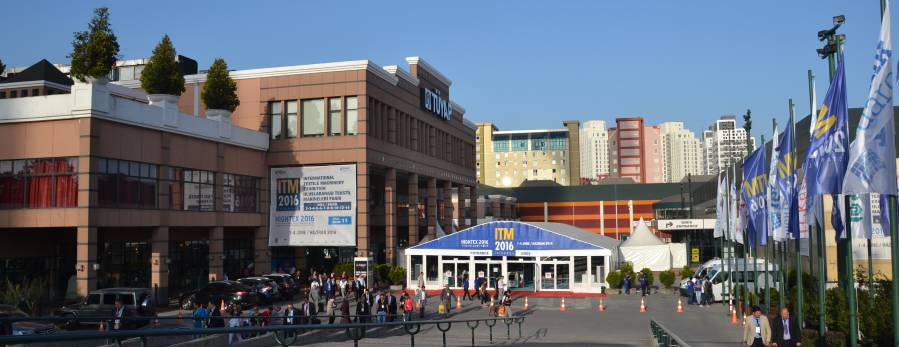
The Italian Trade Agency (ITA) decided to participate in the ITM 2024 Exhibition this year with the Italian pavilion. Italian textile machinery manufacturers, which are leaders in the global textile industry, will mark on the ITM 2024 with their innovative technologies focusing on energy consumption, efficiency, sustainability and digital transformation.

Republic of Turkey Ministry of Commerce announced the year of 2024 ‘Trade Delegation Supports List’. ITM 2024 International Textile Machinery Exhibition and HIGHTEX 2024 International Technical Textiles and Nonwoven Exhibition were included in the list.

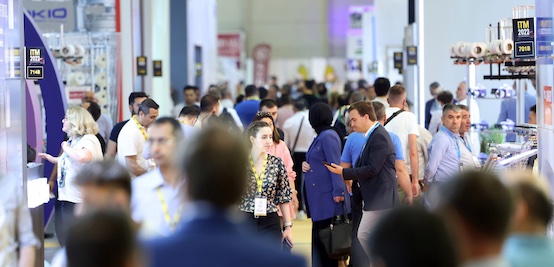
Leading textile machinery manufacturers, global industry investors and professional visitors will meet at ITM 2024 to see the latest textile technologies. The fact that the textile manufacturers of the countries that have visa problems when travelling to Europe will not have this problem when coming to Istanbul will increase the number of exhibitors and visitors of ITM 2024 Exhibition.

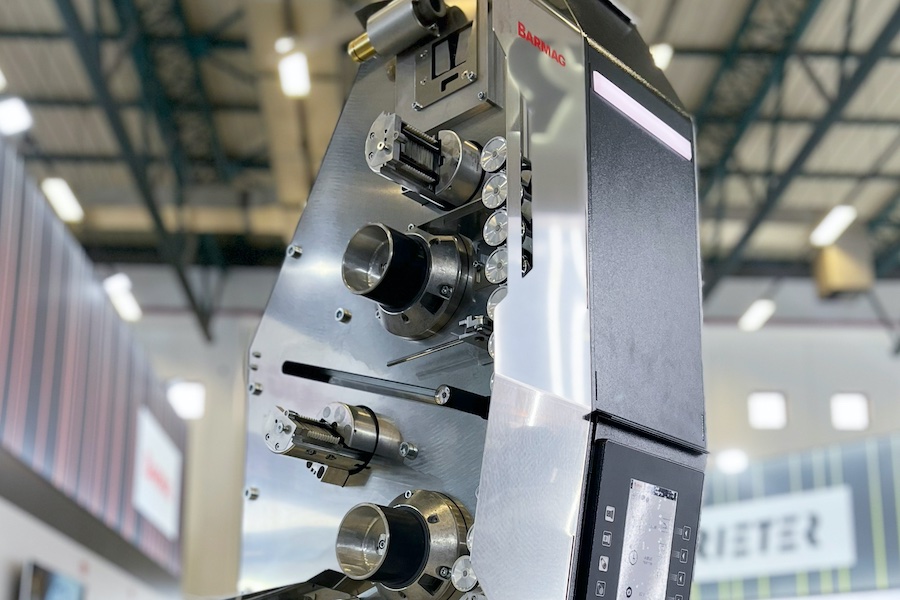
ITM 2024 Exhibition, where world brand companies in textile machinery and technologies will introduce the latest products they have developed, will host a unique experience with the diversity of exhibitors, visitor profile and the business volume it creates. Visitors to ITM 2024 Exhibition will have the opportunity to discover the technologies that will shape the future of textile.

Presented during Texworld Apparel Sourcing Paris, from August 31 to September 2, 2026, at the Paris-Le Bourget Exhibition Center, Autopsy offers a reinterpretation of the contours of fashion in a world undergoing profound transformation, balancing radical introspection and sensitive renewal.

With only two weeks remaining until the start of the second edition of the Textiles Recycling Expo 2026, preparations are entering the final phase. The exhibition and conference, dedicated exclusively to textile recycling and circularity, will take place on 24–25 June 2026 at Brussels Expo and is expected to attract stakeholders from across the textile recycling value chain.

Intertextile Shanghai Home Textiles – Autumn Edition 2026 will spotlight forward-looking design directions and evolving consumer demand, as the global home and lifestyle market continues to adapt to sustainability priorities, emotional well-being, and diversified living spaces. Taking place from 18 – 20 August 2026 at the National Exhibition and Convention Center (Shanghai), the fair will present its latest trend theme, ‘BREATHE UP!’, developed in collaboration with leading international trend forecaster NellyRodi™ Agency, alongside expanded product categories, and the debut of the Home Textiles Lifestyle Zone.

The Better Cotton Initiative (BCI) has confirmed a series of appointments and reappointments to its Council, the multistakeholder board responsible for BCI’s strategic direction.
Dyneema®, owned by Avient Corporation, an innovator of materials solutions, is supplying its high-performance unidirectional (UD) materials to world-leading armor manufacturer NP Aerospace, enabling the production of armor systems designed specifically to fit the female body. With 2,000 new armor systems, including 4,000 plates, made in the United Kingdom (UK) and delivered in June 2026, this collaboration addresses a long-standing lack of high-quality personal protection specially built for female defense and security personnel.

Textile Exchange has released a new Life Cycle Assessment (LCA) study on polyester, providing detailed data on the environmental impacts of both virgin and recycled polyester production. The study aims to strengthen understanding across the fashion, textile and apparel industries and support more informed decision-making regarding polyester sourcing and production.

At FILTECH 2026, taking place in Cologne from June 30th to July 2nd, members of TMAS – the Swedish textile machinery association – will highlight how the country’s engineering expertise is enabling filtration manufacturers to increase productivity, improve traceability and reduce dependence on labour-intensive manual processes.