[pageLogInLogOut]

#Dyeing, Drying, Finishing

Revolutionizing textile production: Thomas Höpfl discusses Mahlo's cutting-edge Orthopac RXVMC-20
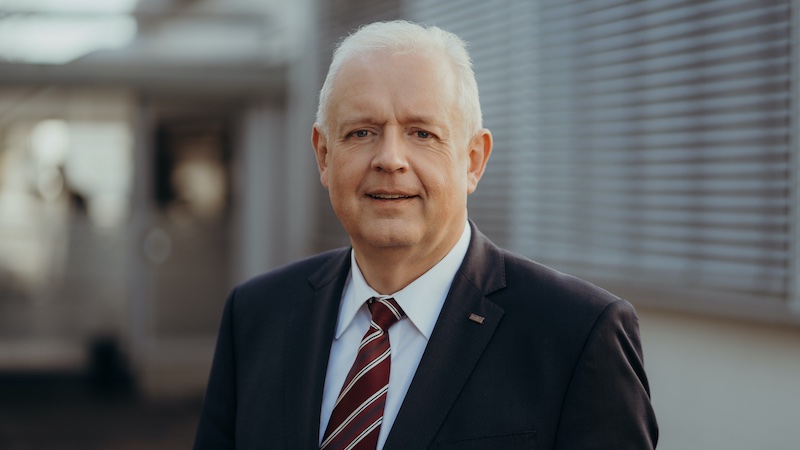
For many decades, the German machine manufacturer Mahlo GmbH + Co KG has been synonymous in the textile industry with straight fabrics and state-of-the-art straightening technologies. The market leader has now further developed its proven straightening concept and adapted it to the challenges of its customers. We are talking about the new Orthopac RXVMC-20 automatic straightening machine, and Sales Manager Thomas Höpfl is on hand to answer any questions.
Thomas Höpfl © 2024 MAHLO


Question: Thomas, thank you for taking the time to speak with us on the topic of optimizing textile production. Let's dive right in. At the ITMA Europe last year, Mahlo has presented the prototype of its latest product development Orthopac RXVMC-20. Now the first machine is installed at a customer. Can you give us an overview of the new straightening concept?

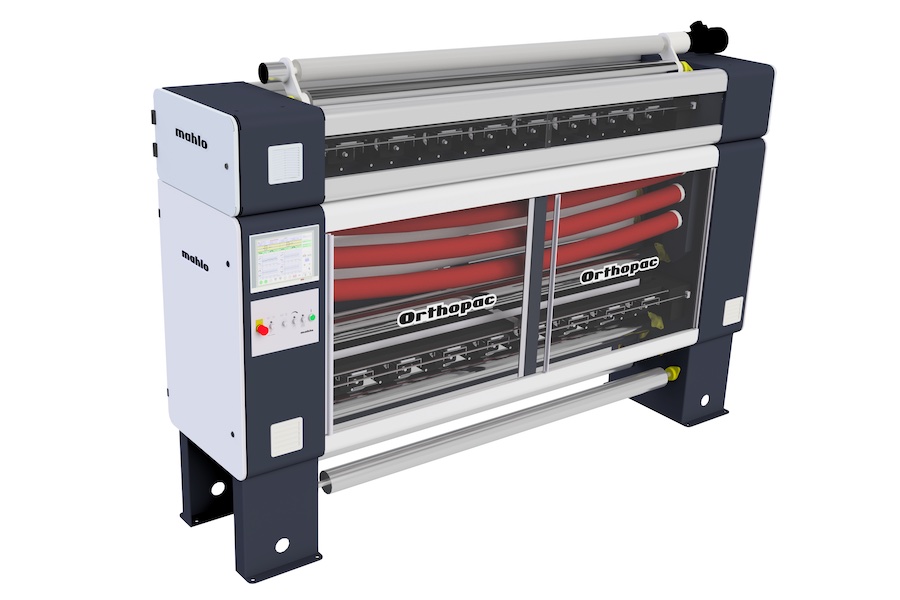
Thomas Höpfl: Good morning, and thank you for having me. The Orthopac RXVMC-20 is our latest innovation designed specifically for processing textiles with high distortion dynamics, particularly in the knitwear sector. It’s a sophisticated system that combines control and regulation to offer maximum control over the straightening process.

Q: What makes the Orthopac RXVMC-20 stand out from conventional straightening systems?

T.H.: The key differentiator is its ability to handle textiles with highly variable distortions effectively. Traditional methods struggle with the inconsistencies often found in knitted fabrics, which can be influenced by numerous factors such as the sewing together of short pieces and the type of knitted fabric. Our system uses independently controllable and adjustable straightening modules that provide a high level of precision and control, thanks to advanced scanning and evaluation electronics.

Q: Can you elaborate on how the system works?

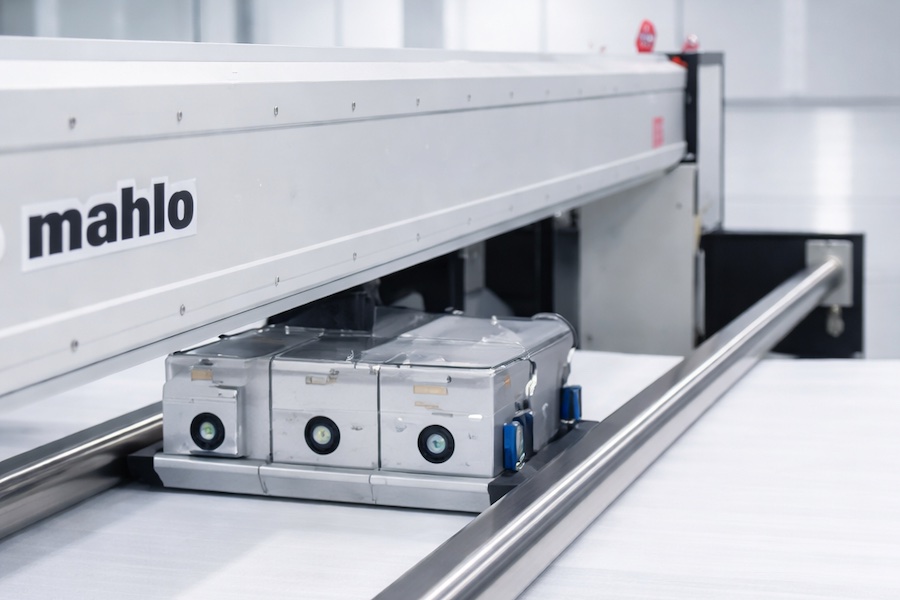
T.H.: Certainly. The Orthopac RXVMC-20 consists of two straightening modules, each individually controllable and driven. Distortion sensors at the infeed of the first module detect any fluctuations before they reach the straightening rollers. These rollers are then adjusted using stepless hydraulic or electric drives. A self-optimizing, AI-enhanced control algorithm ensures a highly precise and fast response to these detected distortions. Additionally, there is another distortion detection system at the outlet of the second module that catches any residual distortion, ensuring it is corrected.

Q: That sounds impressive. How does this system benefit textile companies in practical terms?

T.H.: The most significant benefit is the ability to meet high-quality standards regarding permissible residual distortion, which is crucial in the textile industry today. This system not only improves the quality of the finished product but also reduces waste and increases efficiency. For instance, lower profits due to non-compliance with residual distortion values are now avoidable. This system ensures that companies can maintain consistent quality, thereby increasing their competitiveness in the market.

Q: Could you share an example of a company that has implemented this system and the results they have seen?

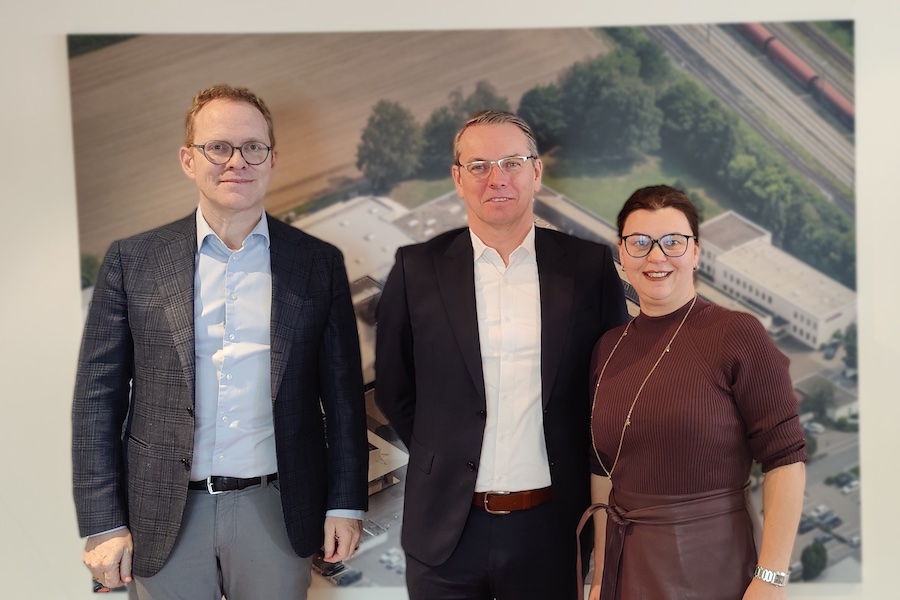
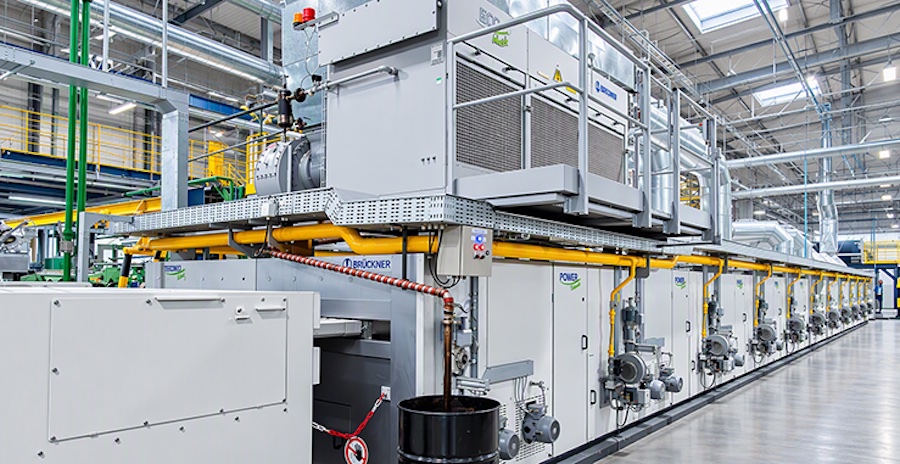
T.H.: Of course. Tintoria Finissaggio 2000, a renowned textile finishing company, recently installed the Orthopac RXVMC-20. They specialize in a wide range of finishing treatments for various fabrics. After equipping their new stenter with our system, they saw significant improvements in quality and efficiency within just a few months. The owners, Dino Masso and Marco Bardelle, mentioned that their expectations were far exceeded by the results.

Q: That's quite an endorsement. What was the feedback from Tintoria Finissaggio 2000 specifically?

T.H.: They were very pleased with the precision and rapid response of the system. Dino Masso and Marco Bardelle highlighted that their high hopes for the Orthopac RXVMC-20 were more than met. They experienced a substantial enhancement in their production process, which is a testament to the system's effectiveness and reliability.

Q: It seems like the Orthopac RXVMC-20 is set to make a significant impact in the textile industry. What are Mahlo's plans for the future with this technology?

T.H.: We are continuously working on innovations to further refine our systems. The success of the Orthopac RXVMC-20 has encouraged us to explore new ways to integrate AI and advanced control algorithms into our products. Our goal is to offer even more efficient and precise solutions to meet the evolving needs of the textile industry.

Q: Thank you, Thomas. It's been great learning about the Orthopac RXVMC-20 and Mahlo's contributions to textile manufacturing. We look forward to seeing how this technology evolves.

T.H.: Thank you for the opportunity to share our advancements. We’re excited about the future and committed to continuing our role as a leader in textile process control systems.
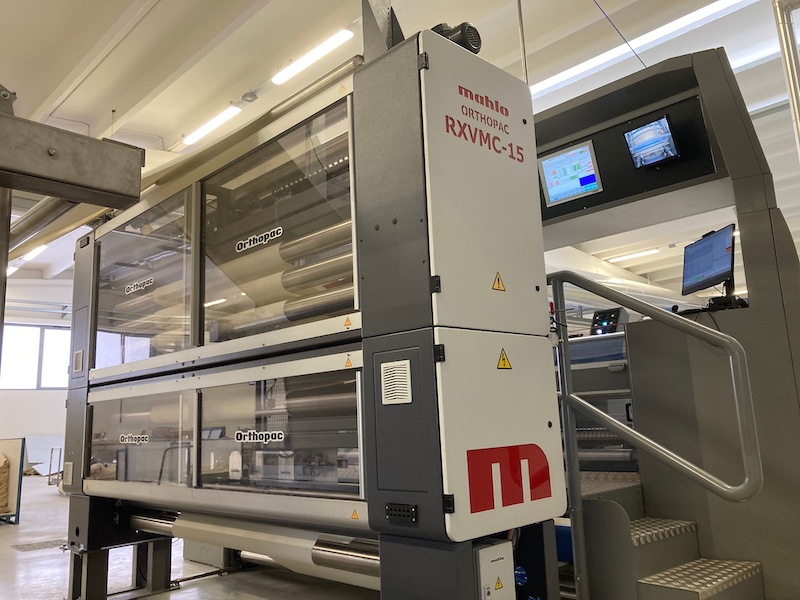
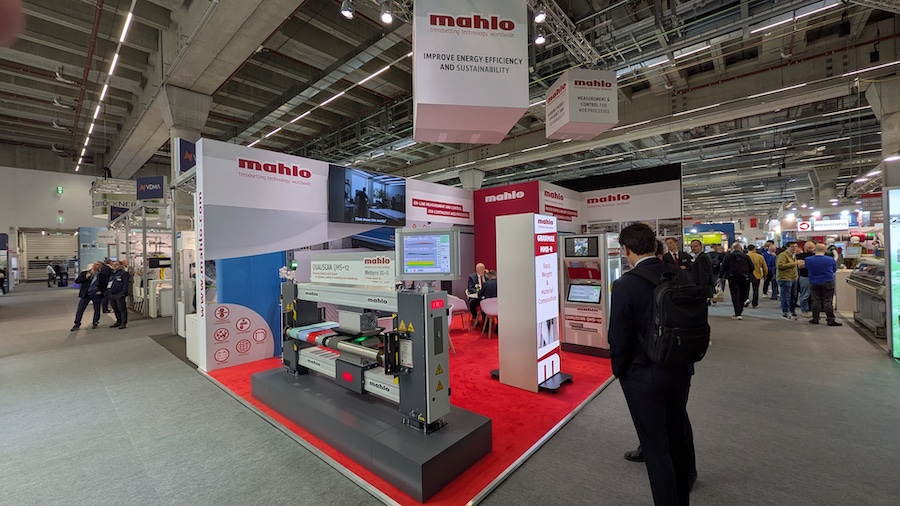
Mahlo RXVMC-20 TF2000 © 2024 MAHLO


More News from Mahlo GmbH + Co. KG

#Dyeing, Drying, Finishing

Knitex Industries Ltd. (Mondol Group) invests in advanced Mahlo technology

Bangladesh’s Knittex Industries Ltd. is known for its commitment to top-quality knitwear and responsible produc-tion. To further enhance fabric quality, the company has invested in a Mahlo Orthopac RVMC-15 weft straightener. Installed by Tootal Quality Resources, the system ensures perfect fabric alignment and supports Knittex’s goal of continuous improvement.

#ITMA Asia + CITME Singapore 2025

Intelligent technologies for sustainable textile production

From October 28 to 31, 2025, the international textile industry will gather at ITMA Asia in Singapore – and Mahlo will be present as part of the "German Pavilion Finishing" with innovative solutions for process optimization. Under the motto “More efficient. More precise. More sustainable.”, the Bavarian family-owned company will present forward-looking technologies for resource-efficient and quality-oriented textile production at booth H7-A103.

#Dyeing, Drying, Finishing

Mahlo GmbH + Co. KG celebrates 80 years of company history

80 years of experience, innovation, and family spirit – this year, mechanical engineering company Mahlo GmbH + Co. KG from Saal an der Donau is celebrating a very special anniversary. Since its founding in 1945, Mahlo has evolved from a small pioneering workshop into a globally sought-after specialist in measurement and control technology.

#Dyeing, Drying, Finishing

Ready for summer: Why textile precision matters in swimwear

As temperatures rise, certain products step into the spotlight that usually spend the rest of the year on the sidelines – swimwear among them. To ensure swimwear not only looks good in summer but also performs reliably, textile precision is essential. Behind every bikini and swimsuit lies a sophisticated production process, where even the smallest errors can have major consequences.

More News on Dyeing, Drying, Finishing

#Dyeing, Drying, Finishing

Navis TubeTex announces U.S. partnership with Icomatex

Navis TubeTex, a global leader in advanced dyeing and finishing machinery solutions, is pleased to announce a new partnership with Icomatex (www.icomatex.com), a respected European manufacturer of high-quality stenters and textile finishing equipment. Under this agreement, Navis TubeTex will exclusively represent the Icomatex stenter line in the United States.

#Dyeing, Drying, Finishing

BW Converting to promote sustainable finishing solutions with A.T.E. at Techtextil India 2025

Under its Baldwin brand, BW Converting will showcase its sustainable textile finishing innovations in collaboration with its India representative A.T.E. Enterprises Pvt. Ltd. at Techtextil India 2025, taking place November 19 - 21 at the Bombay Exhibition Centre in Mumbai.

#Dyeing, Drying, Finishing

Third Monforts Thermex for Turkey’s Altoteks

As a leader in the dyeing, finishing and printing of fabrics for workwear and uniforms, Altoteks, based in Çorlu, Turkey, has been a highly valued Monforts partner since 1996, and has just installed a new Thermex continuous dyeing range.

#ITMA Asia + CITME Singapore 2025

All systems go for Sweden’s imogo in Singapore

With a new strategic partner, its showroom now open in Sweden, and the successful commissioning of a Dye-Max spray dyeing system for a key H&M supplier in Bangladesh, imogo is looking to make a splash at next week’s ITMA Asia+CITME in Singapore (October 28-31).

Latest News

#Recycling / Circular Economy

Advanced Recycling Conference 2025 fuels innovation across key waste streams

The Advanced Recycling Conference (ARC) 2025 brought together nearly 220 experts from 28 countries to spotlight pioneering advancements and foster industry collaboration in recycling across diverse waste streams including plastics, textiles, automotive and other materials.

#Recycling / Circular Economy

ADVANSA launches ADVA®tex: A new step toward textile-to-textile recycling

ADVANSA has introduced ADVA®tex, a new filling fibre made entirely from recycled pre-consumer textile waste, positioning the material as a significant step forward in textile-to-textile (T2T) recycling. The fibre is designed for use in duvets, pillows, mattresses, and furniture applications and is available in three versions.

#Knitting & Hosiery

KARL MAYER celebrates 35 years of EL pattern drive

KARL MAYER is celebrating an anniversary this year: on 30 November 1990, the first warp knitting machine with electronic guide bar control, the KS 4 EL, was delivered – another milestone for patterning. As early as 1980, the SU gearbox with the MRS42SU had initiated the transition from mechanical chains to digital data.

#Research & Development

The region of renewable raw materials: Central German Alliance for Bioplastics

The development of sustainable plastic solutions is rapidly gaining importance in light of global environ- mental pollution, dwindling fossil resources and ambitious climate protection targets. As part of the re- gional alliance RUBIO, which brings together 18 partners from central Germany and the Berlin-Branden- burg area, the bio-based and biodegradable plastic polybutylene succinate (PBS) was comprehensively investigated, starting with the raw material, through the manufacturing process, to industrial application.

TOP