[pageLogInLogOut]

#Dyeing, Drying, Finishing

Monforts denim mills move hemp into the mainstream
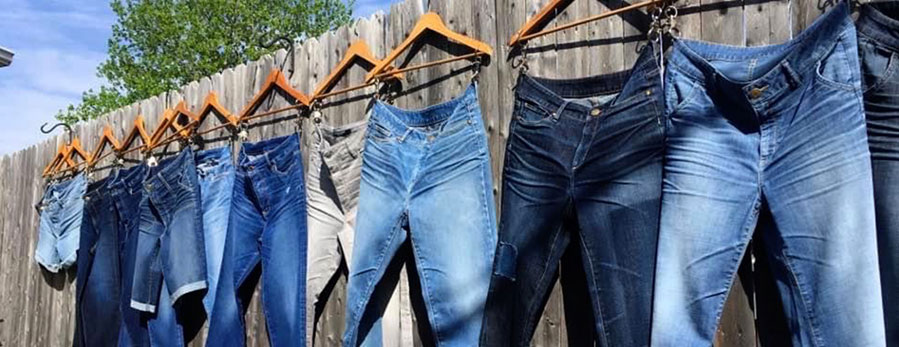
Cone Denim Sweet Leaf jeans. © Cone Denim
There is an urban legend that hemp canvas was used to make the very first pair of Levi’s jeans.While this is a myth that originated in the counterculture of the 1960s, hemp is without doubt the fibre of the moment for the denim industry. At the second Kingpins24 virtual denim show that was broadcast from New York on June 23rd and 24th, the sustainable benefits of hemp fibre were referenced by many Monforts customers who are now including it in their collections, including AGI Denim, Artistic Milliners, Black Peony, Calik, Cone Denim, Naveena Denim Mills (NDM) and Orta.

“Hemp is an easy to grow fibre which requires no irrigation, no fertilizers, no herbicides and no chemicals,” says Allan Little, Director of Product Development for Cone Denim, which has recently launched its Sweet Leaf collection featuring the fibre. “Significantly, it also uses fifty per cent or even less water than cotton in cultivation.”

It can also bring some new aesthetics to denim too, he adds.

“Hemp has a unique colour and adds a different cast to our indigo, the drape and texture of the fabrics is different and it even adds a bit of a unique hand, so combined with its sustainable credentials we are proud to be bringing the Sweet Leaf collection to the market.”

Cone Denim has recently launched its Sweet Leaf collection featuring hemp. © Cone Denim


US supply chain

Cone is currently sourcing its hemp from France, but with much of its manufacturing now in Mexico – and with the introduction of the US Farm Bill in 2018 which has legalised the growing of legal hemp – is exploring the possibility of investing in the US supply chain.

“With US hemp we’re really at the R&D phase,” Little emphasises. “It’s a unique crop, so coming up with the right stalk to provide the right fibre is challenging. We’ve experimented with different types of seed and various methods of decortication.”

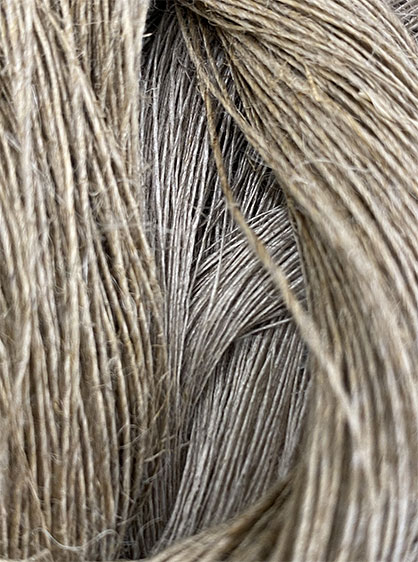
Decortication, he explains, is the mechanical removal of the outside layer of the hemp stalk to useable fibre on the inside. A second process, cottonization, is necessary to make the fibre suitable for spinning, because compared to cotton, hemp is longer, stiffer, and less flexible.
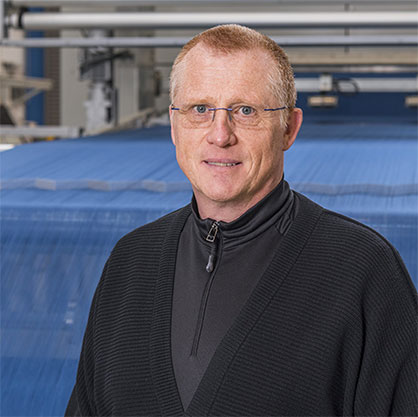
Monforts Head of Denim Hans Wroblowski at the new CYD pilot line at the Monforts ATC in Mönchengladbach, Germany. (c) 2020 Monforts


Cottonization, is necessary to make the fibre suitable for spinning, because compared to cotton, hemp is longer, stiffer, and less flexible. © Cone Denim


 100% success

At the end of 2019, Naveena (NDM), headquartered in Karachi, introduced fabrics featuring up to 51% hemp content in blends with Tencel and recycled polyester and this year has developed the first 100% hemp denims.

“The response to the fabrics we showed last year was incredible and we were looking forward to the response to this latest development – which everyone was asking for – at the Kingpins show in Amsterdam, which unfortunately was unable to go ahead,” says NDM’s Director of Marketing Rashid Iqbal. “We produced initial samples in an undyed state because we were not sure how the wet spun yarn would react in the dyeing, but I’m happy to say we have had success in this respect and are now able to provide one hundred per cent indigo dyed hemp denim.”

Environmental benefits

“Differentiation is the key in the highly-competitive denim industry and we have assisted our customers with trials and optimised processing parameters for a range of different fibres, including hemp, both at our Advanced Technology Centre in Germany and at their own mills around the world,” says Hans Wroblowski, Monforts Head of Denim. “Given the environmental benefits of hemp, and the liberalisation of its cultivation in many parts of the world, the interest in it now comes as no surprise. We have the technologies and know-how to help our customers to fully maximise their hemp denims at all post-weaving stages of production.”

Monforts has a dominant position in the field of denim finishing with its well proven Montex stenters. It has been enjoying further recent success with its Eco Line concept based on two key technology advances – the Eco Applicator and the Thermo Stretch.

The latest Monforts innovation for denim is the CYD yarn dyeing system. This technology is based on the effective and established dyeing process for denim fabrics that is now being applied for yarn dyeing.

The CYD system also integrates new functions and processes into the weaving preparation processes – spinning, direct beaming, warping and assembly beaming, followed by sizing and dyeing – to increase quality, ?exibility, economic viability and productivity. A full CYD line is now available for trials at the company’s Advanced Technology Centre.
More News from A. Monforts Textilmaschinen GmbH & Co. KG

More News on Dyeing, Drying, Finishing

#Dyeing, Drying, Finishing

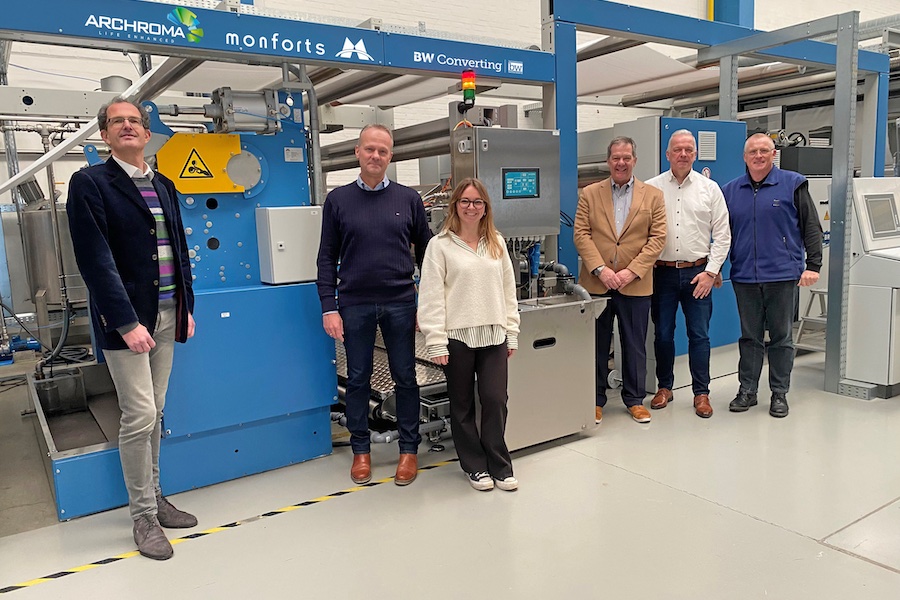
BW Converting expands Southeast Asian presence with new agency partnerships in Vietnam and Indonesia

BW Converting is strengthening its presence in Southeast Asia through new agency partnerships in Vietnam and Indonesia, reinforcing the company’s commitment to supporting textile manufacturers across the region. The expansion comes as BW Converting prepares to exhibit at SaigonTex 2026 (April 8–11, Saigon Exhibition and Convention Center, Ho Chi Minh City, Vietnam) and INDO INTERTEX 2026 (April 15–18, Jakarta International Expo, Indonesia).

#Dyeing, Drying, Finishing

Orthopac RVMC-20 plus: German Engineering for Smarter Weft Straightening

In times of rising cost pressure and growing quality demands, textile producers worldwide are searching for solutions that combine precision, efficiency, and sustainability. With its latest innovation, the Orthopac RVMC-20 plus, Mahlo once again demonstrates the strength of German engineering: improving proven technology to meet today’s challenges.

#Dyeing, Drying, Finishing

Precision jet dyeing moves towards industrial scale as Alchemie partners with Acatel

BTMA member Alchemie Technology, the pioneer of precision jet dyeing solutions based in Cambridge, UK, is partnering with Acatel, the Portuguese leader in sustainable textile manufacturing. The two companies will work together to validate and optimise Alchemie’s Endeavour system for knitted cellulosic fabrics.

#Associations

AATCC announces 2025 Herman & Myrtle Goldstein Graduate Student Paper Competition winners

The American Association of Textile Chemists and Colorists (AATCC) recognized the winners of the 2025 Herman & Myrtle Goldstein Graduate Student Paper Competition. Founded in 1982 to give student members the chance to conduct and present original research, the competition was renamed in 1994 in honor of Herman and Myrtle Goldstein, following their US$60,000 endowment. Their gift is a lasting remembrance of their dedication to young people in the textile industry.

Latest News

#INDEX 2026

EDANA unveils nominees for INDEX™26 Awards: Highlighting the next generation of nonwoven excellence

EDANA is proud to unveil the highly anticipated nominees for the INDEX™26 Awards, the nonwoven industry’s highest accolade for technical and sustainable excellence. Out of a record-breaking field of entries, these finalists represent the cutting edge of material science—from bio-based hygiene fibers and PFAS-free protective textiles to revolutionary water-filtration machinery. Each nominee has been selected by a jury of industry experts for their ability to solve critical global challenges, including the transition to a circular economy and the pursuit of enhanced consumer performance.

#Raw Materials

Lenzing Group positions bio‑based materials as a strategic asset for Europe’s economic security

The Lenzing Group, a leading supplier of regenerated cellulose fibers for the textile and nonwovens industries, hosted a high‑level roundtable in Brussels to discuss how bio‑based materials can strengthen Europe’s economic security and support the shift toward a fossil‑free future. Organized in cooperation with Euractiv, the event brought together representatives of the European Commission, the UK Mission to the EU, academia, civil society, and industry.

#Natural Fibers

Beyond Cotton: Natural Fibres in the Spotlight at the Bremen Cotton Conference - Branded by DNFI

Climate targets, fragile supply chains, and rising regulatory requirements are fundamentally changing the perspective of the textile industry - the focus is increasingly shifting toward the base material. Not only cotton, but natural fibres are gaining significant importance: they stand out not only because of their outstanding functional properties, but also because they make a valuable contribution to the bioeconomy and responsible product development.

#Textiles & Apparel / Garment

Coats to showcase innovative reinforcement and filler materials for leather goods and accessories at APLF 2026

Coats, a world-class Tier 2 manufacturer and trusted partner for the apparel and footwear industries, will be promoting four advanced materials from its ‘Lifestyle Solutions’ portfolio at APLF 2026 in Hong Kong in March. Each innovation has been specifically engineered to help luxury and premium brands elevate the craft, durability, sustainability and creative expression required in the manufacturing of handbags, purses, and other high-end designer accessories.

TOP